Choosing between the top two butterfly valve manufacturers is not a simple contest of catalog size. Global buyers need valves that fit their process, meet project specifications, and remain serviceable after installation. A compact wafer valve may suit a crowded plant room, while a lined or high-performance design may better handle demanding media. Details matter: disc material, seat construction, pressure rating, actuation, and available test documentation can change the decision.
As valve applications engineer Daniel Mercer puts it, “A butterfly valve is only a good choice when its materials and operating limits match the actual service.” That principle should guide any 2 butterfly valve comparison. Buyers should check published technical data, manufacturing capabilities, quality procedures, and export support—not rely on polished brochures alone. Ask how the manufacturer handles custom requirements, spare parts, and communication across time zones. Get the answers in writing.
Look closely. Then compare.
This guide examines two manufacturers through practical criteria: product range, engineering support, quality evidence, and suitability for international projects. It also considers the less visible parts of procurement, such as lead times and after-sales responsiveness. No ranking can replace a datasheet review or a clear duty specification. And even a careful shortlist can miss something; buyers should verify every critical detail against their own operating conditions before placing an order.
Top 2 Butterfly Valve Manufacturers for Global Buyers
Butterfly Valves: Design, Operation, and Common Applications
A butterfly valve uses a disc mounted on a rotating stem to open, restrict, or stop flow. A quarter-turn moves the disc across the pipe; the seat helps create a seal when closed. The design is compact, and its short operating travel can make frequent adjustments practical. But a partly open disc can create turbulence and wear, depending on fluid conditions and valve design. Not always ideal. Check pressure, temperature, media, and required shutoff performance before choosing one. For reliable selection, engineers compare the valve’s materials and pressure ratings with the actual service conditions.
Common applications include water distribution, wastewater treatment, building HVAC, and industrial process lines. In its 2023 Drinking Water Infrastructure Needs Survey and Assessment, the U.S. Environmental Protection Agency estimated that public water systems need $625 billion in investment over 20 years. That figure covers broad infrastructure needs, not butterfly valves alone, but it illustrates the scale of water-system maintenance and upgrades. In practice, operators should also consider access for inspection and whether the valve is intended for isolation or flow control. A catalog rating cannot replace site-specific review. A little humility helps: operating conditions change, and even a well-selected valve can perform poorly if installed or maintained incorrectly.
When comparing two butterfly valve manufacturers, buyers should test the evidence behind each proposal. Match valve size, pressure rating, temperature range, body material, and seat material to the actual service conditions. Ask for drawings, inspection records, and test procedures—not just a polished catalog. Details matter. A manufacturer’s ability to explain how a valve performs in abrasive or corrosive media can reveal practical engineering depth.
Tips: Request a sample data package for one specific valve. Check whether material certificates, pressure-test results, and serial-number traceability align. Confirm production capacity, realistic lead times, export packaging, and how technical questions are handled across time zones. A quick reply is useful; a clear, documented reply is better.
Compare both suppliers against the same written specification, then review any deviations line by line. Ask who performs testing and how nonconforming products are handled. If possible, arrange a factory audit or use an independent inspection service before shipment. I have seen buyers focus heavily on unit price and overlook spare-part availability. That can become an expensive lesson. No checklist removes every risk, and supplier claims still need verification. Look for consistent records and specific answers, not promises alone.
Top 2 Butterfly Valve Manufacturers for Global Buyers
For global buyers, two manufacturer profiles deserve close attention: specialists in engineered, high-performance valves and producers focused on standardized, high-volume models. The first group may offer tailored seat materials, trim options, and actuator configurations for demanding service. The second can be a practical fit for common water, HVAC, and general industrial lines, where dependable availability matters. Neither profile is automatically better. Match the valve to the medium, pressure, temperature, and operating frequency, then confirm the exact configuration in writing.
A useful supplier review goes beyond price and catalogue photos. Ask for pressure-test records, material traceability, dimensional drawings, and clear lead-time details. Check whether the proposed flange pattern and face-to-face dimensions match the existing pipework. Small differences can mean costly rework. I would not treat a certificate as proof that every delivered valve meets the project specification; verify the scope and batch documents. A polished catalogue is not enough, and buyers sometimes overlook after-sales support until a spare part is needed.
Tips: Send both manufacturers the same duty conditions and request itemized quotations. Compare warranty terms, test evidence, spare-part access, and delivery estimates—not just the unit price. Ask one awkward question: what happens if the valve fails to meet the agreed test criteria?
Top 2 Butterfly Valve Manufacturers for Global Buyers
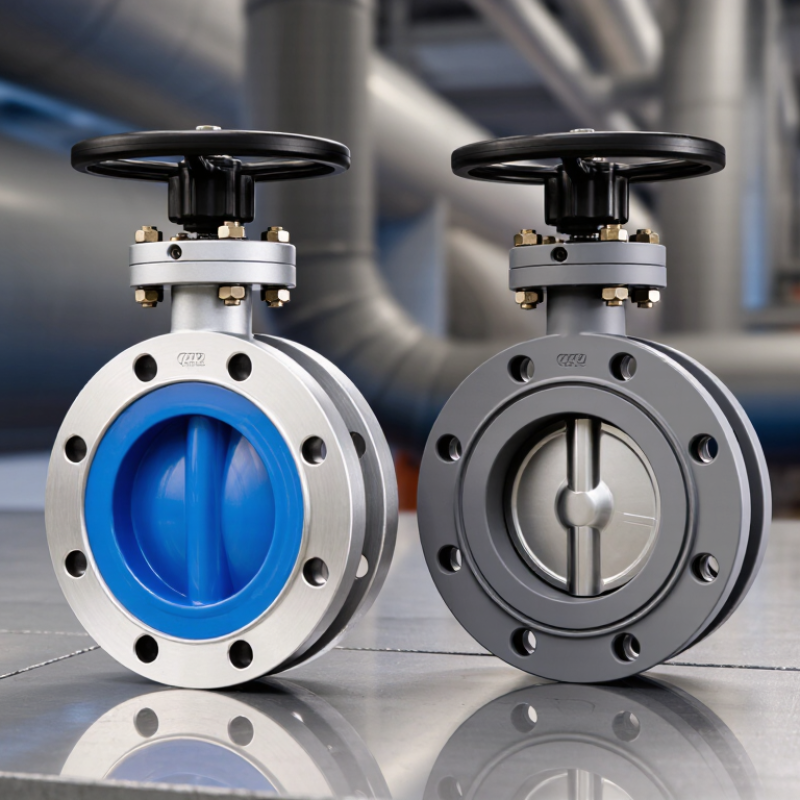
When comparing two shortlisted manufacturers, look beyond nominal size and pressure rating. Check whether each offers wafer, lug, and double-flanged designs, plus resilient-seat and metal-seat options. These details matter when a valve must fit between existing pipe flanges or handle abrasive service. The Grand View Research industrial valves market report estimated the global market at USD 78.5 billion in 2023, reflecting demand across varied applications. A broad catalog helps, but only when the supplier can confirm materials, testing, and delivery schedules.
Certifications need careful reading. The ISO Survey 2022 recorded more than 1.2 million ISO 9001 certificates worldwide; this shows how common quality-system certification is, not that every valve meets a buyer’s specification. Ask for current certificates, traceability documents, pressure-test records, and applicable product-standard details, such as API 609 or EN 593. Support matters, too. Can technical staff answer sizing questions, review actuator compatibility, and provide clear installation guidance? A quick, specific reply is more useful than a polished brochure. No checklist catches everything.
Tip: Request a sample datasheet and a real lead-time estimate before comparing quotes. Check that the stated face-to-face dimensions match your piping drawings. Then ask how replacement seals and technical support are handled after delivery.
Buyer comparison framework: Use these standards as checkpoints when comparing two suppliers. Bars show the number of listed standards in each topic—not manufacturer certifications or product coverage. Confirm each supplier’s documentation, certificate scope, and compliance for the specific valve and application.
Top 2 Butterfly Valve Manufacturers for Global Buyers
Factors to Consider When Selecting a Supplier
A competitive quote is only the beginning. Confirm the valve’s pressure rating, temperature range, disc material, seat compound, and media compatibility against your actual service conditions. A butterfly valve handling clean water may fail early in abrasive slurry. Request material certificates, pressure-test records, and clear details about the applicable design and testing standards. Small details matter.
Supplier capacity matters too. Ask whether the manufacturer controls casting, machining, assembly, and final testing, or relies on outside shops. The U.S. EPA’s 2023 Drinking Water Infrastructure Needs Survey estimates $625 billion in investment needs over 20 years. Its 2022 Clean Watersheds Needs Survey estimates $630.1 billion for wastewater infrastructure. These figures show the scale of water-system investment, not a guarantee that any supplier is suitable. Check production capacity, delivery history, and spare-parts availability for your project.
For global orders, clarify documentation, packing, export experience, and response times across time zones. Ask for inspection plans and test reports tied to specific serial numbers. Verify that actuators, if included, match the required control signal and fail position. A polished certificate is useful, but it cannot replace a traceable test record. I would still ask how the supplier handles a rejected batch; that question is easy to overlook.
| Selection Factor | Supplier Capability Profile 1: Concentric, Resilient-Seated Valves | Supplier Capability Profile 2: Double-Offset, High-Performance Valves | What Global Buyers Should Verify |
|---|---|---|---|
| Typical applications | Commonly used for water, wastewater, HVAC, and other services compatible with the selected seat and body materials. | Often selected for more demanding industrial services, including applications requiring higher temperature or pressure capability than a standard resilient seat provides. | Confirm the fluid, temperature range, pressure, flow conditions, and any solids or abrasive content against the manufacturer’s documented limits. |
| Valve design | Concentric disc and stem arrangement, typically with an elastomeric seat. Available designs and end connections vary by product. | Offset geometry reduces disc-to-seat contact during much of the operating cycle; seat design and materials vary by product. | Request a sectional drawing, design description, and confirmation of the applicable API 609 category or other project-specified design standard. |
| Pressure and temperature | Limits depend on valve size, body and disc materials, seat compound, and end connection. | Limits depend on the pressure class, body and trim materials, seat construction, and operating conditions. | Do not rely on a generic pressure rating. Obtain the pressure-temperature rating for the exact size, materials, and configuration offered. |
| Materials and compatibility | Common options include ductile iron or carbon steel bodies, stainless-steel discs, and elastomer seats such as EPDM or NBR, subject to availability and service suitability. | Common options include carbon steel or stainless-steel bodies and metallic or soft-seat arrangements, depending on the design and service requirements. | Check chemical compatibility, corrosion allowance, potable-water requirements where relevant, and the specified material grades on the bill of materials. |
| Standards and testing | Products may be designed or tested to standards such as API 609, API 598, or EN 593, depending on the valve and project specification. | Products may also reference API 609, API 598, or EN 593; the applicable standard and scope depend on the product and order. | Ask for the exact standard editions and test records. Confirm inspection and pressure-test requirements in the purchase specification. |
| Dimensions and interchangeability | Face-to-face dimensions and flange drilling depend on the design, size, and applicable dimensional standard. | Dimensions and mounting details are product-specific and should be checked against the existing piping and actuator arrangement. | Verify face-to-face dimensions, flange standard, pressure class, disc clearance, and actuator mounting before ordering replacements. |
| Actuation and controls | May be supplied with a lever, gearbox, pneumatic actuator, or electric actuator, depending on size and operating requirements. | May be supplied with manual or powered actuation; torque requirements vary with valve size, differential pressure, and seat design. | Request the actuator sizing calculation, fail position where applicable, control accessories, and electrical or pneumatic specifications. |
| Quality documentation | Documentation can include material certificates, inspection records, pressure-test reports, and product traceability, subject to the order scope. | Documentation can include the same types of records; availability and traceability requirements should be agreed before production. | Specify required certificates, inspection points, test documentation, serial-number traceability, and any third-party inspection in the purchase order. |
| Export and delivery readiness | Delivery time, packaging, and export documentation vary by factory, configuration, order quantity, and destination. | Lead time and export readiness vary with materials, special testing, actuator configuration, and order requirements. | Obtain a written delivery schedule, packaging details, country-of-origin documents, shipping terms, and confirmation of destination-market requirements. |
| Best-fit buying priority | Consider when the service is compatible with a resilient seat and the project prioritizes a straightforward shutoff solution. | Consider when the application calls for a high-performance offset design and the specified service conditions justify it. | Compare complete technical offers against the same duty conditions and specification; do not select on purchase price alone. |
Note: These are generic product-capability profiles, not named or ranked manufacturers. Standards, material options, ratings, certifications, and delivery commitments vary by product and supplier; confirm all details using the manufacturer’s current datasheets and project documentation.
© Shipham Valves 2025. All Rights Reserved.
Website By PS Website Design Ltd
Request a Quote/Further Information
Download
We use cookies on this website, by continuing to browse the site you are agreeing to our use of cookies. Find out more.