Choosing the right double valve is not a simple matter of matching pipe size. The correct selection must balance pressure, temperature, fluid behavior, maintenance access, and failure consequences. A valve that performs well in clean water may struggle with abrasive slurry, corrosive chemicals, or high-cycle steam service. Small details matter, including seat materials, actuator torque, leakage class, and emergency isolation requirements.
Industry data shows why this decision deserves careful attention. Grand View Research estimated the global industrial valves market at approximately USD 78.9 billion in 2023, with continued growth expected through 2030. This expansion reflects rising demand across energy, water treatment, chemical processing, and manufacturing. However, market growth does not guarantee reliable performance. API Specification 6D provides requirements for pipeline and piping valves, while ISO 5208 defines pressure testing and leakage assessment methods. These standards offer a strong technical foundation, but they do not replace application-specific engineering.
Start with the process conditions. Record the normal and maximum pressure, operating temperature, fluid composition, flow direction, and expected cycling frequency. Then compare double isolation options, including double block and bleed designs, based on safety objectives and maintenance practices. Consider a valve installed above a crowded pipe rack. Its weight, access clearance, and actuator position can affect real-world service more than a brochure specification.
No selection matrix is perfect. In practice, teams sometimes overlook draining, venting, or spare-part availability. That mistake can become expensive. A dependable double valve should meet recognized standards, fit the operating environment, and remain serviceable after years of use. Reference drawings, test certificates, material documentation, and supplier experience before approving the final design.
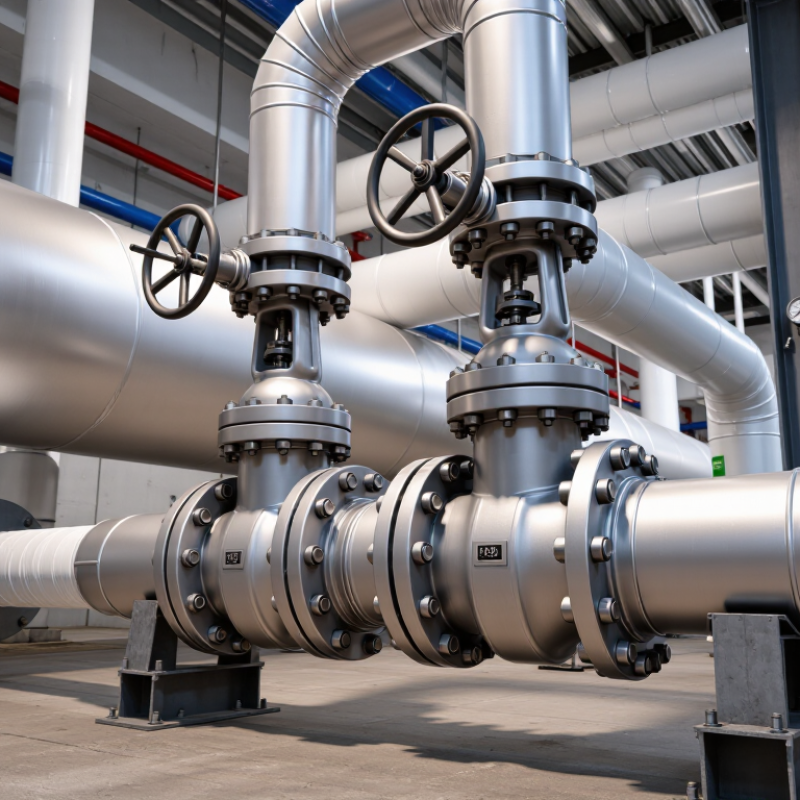
“Double valve” describes several designs, not one universal product. A double block-and-bleed valve uses two shutoff barriers. The cavity between them can be vented or drained, helping operators verify isolation. It suits pipelines where maintenance safety and leakage control matter. However, trapped pressure can remain if the bleed path is poorly designed or blocked.
A dual-plate check valve works differently. Two spring-loaded plates open when flow moves forward. They close quickly when flow reverses, reducing water hammer in many systems.
A double-seat control valve uses two seats and a movable plug to regulate flow. Opposing pressure forces can reduce actuator load, although seat alignment becomes critical. Small installation errors can create uneven wear.
Choose the type by studying the medium, pressure, temperature, flow direction, and required leakage performance. Check the valve’s operating torque at the lowest and highest temperatures. Confirm whether the actuator should fail open, fail closed, or hold position. In field inspections, I also check drain points, access space, and visible position indicators. These details often matter more than a neat specification sheet. A valve may look suitable on paper. It may still perform poorly with abrasive particles, unstable pressure, or frequent cycling. Ask for tested performance data, material certificates, and maintenance instructions before approval.
How to Choose the Right Double Valve?
Identifying Pressure, Temperature, and Flow Requirements
Selecting a double valve begins with accurate process data. Record normal pressure, maximum pressure, and possible surge conditions. The valve rating should exceed the highest credible pressure, not just the routine reading. Pressure changes during startup can be easy to overlook.
Temperature matters just as much. Check the minimum and maximum process temperatures, including cleaning cycles and shutdown periods. Seal materials can harden, soften, or lose elasticity outside their intended range. Cold service may also create frost around connections. It looks harmless, but it can hide a serious sealing problem.
Flow requirements need practical attention. Confirm the required flow rate, fluid viscosity, and allowable pressure drop. A valve with a suitable port size may still restrict flow if its internal passage is too narrow. For throttling service, a double isolation valve may be the wrong choice. Use the manufacturer’s flow coefficient data and compare it with real operating conditions. Do not rely on nominal pipe size alone.
In field reviews, mismatched assumptions often cause more trouble than poor workmanship. I once saw a specification based on average pressure, while the pump produced short pressure spikes. That detail changed the valve selection. Review the process datasheet, material compatibility, connection type, and required testing records together. Ask whether the valve will isolate, drain, vent, or control flow. The answer affects the design. During final review, leave room for uncertainty. Process data is sometimes incomplete.
Choosing a double valve starts with the fluid, pressure, temperature, and service environment. Stainless steel suits corrosive fluids and demanding outdoor installations. Brass can work well in cleaner, moderate-duty systems. Plastic materials may reduce cost, but temperature limits need careful checking. Material compatibility matters more than appearance.
Valve size should match the pipe and required flow, not simply the existing opening. An oversized valve may control poorly. A smaller valve can create pressure loss and noise. Threaded, flanged, welded, and sanitary connections each suit different maintenance needs. Threaded connections simplify replacement. Flanged connections help with larger pipelines. Welded connections provide strength, but they require skilled installation. I have seen projects focus on size while overlooking access for future servicing.
Tips: Confirm the actual medium and operating range. Check pressure ratings at the highest temperature. Compare connection standards before ordering. For sealing, PTFE handles many chemicals, while elastomer seals offer flexibility. Metal seals suit high-temperature or demanding applications, though they require accurate surfaces. There is no universal best seal. I still recheck seal compatibility after reviewing the valve specification, because one overlooked additive can change performance. Consult qualified engineers and applicable standards when the service is critical.
How to Choose the Right Double Valve?
A double valve should provide independent isolation, not just two handles. Check whether each closure can hold pressure separately. A bleed or vent port can reveal seat leakage before maintenance begins. That small opening matters.
During field inspections, clean valve bodies often hide worn seats or stiff stems. Review torque trends, pressure-test records, and cycle counts. ISO 14224:2016 recommends recording failure modes, operating hours, and maintenance actions. These records make service-life estimates less subjective. IOGP Report 456 (2023) also treats loss of containment as a process-safety indicator. Therefore, position feedback, cavity relief, locking devices, and fail-safe actuation deserve careful review. Yet no checklist is perfect. Human inspection still catches details that sensors miss.
Tips: Ask for pressure-test evidence before purchase. Confirm the valve’s temperature and fluid ratings. Inspect drain points for blockage. Set a maintenance interval using cycles, not calendar age alone. Replace damaged seals early. A valve used twice yearly may age differently from one cycling hourly. Corrosion, vibration, and thermal expansion can shorten service life unexpectedly. Keep spare seals dry and clearly identified. One overlooked gasket can delay an entire shutdown. Resist choosing the lowest initial price; inaccessible components often create higher maintenance costs. Check local procedures, competent personnel, and the latest applicable standards before installation.
| Evaluation Dimension | Double Block and Bleed (DBB) | Double Isolation and Bleed, DIB-1 | Double Isolation and Bleed, DIB-2 | Tandem Shutoff Valve Assembly |
|---|---|---|---|---|
| Primary Operating Principle | Two independent closure elements isolate the line, with a cavity or intermediate section that can be bled or vented. | Two independently sealing closure elements provide isolation in both directions, with an intermediate bleed or monitoring connection. | Two closure elements provide bidirectional sealing, while pressure relief is normally provided through a dedicated cavity-relief path or auxiliary arrangement. | Two separate shutoff valves are installed in series and operated as a coordinated isolation arrangement. |
| Typical Safety Strength | High Allows pressure verification and controlled draining or venting between the two barriers. |
Very High Suitable where both upstream and downstream pressure may act on the valve seat. |
High Provides redundant isolation but requires careful cavity-pressure management. |
High Provides physical redundancy, although safe performance depends on correct operation of both valves. |
| Pressure Verification Capability | Excellent when the bleed point is fitted with a suitable gauge, transmitter, drain, or vent connection. | Excellent; intermediate pressure can be monitored to confirm the integrity of both sealing elements. | Good; verification depends on the selected cavity-relief and monitoring design. | Moderate to good; verification generally requires testing each valve or using an additional test connection. |
| Leak Detection | Leakage can be identified by observing pressure buildup or flow at the bleed outlet. | Highly effective for detecting leakage from either seat during isolation testing. | Effective when the cavity-relief system is correctly sized and connected to a safe destination. | Possible through individual seat testing, but not always through one common monitoring point. |
| Pressure Trapping Risk | Medium; trapped cavity pressure may occur if the bleed path is blocked, closed, or incorrectly configured. | Medium to high; thermal expansion or line pressure can increase pressure in the isolated cavity. | Medium; a reliable pressure-relief path is important for liquid service and temperature changes. | Low to medium; risk depends on the piping arrangement and whether a trapped section exists between valves. |
| Recommended Bleed or Relief Arrangement | Bleed or vent connection with a rated valve, safe discharge route, and suitable pressure indication where required. | Dedicated bleed, vent, or test connection designed for the expected pressure, fluid, and discharge destination. | Automatic or controlled cavity-relief arrangement may be needed, especially for blocked-in liquid service. | Independent drain, vent, or test points are recommended when proving isolation is critical. |
| Maintenance Demand | Moderate Requires inspection of both closure elements, the bleed valve, seals, drains, and pressure indicators. |
High More sealing surfaces and monitoring components require disciplined inspection and functional testing. |
High Cavity-relief components and bidirectional sealing elements need periodic verification. |
Moderate Two valves require separate inspection, stroking, and seat-leakage testing. |
| Routine Inspection Focus | External leakage, stem or actuator condition, bleed-path blockage, cavity pressure, and seat-tightness test results. | Seat leakage in both directions, cavity pressure, bleed functionality, actuator condition, and seal integrity. | Relief-path operation, cavity pressure behavior, seat condition, body-joint leakage, and actuator performance. | Valve position indication, interlock or sequencing, individual seat leakage, and condition of both actuators. |
| Suitability for Toxic, Flammable, or Hazardous Fluids | Very suitable when the bleed outlet is routed to a closed drain, flare, recovery, or other approved containment system. | Very suitable for critical isolation, provided materials, emissions control, and discharge arrangements match the fluid hazard. | Suitable for critical service when cavity pressure and relief behavior have been assessed by the system designer. | Suitable when each valve is independently rated and the intermediate section can be safely monitored or relieved. |
| Space and Installation Requirements | Compact compared with two fully separate valves, but requires accessible bleed and test connections. | Compact to moderate; access is needed for cavity monitoring, relief devices, and maintenance. | Moderate; relief and monitoring equipment can increase piping and access requirements. | Highest space demand in most layouts because two separate valves, actuators, and service clearances are required. |
| Pressure and Temperature Considerations | Must be selected for the full line pressure and temperature range; cavity relief is important when thermal expansion is possible. | Requires verification of bidirectional pressure rating, seat behavior, body materials, and thermal-relief provisions. | Requires detailed review of cavity pressure, differential pressure, thermal expansion, and relief-device sizing. | Each valve must meet the line pressure, temperature, fluid compatibility, and applicable piping-system requirements. |
| Expected Service Life | Often approximately 15–25 years in properly specified, maintained fixed-service applications; frequent cycling can reduce life. | Often approximately 15–25 years in suitable service, with seals and soft parts normally replaced sooner than the body. | Often approximately 15–25 years when cavity-pressure control and maintenance are effective. | Often approximately 15–25 years for the valve bodies; actuators, packing, seats, and seals may require earlier replacement. |
| Common Life-Limiting Factors | Abrasive particles, corrosion, erosion, seat damage, blocked bleed lines, poor alignment, and infrequent testing. | High differential pressure, contamination, thermal cycling, seat wear, fugitive emissions, and incorrect cavity management. | Thermal overpressure, relief-device failure, corrosive fluid, seat deformation, and inadequate pressure monitoring. | Unequal operation, actuator wear, installation stress, valve synchronization problems, and repeated high-load cycling. |
| Best Application Profile | Pipeline isolation, process-unit boundaries, hydrocarbon service, and applications requiring a testable intermediate cavity. | Critical process isolation where reliable bidirectional seat sealing and positive leakage verification are required. | Applications where bidirectional isolation is required and cavity-pressure behavior has been fully engineered. | Existing facilities or layouts where two independent valves are preferred for redundancy and straightforward component replacement. |
| Selection Priority | Choose when controlled bleeding, pressure verification, and compact installation are important. | Choose when the highest level of bidirectional isolation assurance is required and maintenance resources are available. | Choose after confirming cavity-relief requirements, liquid thermal-expansion risks, and test procedures. | Choose when independent valve operation, physical redundancy, and access for separate maintenance are priorities. |
How to Choose the Right Double Valve?
Selecting the Best Double Valve for Your Application
Choosing a double valve starts with the process, not the catalog. Define the fluid, operating pressure, temperature, flow rate, and available space. A valve suitable for clean water may fail quickly with abrasive slurry or aggressive chemicals. Check body and seal materials against the actual media. Compatibility charts help, but real operating conditions matter more. Also confirm the required connection size and pressure rating.
Tips: Record normal and maximum conditions. Leave room for pressure surges. Ask operators about recurring leaks, vibration, or difficult access. These details often reveal needs that specifications miss.
Consider how the valve will operate and be maintained. Manual control may suit a small, accessible line, while automated control can improve repeatability. Specify the safest failure position for the application. Review isolation requirements, drainage, inspection access, and replacement time. A compact valve is not always the best choice if technicians cannot reach it. That lesson is easy to overlook. Testing the selected valve under representative conditions provides stronger evidence than relying on a datasheet alone. Document the decision, including assumptions and uncertainties, so future changes can be evaluated reliably.
Selecting a double valve requires balancing isolation reliability, process compatibility, pressure and temperature capability, maintenance access, and leakage control.
The chart presents recommended decision weights for three common service conditions. The percentages in each application total 100% and should be validated against the actual fluid, line pressure, operating temperature, required leakage class, and applicable piping standards before specifying a valve.
© Shipham Valves 2025. All Rights Reserved.
Website By PS Website Design Ltd
Request a Quote/Further Information
Download
We use cookies on this website, by continuing to browse the site you are agreeing to our use of cookies. Find out more.