Call us on: +44 (0) 1482 323163
Request a Quote
Choosing the right double valve supplier worldwide requires more than comparing unit prices. It requires evidence.
Fortune Business Insights valued the global industrial valves market at approximately USD 77.12 billion in 2023. Its 2024 report projects continued growth through 2032, driven by energy, water treatment, chemical processing, and infrastructure investment. Grand View Research also reports sustained market expansion, although its estimates differ. That difference matters. Market reports use different definitions, regions, and product categories.
A reliable supplier should explain those differences clearly. It should provide traceable material certificates, pressure-test records, dimensional drawings, and documented quality procedures. Ask to see how each double valve performs under repeated cycling, temperature changes, and corrosive media. A polished catalog is not enough.
James R. Rishel, author of Industrial Process Control Valves, wrote, “The control valve is the most important part of the control loop.” The principle applies here. A valve can look excellent and still fail through poor sealing, inaccurate machining, or weak after-sales support.
Check the details.
Compare body materials, seat design, actuation options, leakage standards, delivery capacity, and service response. Request references from facilities using comparable pressures and fluids. Review production audits, not only certificates uploaded online. ISO 9001 certification helps, but it does not replace technical verification.
No supplier is perfect. Even experienced buyers can overlook logistics, spare-parts availability, or regional maintenance support. The best decision balances engineering performance, compliance, lifecycle cost, and transparent communication. A worldwide supplier should make risk visible before the purchase order is signed.
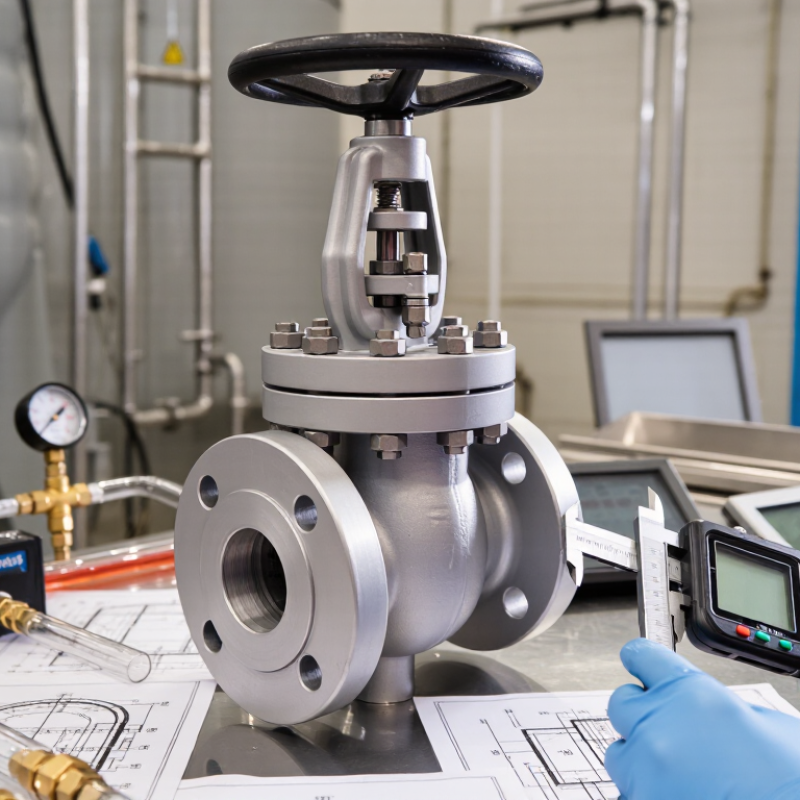
A double valve is more than two handles on one pipe. It combines two shutoff functions in a single arrangement, often with a bleed path between them. This design can isolate equipment, release trapped pressure, and support safer maintenance. In a workshop, the difference appears clearly: a technician checks the closed valves, opens the bleed point, and watches the gauge fall. Small details matter. Thread quality, seat condition, and actuator response can change the result.
Supplier selection matters because valve performance depends on design, materials, testing, and documentation. An experienced supplier should explain pressure ratings, temperature limits, media compatibility, and installation orientation. Ask for material certificates, inspection records, leak-test results, and traceable serial information. Independent testing is useful, but paperwork alone is not proof. Request evidence that matches the actual valve delivered.
Reliable suppliers also support the years after purchase. They should provide drawings, maintenance guidance, replacement seals, and responsive technical communication. Check whether their engineers understand your piping layout instead of offering a generic quotation. A low price may hide weak testing or difficult spare-part access. Practical questions often reveal more than polished promises. Still, no supplier is perfect; unclear specifications can come from the buyer, too. Recheck flow conditions, shutdown procedures, and local compliance before approval.
| Evaluation Dimension | Verified Industry Information | Why It Matters in Supplier Selection | Recommended Supplier Evidence |
|---|---|---|---|
| Definition of a double valve | “Double valve” is a broad term that may describe a double block and bleed valve, a double isolation arrangement, a dual-plate check valve, or a valve with two independent closing elements. | A clear product definition prevents the supplier from offering a technically unsuitable valve for the intended service. | Product datasheet, sectional drawing, operating description, and confirmation of the exact valve configuration. |
| Double block and bleed function | A double block and bleed arrangement provides two barriers to process flow and a bleed or vent path between the barriers for pressure verification or cavity depressurization. | It can support safer maintenance, isolation verification, and reduced equipment count when the design and service conditions permit. | Piping and instrumentation diagram, cavity-relief details, seat arrangement, and documented isolation philosophy. |
| Common valve configurations | Typical designs include trunnion-mounted ball valves, expanding plug valves, double-plate check valves, and two separate isolation valves with an intermediate bleed connection. | Each configuration has different pressure-drop, maintenance, sealing, installation, and actuator requirements. | Valve type comparison, flow-direction requirements, allowable installation position, and maintenance procedure. |
| Size and pressure class | Nominal size, pressure rating, design pressure, design temperature, and end-connection dimensions must be selected together. ASME Class ratings and PN ratings are not interchangeable without engineering verification. | Incorrect pressure or dimensional selection may cause leakage, installation problems, or unsafe operation. | GA drawing, pressure-temperature rating chart, flange or end-connection standard, and design-condition confirmation. |
| Body and trim materials | Material selection depends on fluid composition, temperature, pressure, corrosion risk, erosion, sour-service exposure, and required mechanical properties. Common material families include carbon steel, stainless steel, alloy steel, and nickel-based alloys. | Material compatibility directly affects service life, fugitive emissions, corrosion resistance, and pressure-boundary integrity. | Material specification, heat or cast certificates, corrosion allowance, NACE compliance where applicable, and positive material identification records. |
| Seat and seal design | Seats may be soft, metal-seated, or a combined design. Seal materials must be compatible with the process fluid, temperature range, pressure differential, and expected cycling frequency. | Seat design influences shutoff performance, fire resistance, torque, emissions, and maintenance intervals. | Seat-material specification, temperature limits, fire-test documentation where required, and leakage-test results. |
| Applicable standards | Commonly referenced standards include API 6D or ISO 14313 for pipeline valves, ASME B16.34 for valves, ISO 5208 or API 598 for pressure testing, and ISO 15848 for fugitive-emission testing when specified. | Standards establish consistent requirements for design, testing, dimensions, pressure integrity, and documentation. | Standards compliance matrix, valid certificates, test procedures, and a clear statement of edition and scope. |
| Testing and inspection | Typical quality activities include shell testing, seat testing, functional testing, dimensional inspection, visual inspection, and non-destructive examination when required by the specification. | Independent and traceable inspection reduces the risk of defects that may not be visible after installation. | Inspection and test plan, pressure-test records, NDE reports, calibration certificates, and third-party inspection options. |
| Actuation and automation | Double valves may use manual gear operators, electric actuators, pneumatic actuators, or hydraulic actuators. Actuator sizing must account for breakaway torque, running torque, differential pressure, temperature, and safety factor. | An incorrectly sized actuator can cause failure to open or close, excessive wear, or unsafe emergency operation. | Torque calculation, actuator sizing sheet, fail position, control interface, enclosure rating, and cycle-test results. |
| Leakage and emissions control | Internal seat leakage and external stem or body emissions are separate performance considerations. Acceptance criteria should be defined in the purchase specification and test standard. | Leakage control is important for safety, environmental compliance, product loss, and process reliability. | Specified leakage class or acceptance criterion, emissions test report, packing details, and pressure-test records. |
| Manufacturing traceability | A controlled manufacturing process should link raw materials, machining, heat treatment, welding, assembly, testing, and final inspection to the valve identification number. | Traceability supports quality audits, warranty investigations, regulatory compliance, and long-term asset management. | Manufacturing record book, serial-number system, material certificates, process qualifications, and document-index sample. |
| Delivery and logistics capability | Worldwide supply requires coordinated engineering approval, production planning, export documentation, packaging, preservation, transport, and customs information. | A technically compliant valve can still delay a project if documentation, packing, or delivery coordination is inadequate. | Manufacturing schedule, approved vendor list status, export documentation capability, packing specification, and shipment milestones. |
| After-sales support | Support may include installation guidance, commissioning assistance, spare-part identification, actuator troubleshooting, repair instructions, and technical response during operation. | Accessible support can reduce downtime and simplify future maintenance across different countries and time zones. | Service-response process, spare-parts list, maintenance manuals, training options, warranty terms, and regional support coverage. |
| Total cost of ownership | The total cost includes purchase price, engineering review, inspection, installation, commissioning, spare parts, energy or actuation costs, maintenance, and potential downtime. | The lowest initial quotation may not provide the lowest lifecycle cost if reliability, documentation, or maintenance requirements are poor. | Lifecycle-cost comparison, warranty coverage, maintenance interval, spare-parts pricing, and clearly itemized quotation. |
| Supplier qualification checklist | A qualified supplier should demonstrate relevant product experience, documented quality controls, engineering competence, manufacturing capacity, testing capability, and reliable project communication. | Supplier selection affects technical risk, schedule risk, compliance risk, and long-term operating performance. | Technical questionnaire, quality audit, reference projects without confidential information, sample documentation, capacity statement, and corrective-action history. |


© Shipham Valves 2025. All Rights Reserved.
Website By PS Website Design Ltd
Request a Quote/Further Information
Download