2026 Best Valve Ball Types for Global Buyers?

2026 Best Valve Ball Types for Global Buyers?

Choosing the best valve ball in 2026 requires more than comparing prices or catalog photographs. Buyers must match ball design with pressure, temperature, fluid chemistry, pipeline size, and operating frequency. A polished stainless-steel ball may look ideal, yet it can fail quickly in abrasive service without suitable hard-facing or coating.

Valve engineering specialist Philip L. Skousen offers a useful principle: “Valve selection begins with the process, not the catalog.” This idea guides our comparison of floating, trunnion-mounted, solid, hollow, full-port, and reduced-port designs. Each type creates a different balance between torque, sealing performance, weight, maintenance, and lifecycle cost.

Global buyers should also examine material certificates, pressure-test records, cavity-relief design, and traceability. API 6D, ISO 5208, and applicable project specifications may influence acceptance. Soft-seated valve ball assemblies often suit clean oil, gas, and water services. Metal-seated options may perform better with heat, erosion, or dirty media. That is not universal.

Small details matter. A rough surface can damage a seat. Incorrect stem alignment can increase operating torque. Inconsistent coating thickness may create hidden leakage risks. Suppliers should explain these points clearly, not merely promise “premium quality.”

This guide compares practical valve ball choices for international projects in 2026. It also recognizes an uncomfortable truth: the cheapest selection may become the most expensive component after installation. Performance data can still be incomplete. Careful buyers should question assumptions, verify documentation, and request application-specific recommendations before ordering.
2026 Best Valve Ball Types for Global Buyers?

Valve Ball Basics: Design, Function, and Core Performance Terms

2026 Best Valve Ball Types for Global Buyers?

A valve ball is a precision-machined closure element, not simply a round plug. Its bore aligns with the pipeline during opening and blocks flow after a 90-degree turn. Floating balls use line pressure to press against the downstream seat. Trunnion-mounted balls use additional supports and usually reduce operating torque in larger, higher-pressure valves.

Core terms include full bore reduced bore seat loading stem torque pressure class Cv temperature range.

A 2024 Grand View Research report estimated the global industrial valves market at about USD 78 billion in 2023, showing why basic selection details matter across energy, water, and process facilities.

Material compatibility comes first. Stainless steel may suit corrosive service, while carbon steel can offer practical strength and cost control. The ball surface must resist galling, erosion, and repeated cycling.

“Bubble-tight” sounds clear, but it depends on the test standard, seat material, and operating temperature. API 598 leakage testing is widely referenced, yet it does not replace application review.

Field inspections often find excessive actuator torque caused by contaminated seats or pressure differentials ignored during sizing. That is an avoidable mistake.

Another imperfect assumption is that a larger bore always improves performance; it can also increase cost, weight, and required actuator capacity.

Buyers should verify pressure-temperature ratings, fugitive-emission requirements, fire-safe design, and documented test results before approving a valve ball assembly.
Major Valve Ball Types and Their Suitable Industrial Applications

2026 Best Valve Ball Types for Global Buyers

Valve ball design should match the medium, pressure, temperature, and operating frequency. A floating ball valve suits water, compressed air, and moderate-pressure process lines. Its ball moves slightly toward the seat, creating reliable sealing with a simple structure. Trunnion-mounted balls handle larger sizes and higher pressures. They use supports to reduce operating torque. This makes them suitable for oil, gas, power, and pipeline systems.
Full-port designs reduce pressure loss. Reduced-port designs save space and cost. The choice is not always obvious.
V-port balls provide controlled flow and are useful in process regulation, blending, and clean liquid handling. Soft-seated balls often seal tightly in ordinary chemical and utility services. Metal-seated balls perform better with abrasive particles, hot fluids, or severe pressure differences. They may require more careful machining and maintenance. In cryogenic service, material contraction and seat performance need close review. For corrosive media, engineers commonly evaluate stainless steel or nickel-based alloys. Do not select by size alone. A compact valve can still face extreme service conditions.
Tips: Confirm the fluid’s solids content, temperature range, pressure class, and shutoff needs. Ask for test records, material certificates, and cycle data. Check whether the actuator can deliver enough torque after years of service. Site conditions matter too. Dust, vibration, and poor alignment can shorten valve life. In practice, a technically suitable ball may still fail when installation details are ignored. That lesson deserves attention.

How Materials, Coatings, and Finishes Affect Valve Ball Selection

2026 Best Valve Ball Types for Global Buyers?

How Materials, Coatings, and Finishes Affect Valve Ball Selection

Valve ball selection starts with the process, not the purchase price. Stainless steel suits many corrosive fluids, while carbon steel can perform well in cleaner, less aggressive systems. Duplex alloys offer stronger resistance to chloride stress, but their higher cost needs justification. Temperature, pressure, media concentration, and cycling frequency should be checked together.

Coatings change performance at the sealing surface. Electroless nickel can improve corrosion resistance and surface hardness. Chrome coatings may reduce wear in repeated operation. Tungsten carbide is useful where abrasive particles could damage the ball. However, coating thickness, adhesion, porosity, and edge coverage matter more than a coating name alone. A poorly applied layer can fail early.

Surface finish also affects torque, leakage, and seat life. A smooth ball reduces friction and helps prevent particles from scratching soft seats. Extremely fine polishing is not always necessary. It may add cost without improving service performance. Inspectors should verify roundness, stem-slot accuracy, hardness, and roughness values. Practical testing with the actual fluid is stronger than relying only on catalogue data.

No material wins every service. A polished ball is not automatically better. Field conditions can expose gaps in an otherwise convincing specification. Procurement teams should compare test records, coating controls, and maintenance history before approving a valve ball. Specification sheets can be incomplete.

2026 Best Valve Ball Types for Global Buyers? - How Materials, Coatings, and Finishes Affect Valve Ball Selection

Valve Ball Type Typical Ball Material Common Coating or Finish Best-Suited Service Main Advantages Key Limitations Selection Guidance
Floating Ball Austenitic stainless steel, carbon steel, or nickel alloy Precision-machined and polished; electroless nickel or hard chrome may be used where compatible General liquid and gas isolation in small to medium sizes and moderate pressures Simple construction, lower purchase cost, compact design, reliable shutoff when correctly sized Higher seat load as pressure increases; torque and seat wear can rise in larger or high-pressure applications Use when line pressure is within the valve design range and the medium is not highly abrasive.
Trunnion-Mounted Ball Carbon steel, stainless steel, duplex stainless steel, or nickel alloy Polished metallic surface, electroless nickel, tungsten carbide, or other qualified hard-facing systems Large-diameter, high-pressure transmission, process, and pipeline isolation Reduced operating torque, good mechanical support, suitable for large sizes and high differential pressure Higher design complexity, greater weight, and usually higher maintenance and procurement cost Prefer for high-pressure or large-bore service, especially where actuator torque must be controlled.
Full-Port Ball Carbon steel, stainless steel, duplex stainless steel, or alloy steel Smooth machined and polished bore; corrosion-resistant coating may be applied to external or wetted surfaces Pigging pipelines, low-pressure-drop process lines, slurry-compatible isolation where specified Bore is approximately equal to the connected pipe inside diameter, producing low flow restriction Larger body, greater weight, and higher cost than reduced-port designs Choose when pressure loss, pigging, or minimizing solids retention is important.
Reduced-Port Ball Carbon steel, stainless steel, or alloy steel Machined and polished bore; protective plating or coating selected according to the medium Utility, process, and isolation systems where compactness and cost are priorities Lower weight and cost; smaller valve envelope; suitable for many non-pigging applications Higher pressure drop and possible solids accumulation compared with full-port designs Use only after confirming acceptable flow coefficient, velocity, and solids-handling requirements.
Metal-Seated Ball Hardened stainless steel, alloy steel, or nickel-based alloy Tungsten carbide, chromium carbide, hard chrome, nitriding, or other qualified hard-facing treatment High temperature, abrasive, erosive, flashing, or dirty process service Superior temperature capability and better resistance to erosion, abrasion, and some chemical attack than soft-seat designs May have higher leakage than soft-seat valves; requires controlled lapping, coating quality, and alignment Select when temperature or solids exceed the practical limits of PTFE, elastomer, or other soft seats.
Soft-Seated Ball Stainless steel, carbon steel, or alloy steel ball with polymer or elastomer seats Fine polished ball surface; seats may use PTFE, reinforced PTFE, PEEK, UHMWPE, or elastomers Clean liquids, gases, water, chemicals, and applications requiring tight shutoff Excellent bubble-tight potential, low friction, and broad availability Seat temperature, compatibility, pressure, and extrusion limits must be respected; vulnerable to hard particles Verify seat material against temperature, chemical compatibility, pressure, and decompression conditions.
Cryogenic Ball Austenitic stainless steel or other qualified low-temperature alloy Low-temperature-compatible polished surface; coatings used only when qualified for cryogenic duty Liquefied gases and services below ambient temperature, including refrigerated process systems Maintains toughness at low temperature; can be designed with extended bonnet and controlled thermal leakage Requires special seat materials, cleaning, testing, and design for differential thermal contraction Confirm minimum design temperature, seat behavior, leakage test method, and oxygen-cleanliness needs where applicable.
Jacketed Ball Stainless steel or alloy steel Polished wetted surfaces; jacket and body finishes selected for heating or cooling medium compatibility Viscous, crystallizing, or temperature-sensitive fluids requiring thermal conditioning Helps maintain process temperature and reduce solidification or viscosity-related operating problems More connections, larger envelope, and additional thermal-stress and maintenance considerations Specify jacket pressure, temperature, connection arrangement, and required heat-transfer medium.
V-Port or Characterized Ball Hardened stainless steel, alloy steel, or nickel alloy Precision-machined port with hard-facing or erosion-resistant coating when required Modulating flow control, high-pressure-drop service, and applications needing a predictable flow characteristic Improved controllability compared with a conventional round-port isolation ball Not a universal substitute for an isolation valve; high velocity can increase noise, cavitation, and erosion Size using flow coefficient, pressure-drop, cavitation, flashing, noise, and actuator requirements.
Three-Way Ball Stainless steel, carbon steel, or alloy steel Machined and polished flow passages; corrosion-resistant treatment selected by service chemistry Flow diversion, mixing, isolation of multiple process paths, and instrument systems Combines multiple flow functions in one valve body and can reduce piping complexity Flow pattern, port orientation, pressure rating, and shutoff capability are configuration-dependent Specify L-port or T-port arrangement, allowable positions, and whether simultaneous isolation is required.
Ceramic or Ceramic-Coated Ball Technical ceramic, ceramic-lined metal, or metal substrate with ceramic coating Polished ceramic contact surface or engineered ceramic lining Highly abrasive, corrosive, or particle-laden media where conventional metals have short service life High hardness and strong resistance to many wear mechanisms and corrosive environments Ceramics can be brittle and sensitive to impact, thermal shock, installation damage, and misalignment Use after reviewing particle size, impact risk, thermal cycling, pressure rating, and coating adhesion.
Double-Block-and-Bleed Ball Carbon steel, stainless steel, duplex stainless steel, or nickel alloy Polished sealing surfaces with corrosion-resistant or hard-facing systems selected for the medium Hydrocarbon, chemical, process, and critical isolation applications requiring cavity pressure monitoring or relief Provides two isolation barriers with a bleed or vent path when correctly designed and operated More complex construction, larger size, higher cost, and greater testing and maintenance requirements Confirm the required isolation philosophy, cavity relief direction, seat behavior, and applicable project standards.
Buyer Selection Checklist: Verify pressure class, design temperature, fluid composition, solids content, corrosion rate, flow velocity, required leakage class, port configuration, seat compatibility, coating qualification, fire-safe requirements, fugitive-emission requirements, inspection and testing requirements, and applicable standards before final selection.

Global Buyer Criteria: Pressure, Temperature, Media, and Standards

2026 Best Valve Ball Types for Global Buyers?

Global Buyer Criteria: Pressure, Temperature, Media, and Standards

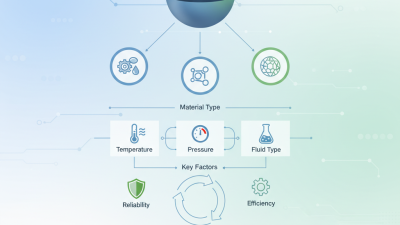
Selecting a ball valve starts with pressure, not catalog appearance. Floating designs suit moderate pressure and smaller pipe sizes. Trunnion-mounted designs reduce operating torque in larger, higher-pressure systems. ASME B16.34 requires pressure-temperature ratings based on body materials and construction. Therefore, a Class 600 label alone is not enough. Confirm the rating at the actual operating temperature. A 2023 MarketsandMarkets report valued the industrial valves market at about USD 78.7 billion, showing intense global demand. It also highlights replacement and process-industry growth. Yet market growth does not remove basic engineering discipline.

Temperature changes material behavior. Stainless steel may perform well in corrosive service, while soft seats can lose strength near their limits. Metal-seated balls may better handle abrasive or high-temperature media, but leakage expectations must be checked. For oxygen, chemicals, steam, or hydrocarbons, ask for documented compatibility evidence. ISO 15848 addresses fugitive emissions testing, while API 6D covers pipeline valve design and testing. These standards support comparison, but they do not replace project-specific review. Media details are often incomplete. That is a costly weakness.

Tips: Request pressure, temperature, fluid composition, solids content, cycling frequency, and required shutoff class in writing. Compare floating, trunnion, three-way, top-entry, and lined options against those facts. Check certification scope, not just certificate titles. One overlooked contaminant can damage a seat quickly. Recheck the selection with an independent engineer before purchase. Getting it nearly right is still not right.

2026 Best Valve Ball Types for Global Buyers

Global buyer criteria: pressure, temperature, media, and international standards

Typical Seat-Material Temperature Envelope

Temperature limits are typical engineering ranges for commonly used ball-valve seat materials. Actual limits depend on pressure, chemical compatibility, valve design, cycling frequency, and the manufacturer’s pressure-temperature rating.

Floating Ball Valves

Suitable for many low-to-medium pressure services, clean liquids, gases, and general process isolation.

Trunnion-Mounted Ball Valves

Preferred for larger sizes, higher pressure classes, pipeline service, and applications requiring lower operating torque.

Metal-Seated Ball Valves

Used for abrasive media, high temperatures, solids-bearing fluids, and severe-service applications where soft seats are unsuitable.

Key Standards

Check ASME B16.34, ASME B16.5, API 6D, ISO 17292, ISO 5211, ISO 15848, and applicable fire-safe requirements such as API 607 or API 6FA.

A Step-by-Step Method for Comparing Suppliers and Ordering Valve Balls

For global buyers in 2026, selecting a valve ball starts with the process, not the catalog. Identify fluid, pressure, temperature, particle load, and operating cycles. A stainless steel ball may suit corrosive water, while a coated carbon steel ball can reduce cost in less aggressive service. Ceramic options can help with abrasion, but brittleness requires careful review. Record bore size, roundness tolerance, surface finish, and stem interface. Small details matter.

Compare suppliers with one identical RFQ. Request material certificates, dimensional reports, hardness data, coating thickness, and batch traceability. Ask how critical dimensions are measured, and request sample inspection photographs. Confirm production capacity, minimum order quantity, tooling charges, packaging, lead time, and shipping terms. Do not accept “industrial grade” without a defined standard. It sounds useful, but it is vague. Check independent test results when the application carries high risk. A factory audit or video inspection may reveal storage problems, mixed batches, or weak packing.

Before ordering, approve a written specification and signed drawing. Include material grade, ball type, bore pattern, tolerance, finish, quantity, inspection level, and acceptance criteria. Order a small trial batch when geometry is unproven. Measure received balls with calibrated gauges, not visual judgment alone. Check scratches, pits, leakage-related fit, and packaging damage. Compare actual lead time with the quoted schedule. I have seen a low unit price become expensive after rework. That mistake still deserves review. Keep all records for repeat orders, but revise the specification when field evidence changes.

Request a Quote/Further Information

    Download