What Is a USB Car Fan and How Does It Work?
A Usb Car Fan is a compact device that circulates air inside a vehicle through a USB connection. It usually contains a small electric motor, fan blades, a protective grille, and an adjustable mounting base. When connected to a USB port, electrical energy powers the motor. The motor spins the blades, creating a directed stream of air across the cabin. It does not produce cold air like an air conditioner. Instead, it improves air movement and may make warm conditions feel more comfortable.
Simple design, practical effect.
In daily use, placement matters more than many buyers expect. A fan aimed toward the driver can improve airflow around the face and shoulders. A second position may work better when passengers need shared circulation. Most models offer several speed settings, but higher speeds often create more noise and consume more power. Check the USB port’s output rating before use, especially in older vehicles or with low-quality adapters. A secure mount also prevents the fan from sliding during braking or turning.
My experience with small car fans shows a clear limitation: they support ventilation, but they cannot replace proper vehicle cooling. Dust can collect around the grille, and loose blades may reduce performance over time. Regular cleaning, careful cable routing, and realistic expectations improve reliability. Product specifications should be checked from the manufacturer, not assumed from attractive packaging. This article explains how a Usb Car Fan works, where it performs well, and which details deserve closer consideration before purchase.
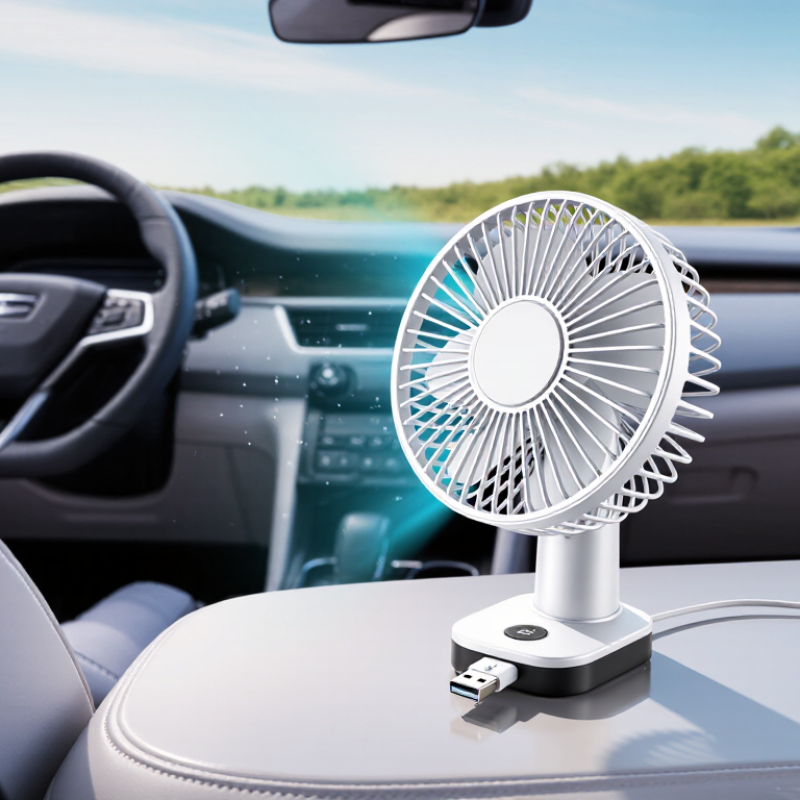
USB Car Fan: Definition and Main Purpose
What Is a USB Car Fan and How Does It Work?
USB Car Fan: Definition and Main Purpose
A USB car fan is a compact electric fan powered through a vehicle’s USB port. Its main purpose is to move air inside the cabin. It does not create cold air like an air conditioner. Instead, it circulates existing air across your skin, helping reduce the feeling of heat.
The device usually contains a small motor, fan blades, a protective grille, and a USB cable. When connected to a suitable 5-volt USB port, electrical current reaches the motor. The motor spins the blades, which push air forward. Adjustable models may allow changes in direction or speed. The airflow often feels stronger near the face, hands, or steering wheel.
A USB car fan can improve comfort during short trips, while parked ventilation, or when the vehicle’s airflow feels uneven. It may also help reduce stale air, but it cannot replace proper ventilation. Keep the fan clear of loose clothing, papers, and other objects. A blocked grille can restrict airflow and strain the motor.
It is easy to overestimate its cooling power. The air may feel refreshing, yet the cabin temperature might barely change. I would also check the USB port’s output before use, because some older ports provide limited power. Secure placement matters too. A moving fan should not obstruct the driver’s view or interfere with vehicle controls.
Key Components and Their Functions
What Is a USB Car Fan and How Does It Work?
A USB car fan is a compact air-moving device powered through a vehicle’s USB port. It does not create cooler air like an air conditioner. Instead, it circulates cabin air across your skin, which can make you feel more comfortable. The fan usually operates on low-voltage direct current, commonly supplied at 5 volts.
The motor is the working core. Electrical power reaches its coils, creating magnetic force that turns the motor shaft. The shaft rotates the blades, while the blade angle pushes air forward. A protective grille surrounds the blades and helps reduce contact with moving parts. Many models include a speed switch or button, allowing the motor to receive different power levels. The USB cable carries electricity, but it is not merely an accessory. A loose connection can cause intermittent operation or weak airflow.
Very practical.
A flexible neck or rotating base directs airflow toward the driver or passengers. A stable clamp matters because vibration can slowly change the fan’s position. During use, dust gathers around the grille and blades, restricting airflow and increasing motor strain. Cleaning with a dry, soft brush is usually safer than using liquid near electrical parts.
In my experience, airflow often feels weaker in a large cabin than expected.
That is a limitation worth accepting.
The fan improves circulation, but it cannot replace proper ventilation or a functioning vehicle cooling system. It should also remain clear of pedals, controls, and the driver’s view.
How a USB Car Fan Produces Airflow
A USB car fan is a compact ventilation device powered through a vehicle’s USB port. It uses low-voltage electricity to run a small motor inside its housing. The motor turns the fan blades around a central shaft. As the blades rotate, their angled surfaces push nearby air forward. This creates a steady stream that passengers can feel across the face or neck.
The airflow begins at the rear grille, where the blades draw cabin air inward. Air then moves through the spinning blades and exits through the front grille. The blade angle, motor speed, and grille shape all affect the final air volume. A higher speed usually produces stronger airflow, but it also creates more noise and uses more power. Small fans work well near one passenger. They may feel weak in a large vehicle.
In practical use, I notice the airflow changes when the fan sits against a seat or dashboard. Obstructions reduce the air reaching the blades. Keeping the intake and outlet clear makes a noticeable difference. The fan does not create cold air by itself. It mainly improves circulation and helps sweat evaporate from the skin. That distinction matters. A USB fan can support the vehicle’s air conditioning, but it cannot replace a cooling system. Performance also varies with the USB port’s power output, so some fans may run slowly in older vehicles.
How a USB Car Fan Produces Airflow
A USB car fan uses the USB supply to power a small DC motor. The motor turns the blades, which create a pressure difference and move air through the fan guard. This chart shows the ideal electrical input power available at a 5-volt USB connection, calculated from Power = Voltage × Current. Actual airflow depends on blade design, motor efficiency, and airflow resistance.
Power Supply, Controls, and Installation
A USB car fan is a compact ventilation device powered through a vehicle’s USB port. Its motor converts electrical energy into rotating airflow. Most models use a small brushless or brushed DC motor, a protective grille, and adjustable blades. The USB-IF USB 2.0 specification lists 5 volts and up to 500 milliamps, providing about 2.5 watts. USB 3.x ports can provide more current, while USB Power Delivery 3.1 supports much higher power levels. A fan may not use that capability. Its circuit must negotiate power correctly.
Controls usually include one speed button, a rotary dial, or several preset levels. Some fans also offer oscillation and adjustable tilt. Installation is simple: connect the cable, position the fan, and secure it firmly. I once treated cable length as a minor detail. It was not. A loose cable can touch pedals, block storage areas, or create distracting vibration. Power should come from a stable port, not a damaged adapter or overloaded splitter.
Tips: Check the fan’s rated input before connecting it. Confirm the vehicle port’s output in the owner’s manual. Clean dust from the grille monthly. Test the airflow while parked. High speed feels useful, but it can produce noticeable noise and drain accessory power. A practical setup leaves the driver’s view clear, keeps wiring short, and allows quick removal. Airflow also depends on cabin temperature, window position, and fan angle, so published performance numbers may not match real driving conditions.