Top Plating Current Rectifiers at Canton Fair 2026 Guide?
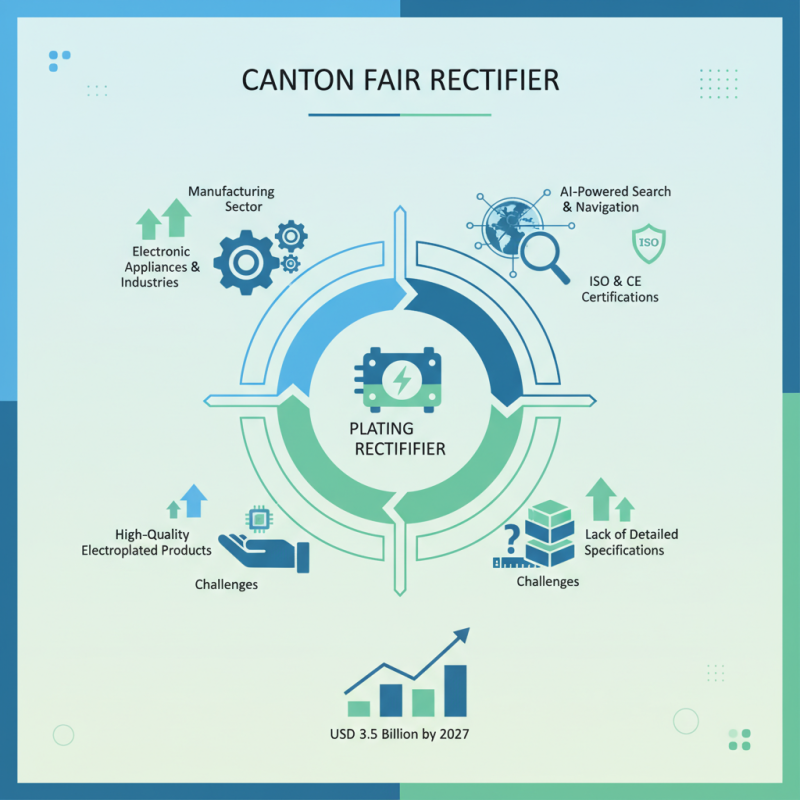
As the Canton Fair 2026 approaches, the spotlight turns to innovative solutions in the manufacturing sector. Among these crucial technologies is the Plating Current Rectifier, a pivotal component for electroplating processes. With the increasing demand for high-quality electroplated products, the global rectifier market is projected to reach USD 3.5 billion by 2027, driven by advancements in electronic appliances and automotive industries.
The introduction of AI-powered search and navigation at this year's fair will facilitate efficient supplier discovery. Buyers can easily identify manufacturers with key certifications like ISO and CE. This technological leap enhances the efficiency of moving within the expansive 1.55 million square meters of exhibition space. However, even with such innovations, challenges remain. Many suppliers often lack detailed specifications in their offerings, leaving gaps in understanding product capabilities.
Attendees at the event should pay close attention to the features and applications of Plating Current Rectifiers. While the technology has evolved significantly, some rectifiers still struggle with efficiency and scalability. As the industry grows, continuous innovation and quality assurance are vital for sustainable progress in electroplating solutions.
Overview of Plating Current Rectifiers and Their Significance
Plating current rectifiers play a crucial role in industrial processes. They convert alternating current (AC) to direct current (DC), making them essential for electroplating. Without these rectifiers, achieving consistent and high-quality plating would be a challenge.
Many manufacturers rely heavily on plating current rectifiers. These devices ensure stable voltage and current, which directly affects the quality of the plated surface. Factors like temperature and load can influence their performance. Users often face difficulties finding the right specifications for their needs. This sometimes leads to inefficient operations and wasted resources.
Moreover, improper installation or maintenance of these rectifiers can cause failures. Users may overlook critical details, leading to performance issues. Regular inspections and adaptations are vital. A more thorough understanding of these devices is needed among users to maximize their advantages in electroplating. This knowledge gap can result in missed opportunities for enhanced efficiency and cost-effectiveness.
Key Features to Look for in Plating Current Rectifiers
When searching for plating current rectifiers, key features play a vital role. Efficiency is crucial. Look for rectifiers with at least 90% efficiency ratings. This reduces energy costs and increases production output.
Another important aspect is the operating voltage range. A broader range allows for more versatility across various applications. Models should manage from low to high voltages seamlessly. This flexibility can contribute to smoother operations in different environments.
Discerning users often emphasize current load capacity. Choosing rectifiers that can handle at least 100A is standard for robust applications. However, ensure heat management is also accounted for. Overheating can lead to failures and downtime. Regularly monitoring temperature can prevent expensive maintenance.
Finally, check safety features. Advanced overload protection and short-circuit prevention are essential. These prevent damage that can halt production and incur losses. Industry reports indicate that rectifier failures can lead to up to a 15% decrease in operational efficiency. Hence, selecting the right features is critical for longevity and effectiveness in plating processes.
Top Manufacturers and Suppliers at Canton Fair 2026
At the Canton Fair 2026, a wide range of manufacturers and suppliers will showcase their top plating current rectifiers. These devices play a crucial role in various applications, ensuring that electrical currents are efficiently converted. It's important to understand the features and specifications that different suppliers offer.
When searching for a reliable supplier, pay attention to certifications. Not all manufacturers have the same quality standards. Visit their booth and ask for product demonstrations. Seeing the technology in action can help you gauge its reliability. While many suppliers promise high-quality, not all can deliver consistently.
Tip: Collect brochures and take notes. A simple checklist can keep you organized. Also, don't hesitate to ask questions. Suppliers appreciate engaged visitors. However, some may not provide clear answers. This can be a red flag. Don't overlook your instincts. Do thorough research after the fair. Many suppliers may not have a strong online presence. This can make follow-up difficult, so ensure you have all needed contact information handy.
Top Plating Current Rectifiers at Canton Fair 2026 Guide
| Manufacturer | Model | Voltage Rating (V) | Current Rating (A) | Efficiency (%) | Price (USD) |
| Manufacturer A | Model X1 | 400 | 200 | 98 | 500 |
| Manufacturer B | Model Y2 | 600 | 150 | 95 | 450 |
| Manufacturer C | Model Z3 | 500 | 250 | 90 | 550 |
| Manufacturer D | Model A4 | 650 | 180 | 92 | 475 |
Comparative Analysis of Popular Rectifiers at the Fair
The Canton Fair in 2026 showcases various current rectifiers. These devices are critical in converting alternating current to direct current. A wide range of models are presented, each with distinct features and specifications. Visitors can observe the differences firsthand. From size to efficiency, the options are diverse. Many models boast innovative cooling systems and compact designs. However, not all designs are user-friendly. Some require in-depth technical knowledge for optimal setup.
When comparing popular rectifiers at the fair, we notice variations in performance metrics. The key specifications include input voltage, output stability, and thermal management. Some rectifiers perform exceptionally well under heavy loads. Others struggle with heat dissipation, which can lead to performance degradation. While aesthetics are appealing, functionality should always take precedence. It's essential for prospective buyers to weigh these factors carefully.
Exhibitors often focus on unique selling points. Yet, the practical usability of each rectifier can vary significantly. Some products look robust but may falter in real-world applications. Attendees should ask probing questions and seek demonstrations. Assessing a rectifier's reliability requires hands-on experience. With so many options available, making an informed choice is crucial.
Future Trends in Plating Current Rectifier Technology
The future of plating current rectifier technology is evolving rapidly. Emerging trends indicate a shift toward higher efficiency and sustainability. Many manufacturers are now focusing on reducing energy losses during the conversion process. This addresses both environmental concerns and operating costs.
Next-generation rectifiers are integrating smart technology. They provide real-time monitoring and data analytics, improving performance. Users can adjust settings remotely for optimal operation. This kind of innovation enhances flexibility in various applications. However, not all companies are adapting quickly to these trends. Some still rely on outdated technologies, risking competitiveness.
Additionally, the move toward eco-friendly materials is gaining traction. New designs utilize sustainable components that minimize ecological impact. While this is a positive step, challenges remain. Developing these materials often comes at a higher cost. Companies must balance performance with affordability. This may lead to difficult choices in the near future.
Top Plating Current Rectifiers Demand Trend (2019-2026)
This bar chart illustrates the projected demand for plating current rectifiers from 2019 to 2026. The upward trend indicates a significant growth in the market as industries increasingly adopt advanced plating technologies.