Top Deep Hole Honing Machine Manufacturers

Deep Hole Honing machines serve industries where a bore must be straight, smooth, and dimensionally consistent. A hydraulic cylinder barrel offers a clear example: tool marks, taper, or uneven cross-hatching can affect sealing and wear. Buyers comparing manufacturers should look beyond spindle power. Bore diameter range, stroke length, stone control, workholding, automation, and service support all matter. Fit matters. So does repeatability.

The market context is broader than honing alone. MarketsandMarkets’ 2021 Machine Tools Market report projected growth from USD 77.4 billion in 2020 to USD 113.4 billion by 2026, a forecast rather than a current measured result. That figure covers machine tools broadly, not deep-hole honing machines specifically. It still signals why precision equipment attracts investment. For technical grounding, Serope Kalpakjian’s manufacturing texts describe honing as an abrasive finishing process that improves bore accuracy and surface quality. This is a paraphrase, not a verbatim quotation.

This guide introduces leading Deep Hole Honing machine manufacturers and the details that separate a capable system from a suitable one. Compare published capacity with your actual parts. Ask for sample-bore results, tolerance records, and clear maintenance requirements. A polished brochure cannot prove performance. Nor can one successful demonstration guarantee production stability. Supplier claims deserve careful review. The strongest shortlist connects machine specifications to measurable results, operator needs, and long-term support. Small details count.
Top Deep Hole Honing Machine Manufacturers

Understanding Deep Hole Honing Machines and Their Applications

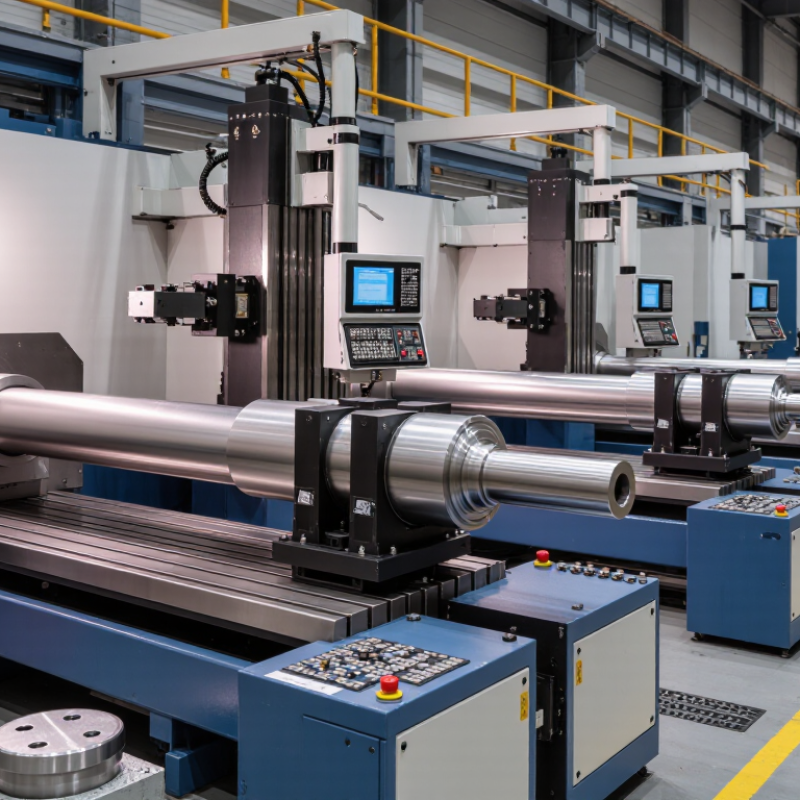
Deep-hole honing corrects bore geometry while creating a controlled crosshatch finish. A honing head expands abrasive stones against the bore wall as it rotates and reciprocates. In practice, operators watch coolant flow, stone wear, and bore temperature; small changes can affect roundness and surface finish. The process is used for hydraulic cylinders, fuel-system components, and long engine or transmission bores. It can improve oil retention, but it cannot compensate for poor alignment or a damaged starting bore.

Machine selection depends on bore diameter, length, material, and required tolerance. A horizontal setup often supports long, heavy workpieces, while vertical machines can suit shorter parts and limited floor space. Grand View Research valued the global machine-tools market at USD 96.5 billion in 2023 and projected 6.2% annual growth from 2024 to 2030. This is broad market context, not a deep-hole honing forecast. Fortune Business Insights also tracks machine tools as a major manufacturing segment, though its market boundaries differ. That distinction matters.

For buyers, useful specifications include maximum honing depth, spindle speed, stroke control, filtration capacity, and measurement method. Ask how the machine maintains alignment across the full bore, not just at the entrance. A trial run with the actual workpiece can reveal taper, chatter, or uneven crosshatch patterns. Reports rarely capture these shop-floor details. And they matter.
How to Evaluate Deep Hole Honing Machine Manufacturers

Top Deep Hole Honing Machine Manufacturers

How to Evaluate Deep Hole Honing Machine Manufacturers

A reliable evaluation starts with your actual bore, not a catalogue promise. Share the workpiece material, diameter, depth, required straightness, roundness, and surface finish. Then ask the manufacturer to hone a representative part under documented conditions. Measure the result independently. ISO 230-2:2014 describes tests for positioning accuracy and repeatability of numerically controlled machine axes; it can inform acceptance checks, but it does not certify honing quality.

Inspect the machine’s structure, spindle stability, honing-head compatibility, coolant filtration, and measurement process. Request repeat runs, not a single polished sample. Compare cycle time and tool wear across parts. Small details matter: a temperature change or worn abrasive can shift results. Service access matters too. The 2024 Deloitte and Manufacturing Institute talent study estimates that U.S. manufacturing may need 3.8 million workers by 2033, with 1.9 million roles potentially unfilled. That is not a honing-machine forecast, but it makes training and clear maintenance support practical selection criteria.

Tips: Bring a difficult part to the trial. Ask for recorded measurements, setup notes, and a written acceptance plan. Check what happens when results drift. No test covers every shift; that limitation deserves an honest discussion.

Leading Manufacturers and Their Areas of Specialization

Deep-hole honing machine manufacturers usually differ in the work they are built to handle. Some focus on horizontal machines for long hydraulic cylinders and heavy workpieces. Others specialize in vertical systems that save floor space and support shorter, rigid components. Production-focused manufacturers may offer multi-spindle layouts, automatic loading, and in-process gauging. These features can reduce handling, but only when they match the part mix and required bore finish.

Custom machine builders often concentrate on unusual bore diameters, deep length-to-diameter ratios, or integration with existing production lines. Their expertise may include abrasive-stone expansion, coolant filtration, and bore measurement. Ask manufacturers for trial results using parts similar to yours, including roundness, surface finish, and cycle time. Check how easily operators can change tooling and maintain the filtration system. A polished demonstration is useful, but real production data matters more. Even experienced buyers can overvalue automation before confirming setup needs.

Tips: Share a sample part drawing and material details before comparing quotations. Clarify tolerance, bore length, and expected annual volume. Ask who handles installation and operator training. Small details count. A machine that meets the target on paper may still need careful process tuning on the shop floor.

Top Deep Hole Honing Machine Manufacturers: Areas of Specialization

Deep-hole honing is used across these application areas. Each bar represents one representative application, not a manufacturer count, market share, or ranking; machine capabilities vary by model.

Comparing Machine Features, Precision, and Support

A deep hole honing machine should be judged by how it controls the bore, not by a headline accuracy figure. Compare its usable diameter range, stroke control, spindle speed, and stone expansion under load. Ask for repeatability data across several parts, not just one polished sample. Check coolant filtration too: fine abrasive particles can mark a bore and distort results. Small details matter.

ISO 1:2022 specifies 20 °C as the standard reference temperature for dimensional measurements, so thermal control matters when checking tight tolerances. Request a trial using your material, bore length, and target finish. Then inspect roundness, straightness, and surface texture with agreed measurement methods. For support, compare commissioning, operator training, tooling availability, and realistic parts lead times. The 2024 Deloitte and Manufacturing Institute talent study estimates that U.S. manufacturing may need 3.8 million workers by 2033, with 1.9 million jobs potentially unfilled. That makes clear training and responsive service practical selection criteria, not extras. Still, a supplier’s service promise can look better on paper than it feels during a production stoppage. Ask who answers technical calls, and how quickly common wear parts ship.

Choosing a Manufacturer for Your Production Requirements

Choosing a deep hole honing machine manufacturer starts with the bore, not the brochure. Specify diameter, depth, material, straightness, roundness, surface finish, and daily volume. A 1.2-meter steel tube and a short aluminum sleeve demand different tooling and process control. Ask manufacturers to demonstrate your actual workpiece, using your coolant and target tolerances. Ask for measured results, not just a polished sample. Numbers matter.

Check how the machine handles setup changes, tool wear, and production records. Deloitte and MAPI’s 2024 Smart Manufacturing Survey found that 92% of manufacturers saw smart manufacturing as a competitiveness driver over the next three years. That supports asking about diagnostics and data access, but connectivity alone cannot prove honing quality. Request a cycle-time breakdown, repeatability results, operator training, and a written spare-parts plan. Ask who responds when a spindle alarm stops a night shift. Small detail. It matters.

Compare acceptance tests under realistic conditions, including multiple parts and routine tool adjustments. Confirm what happens if results drift after installation. A supplier may offer impressive specifications, yet leave commissioning assumptions unclear; make those assumptions visible in the quotation. I would not choose on price alone, though production teams sometimes must. Record the trade-offs: footprint, service response, tooling cost, and expected output. That record can be imperfect, but it makes the decision easier to review.

Top Deep Hole Honing Machine Manufacturers - Choosing a Manufacturer for Your Production Requirements

Selection guide: The figures below are indicative screening ranges for machine configurations available in the market, not specifications for any individual manufacturer. Confirm capability against the proposed machine model, workpiece, tooling, and acceptance test.

Evaluation Dimension Indicative Capability or Benchmark Best Fit for Production What to Confirm with the Manufacturer
Honing diameter Compact configurations may cover bores around 20–100 mm; general-purpose machines often cover a wider range, while large-bore work can require dedicated equipment above 500 mm. Choose a machine whose usable diameter range covers both current parts and planned product variants. Minimum and maximum bore diameter by tooling setup; changeover requirements; and whether the quoted range applies to the full honing length.
Honing length and stroke Machine configurations range from short-stroke equipment for parts of a few metres to extended-stroke or custom machines for longer bores. Suitable for hydraulic cylinders, tubes, and other long-bore parts when the machine provides sufficient stroke and workpiece clearance. Maximum usable stroke, workpiece length, loading space, and support arrangement for long or slender parts.
Surface finish Honing is commonly used to produce fine finishes; Ra targets around 0.2–0.8 μm are a useful initial discussion range, depending on material, abrasive, and process conditions. Applications requiring a controlled surface texture or a crosshatch pattern, including many cylinder and precision-bore applications. Run a representative workpiece trial and agree how Ra, measurement location, and surface-texture requirements will be measured.
Bore geometry and size control Roundness, cylindricity, straightness, and diameter capability depend on the machine, tooling, workpiece, and process setup; there is no single reliable value for all applications. Precision production where bore consistency and documented inspection results are required. Request a sample-part report showing the agreed geometry and diameter measurements, inspection method, and results over the full bore length.
Workpiece capacity Capacity varies substantially across machine sizes. Maximum workpiece mass and support requirements should be checked for the complete part and fixture. Heavy tubes, long components, or production cells with frequent part loading. Maximum part weight, support spacing, clamping method, loading height, and any limits on part length or overhang.
Process control Options may include programmable stroke and feed, stored recipes, process monitoring, and automated size measurement, depending on the machine configuration. Repeat production runs, multiple part families, or processes requiring traceable settings. Which controls are included, what data can be recorded, and whether settings can be saved and recalled by part number.
Automation and changeover Available arrangements range from manual loading to assisted handling and integrated automation; automation is generally application-specific. Higher-volume production or operations where loading time and operator availability constrain output. Demonstrate changeover steps, tooling-change time, interface requirements, and compatibility with existing material handling.
Tooling and consumables Tool and abrasive selection depends on bore size, material, stock removal, finish target, and production volume. Operations with varied materials or part families that require stable process results. Tooling availability, recommended consumables, expected service intervals, and the cost of a complete production setup.
Installation and support Commissioning needs depend on machine size and configuration; installation may require suitable foundations, power, coolant handling, and operator training. Facilities introducing a new process or installing large or customized equipment. Site requirements, commissioning scope, training, spare-parts lead times, service response arrangements, and warranty terms.
Acceptance testing A documented factory or site acceptance test can verify performance against agreed workpiece and process criteria. Capital purchases where output quality, repeatability, or production readiness must be demonstrated before sign-off. Agree the test part, material, cycle conditions, sample quantity, measurement method, and pass/fail criteria before placing the order.

Request a Quote/Further Information

    Download