Top Exterior Cladding Materials for Buildings
Exterior Cladding does more than give a building its visible character. It helps manage rain, wind, heat, and everyday wear. A wall in a wet coastal town faces different demands from one under dry, intense sun. The right material depends on climate, structure, budget, installation quality, and maintenance capacity. Looks matter, of course. But performance is less visible.
The stakes extend beyond appearance. The UN Environment Programme’s Global Status Report for Buildings and Construction 2024/25 estimates that buildings and construction accounted for 32% of global energy demand and 34% of energy-related carbon dioxide emissions in 2023. Cladding alone cannot solve those challenges. Yet its insulation, durability, and repair needs can influence a building’s long-term performance. Building scientist Joseph Lstiburek is often quoted as saying, “All buildings leak; the only question is where and how much.” That warning makes sound detailing essential, even when the finish looks flawless.
This guide examines common options, including brick, fiber cement, metal, timber, stone, and high-pressure laminate. Each brings trade-offs in cost, fire performance, weight, weather resistance, and upkeep. A material that works beautifully on one project may disappoint on another. No finish is maintenance-free. Selection should therefore consider the complete wall assembly, not just a sample board or showroom image. Where available, consult product testing, installation guidance, and qualified façade professionals. The comparisons that follow aim to make those decisions clearer, while recognizing that no single cladding solution fits every building.
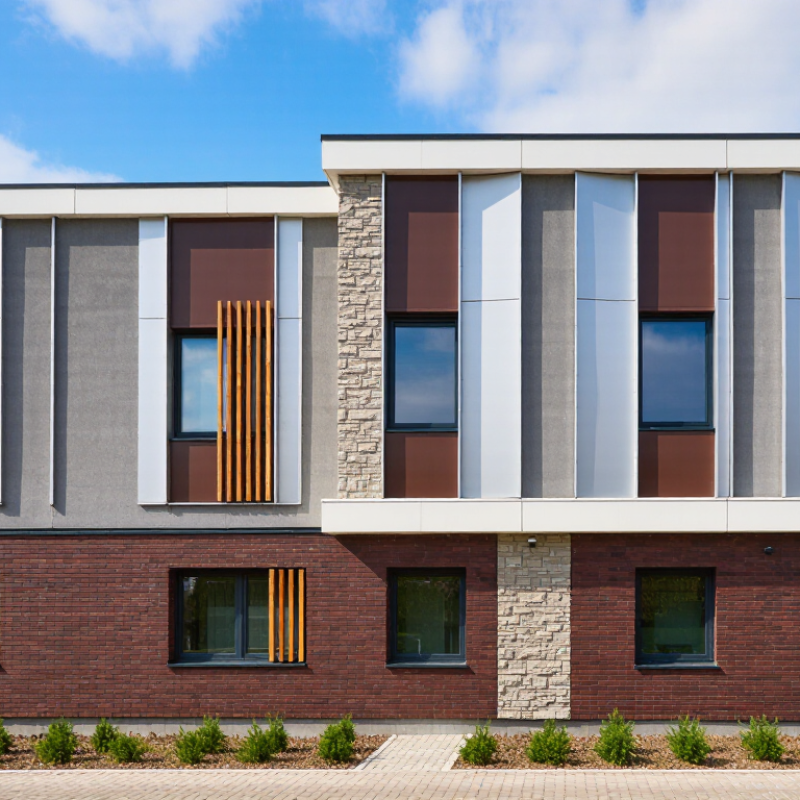
What Exterior Cladding Is and How It Protects Buildings
Exterior cladding is the outer layer attached to a building’s walls. It may use timber, metal, brick, fiber cement, or other materials. Cladding gives the facade its visible finish, but it also helps shield the wall assembly from rain, wind, sunlight, and everyday knocks. Not a waterproof guarantee.
A well-designed cladding system manages water rather than pretending water will never get in. Rain can pass through joints or openings, so drainage gaps and flashing help guide it back outside. Ventilation behind panels can help damp surfaces dry. Small details matter: a blocked gap near the base can trap water. Easy to miss.
Cladding can also reduce direct heat and ultraviolet exposure, while contributing to sound control and insulation when paired with suitable layers. The wall beneath still needs proper air and water barriers, sealed transitions, and careful installation around windows, roof edges, and service openings. Material choice affects maintenance, fire performance, weight, and repairs, so climate and building design should guide selection. A beautiful panel cannot fix a poorly detailed wall. No system stays maintenance-free; inspect joints and coatings over time.
Top Exterior Cladding Materials for Buildings
Exterior cladding is the outer layer of a building. It helps shield the structure from rain, wind, sunlight, and physical wear; its performance depends on the complete wall system, installation, climate, and maintenance.
Bars show indicative midpoints of broad typical service-life estimates, not guaranteed lifespans: vinyl siding 20–40 years; wood siding 20–40; fiber-cement siding 30–50; metal siding 40–70; brick veneer 50–100+; natural stone 75–100+. Actual service life varies with product, detailing, exposure, installation, and upkeep.
Major Types of Exterior Cladding Materials
Exterior cladding protects a building while shaping its appearance. Wood siding offers a warm, natural surface, but it needs regular inspection for peeling finishes, moisture, and insect damage. Vinyl is lightweight and requires little upkeep. However, heat can make some products expand, so installation clearances matter. Small details count.
Fiber cement combines a painted finish with resistance to rot and many common pests. It is heavier than vinyl and must be cut and installed carefully to control dust. Brick and stone masonry can last for decades, but their weight may require structural support. Mortar joints also need attention as they weather.
Metal panels create crisp lines and shed rain quickly when seams and flashings are designed well. Stucco suits smooth, continuous façades, yet cracks can let water reach the layers behind it. No material is perfect. Climate, wall design, workmanship, and maintenance all affect performance. A ventilated drainage space behind cladding can help manage incidental moisture, though its details vary by system. Samples viewed outdoors often look different from those under showroom lighting.
How Cladding Materials Differ in Performance and Durability
Exterior cladding does more than set a building’s appearance. It faces rain, sunlight, wind, and daily temperature changes. The right material depends on local weather, wall design, and maintenance plans. Details matter.
Brick and stone masonry can withstand impact and weather for decades when properly supported and drained. Their weight requires a suitable structure, and repairs can be difficult to match. Fiber-cement panels are lighter and resist rot, but cut edges and joints need careful sealing. Metal cladding handles rain well when coatings and fixings remain intact. Scratches or trapped moisture can still lead to corrosion. Timber brings warmth, though exposed boards may need regular coating and close attention around joints.
Performance is not only about the surface. A drained cavity behind cladding helps water escape, while sound flashing protects openings such as windows. Poor installation can shorten the life of even durable materials. That part gets overlooked. In coastal areas, salt exposure may affect metal finishes; in wet climates, slow-drying assemblies can encourage decay. Compare expected maintenance, repair access, and local installer experience—not just initial cost. There is no perfect choice. The best system is one suited to the building and checked over time.
Factors to Consider When Choosing Exterior Cladding
Exterior cladding does more than shape a building’s appearance. It must suit the local climate, wall structure, and maintenance capacity. In wet regions, trapped moisture can damage sheathing behind timber, fiber cement, or metal panels. Good drainage and a ventilated cavity help the wall dry. In sunny locations, consider fading and heat gain. Small details matter.
Compare materials by their full performance, not just the sample on display. Brick and stone can last for decades, but their weight may require stronger support. Lightweight panels can simplify installation, though joints need careful sealing against wind-driven rain. Check fire performance, insulation needs, repair options, and expected upkeep. A low purchase price may hide higher maintenance costs. This is easy to overlook.
Tips: Ask for samples and view them outdoors, where color and texture change in natural light. Confirm that installers understand the chosen system and its flashing details. Request a written maintenance schedule. Measure twice. Also consider future repairs: a finish that is difficult to match can make a small damaged area surprisingly noticeable. I would not choose on appearance alone; that preference can age badly.