Top 10 Drain Cleaning Machines for Global Buyers

Choosing the right Drain Cleaning Machine can shape service quality, operating costs, and customer trust. Global buyers face many options, from compact electric augers to heavy-duty sectional machines and high-pressure water jetters. Each design suits different pipe diameters, blockage types, workspaces, and local power conditions.

Industry trainer Steve Allred offers a practical reminder: “The best machine is the one your crew can control safely, every time.” That principle matters in real jobs. A narrow bathroom line may need a lightweight drum machine. A long commercial drain may demand stronger torque, longer cable reach, and better debris control. Voltage compatibility also deserves attention, especially for buyers importing equipment across regions.

This guide examines ten leading machines for international purchasers. It compares cleaning capacity, cable systems, motor performance, portability, safety features, maintenance needs, and value over time. It also considers spare-part availability and technical support, which can become decisive after a breakdown.

No machine wins every job.

That is easy to forget.

A low-cost model may appear attractive, yet weak components can increase downtime. A powerful unit may perform impressively, but become difficult to transport or control. Buyers should match equipment with actual workloads, operator experience, pipe conditions, and service environments. Product claims should be tested against manuals, warranties, certifications, and credible user feedback. Some rankings remain debatable because performance changes across regions and applications. This comparison therefore aims to guide careful decisions, not replace field testing or professional judgment.
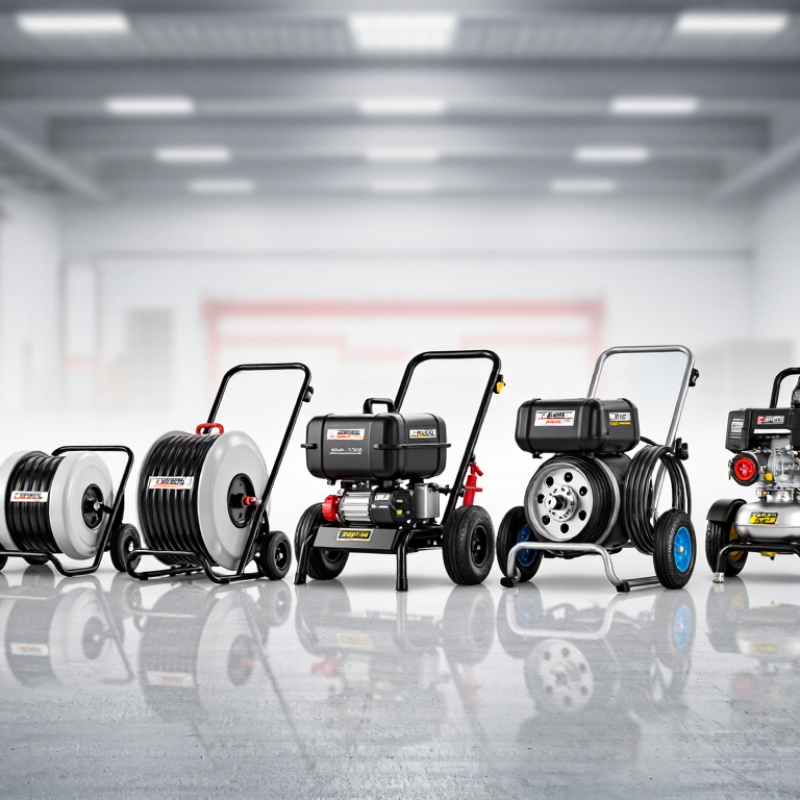
Top 10 Drain Cleaning Machines for Global Buyers

Drain Cleaning Machine Types and Their Main Applications

Top 10 Drain Cleaning Machines for Global Buyers

Drain Cleaning Machine Types and Their Main Applications

Drain cleaning machines differ by pipe diameter, blockage severity, and working environment. Compact hand-crank machines suit household sinks, floor drains, and short indoor lines. Electric drum machines handle longer runs through kitchens, hotels, and commercial buildings. Sectional cable machines provide stronger torque for repeated maintenance in larger service pipes.

Water jetters use pressurized water to remove grease, sludge, and mineral deposits. Small jetters work well in residential drains, while trailer-mounted units serve industrial sites and municipal networks. Vacuum combination machines remove loosened debris and standing water, especially after heavy blockage or flooding. Root-cutting heads, chain knockers, and flexible shaft systems add specialized cleaning options.

Application matters more than headline power. A narrow pipe may need a compact cable, not a high-flow jetter. The U.S. EPA’s 2022 Clean Watersheds Needs Survey identified about $630.1 billion in wastewater infrastructure needs through 2041, highlighting the scale of maintenance demand. WHO and UNICEF reported in 2023 that 3.5 billion people lacked safely managed sanitation services, although this figure does not measure machine demand directly.

A ranking can mislead.

Buyers should check cable reach, nozzle compatibility, pressure control, noise, transport weight, and operator training. In practice, corrosion resistance and easy cleaning often matter more than maximum torque. I have found that machine selection becomes clearer after recording pipe material, diameter, access points, and blockage history. Even then, the first choice may be wrong. Field conditions change quickly.
Key Features to Compare When Choosing a Drain Cleaning Machine

When comparing the top 10 drain cleaning machines, look beyond motor power. The right choice depends on pipe size, blockage type, and working conditions. A compact drum machine may suit indoor maintenance, while a sectional machine can handle longer commercial lines. Cable diameter and working length must match the pipe without forcing the equipment.

Power matters. Variable speed control helps operators adjust pressure near fragile pipes. A reliable reverse function can release a stuck cable quickly. Automatic cable feed reduces hand strain, but it requires careful adjustment.

Safety features should include overload protection, stable wheels, insulated controls, and suitable electrical protection. Global buyers should also check voltage, frequency, plug design, and local compliance requirements.

Maintenance details often decide long-term value. Choose machines with replaceable cables, accessible drive parts, and clear service instructions. Stainless or corrosion-resistant components help in wet environments, though they do not remove the need for cleaning and drying. Noise level and total weight also matter when carrying equipment through narrow buildings. Safety comes first.

In field work, operators often underestimate transport space. Measure doors, stairways, and service vehicles before ordering. A powerful machine that stays in storage is not a practical investment. I would also compare warranty response and spare-part availability, not just the purchase price. Some specifications look impressive, but real performance depends on training, cable selection, and disciplined operation. That detail matters.

Top 10 Drain Cleaning Machines for Global Buyers

Top 10 Drain Cleaning Machines for Global Buyers

Choosing among the top 10 drain cleaning machines requires more than comparing motor power. Global buyers should examine drum machines, sectional cleaners, compact electric units, water jetters, trailer jetters, and vacuum-assisted systems. Each type suits different pipe diameters, blockage materials, and working environments. Cable diameter, cleaning reach, torque control, and transport weight matter greatly on real jobs. A machine that looks powerful may become awkward in a narrow service corridor.

The U.S. Environmental Protection Agency’s 2022 Clean Watersheds Needs Survey estimates 630.1 billion dollars in wastewater infrastructure needs over twenty years. The figure does not measure machine sales, but it shows the scale of maintenance demand. The EPA’s 2023 Drinking Water Infrastructure Needs Survey also identifies 625 billion dollars in needs through 2043. For international buyers, this supports investment in durable equipment, replaceable cables, sealed controls, and accessible spare parts. Still, performance claims need testing. Marketing numbers can be optimistic.

Tips: Match the machine to pipe size and blockage type. Choose adjustable speed for fragile lines. Confirm voltage, plug standards, noise limits, and local safety requirements before ordering. Ask for torque data, operating videos, and service documentation. In my experience, lighter equipment often gets used more frequently. Bigger is not always better. Cleaners should also use gloves, eye protection, ventilation, and lockout procedures. Some machines require training, and that detail is easy to underestimate.

Top 10 Drain Cleaning Machines for Global Buyers
Rank Machine Type Best Use Recommended Pipe Diameter Typical Cable or Hose Length Typical Cable or Hose Diameter Power Source Typical Operating Weight Key Performance Characteristics
1 Electric Drum Drain Cleaner Residential and light commercial blockages 32–100 mm 15–30 m cable 8–16 mm cable Single-phase electric motor, typically 0.4–1.1 kW 18–45 kg Enclosed rotating drum, easy transport, and good control for grease, hair, soap, and soft obstructions.
2 Sectional Drain Cleaning Machine Long indoor and commercial drainage lines 50–150 mm 15–30 m of sectional cable 16–32 mm cable Electric motor, typically 0.75–1.5 kW 45–95 kg Uses interchangeable cable sections, allowing long working distances and high torque on heavy stoppages.
3 Portable Water Jetting Machine Grease, sludge, and pipe-wall cleaning 40–150 mm 15–30 m hose 6–10 mm high-pressure hose Electric motor, typically 1.5–3.0 kW 25–70 kg Uses pressurized water rather than a rotating cable; effective for flushing deposits and restoring internal pipe flow.
4 Compact Handheld Drain Auger Sinks, basins, showers, and small branch lines 20–75 mm 7.5–15 m cable 6–10 mm cable Manual crank or compact battery drive 3–12 kg Lightweight and highly portable; suited to short-distance obstructions in small-diameter residential pipes.
5 Petrol-Driven Drum Cleaner Outdoor work where grid power is unavailable 50–150 mm 23–30 m cable 13–19 mm cable Small four-stroke petrol engine, typically 2–5 hp 45–90 kg Independent of mains electricity and suitable for yards, construction areas, and remote service locations.
6 Heavy-Duty Sectional Cable Machine Municipal, industrial, and large commercial drains 75–250 mm 30–60 m of sectional cable 22–32 mm cable Electric motor, typically 1.5–3.0 kW 80–160 kg High-torque drive and large cable capacity for deeply seated roots, scale, and compacted material.
7 Trailer-Mounted Water Jetter Large sewer lines, commercial sites, and continuous field work 75–300 mm 60–120 m hose 10–19 mm high-pressure hose Petrol or diesel engine, typically 13–35 hp 350–1,200 kg including trailer Large water tank, high flow rate, and long hose reach make it suitable for demanding outdoor cleaning operations.
8 Battery-Powered Drain Cleaner Indoor maintenance and locations with limited power access 32–100 mm 15–23 m cable 8–16 mm cable Rechargeable battery, commonly 18–36 V 15–35 kg Low setup time, reduced cable clutter, and quieter operation than many corded or engine-powered alternatives.
9 High-Pressure Sewer Jetter Professional descaling, root cutting, and pipe flushing 75–300 mm 30–90 m hose 8–16 mm high-pressure hose Petrol or diesel engine, typically 15–50 hp 120–500 kg High water pressure and flow can remove hardened deposits; nozzle selection must match pipe material and blockage type.
10 Vacuum-Assist Drain Cleaning System Standing water, debris recovery, and maintenance support 50–200 mm 5–15 m suction hose 38–75 mm suction hose Electric or petrol vacuum motor, typically 1.5–5.5 kW 20–100 kg Removes liquid and loose debris from access points; commonly used alongside cable machines or water jetters.
Typical specifications are representative operating ranges for commonly used machine categories. Actual performance depends on cable or hose selection, pipe material, blockage type, access conditions, power supply, and local safety requirements.

Safety, Maintenance, and Operating Requirements

Top 10 Drain Cleaning Machines for Global Buyers

Safety, Maintenance, and Operating Requirements

Drain cleaning machines vary widely in cable length, torque, pressure, and portability. Global buyers should match the machine to pipe diameter, blockage type, and available power. A compact unit may suit household drains, while larger systems require trained operators and controlled work areas.

Safety starts before activation. Inspect the cable, drum, guards, plugs, and switches for damage. Wear eye protection, waterproof gloves, non-slip boots, and close-fitting clothing. Keep hands away from rotating cables. Use residual-current protection where electrical standards require it. Never operate equipment near standing water without suitable protection. Ventilate enclosed spaces carefully.

Read the operating manual every time conditions change. Confirm the correct nozzle, rotation direction, and pressure setting. Start slowly and stop when resistance increases sharply. Forcing the cable can damage both the machine and the pipe. After use, clean and dry the cable, then check for kinks or corrosion. Lubricate moving parts according to the service schedule. Record inspections, repairs, and operator training.

I have seen rushed maintenance create bigger failures. A checklist helps, but it cannot replace judgment. Some pipe materials react poorly to aggressive tools. Test gently first. Make the work area visible, especially in shared buildings or busy streets. Replacement parts should meet the machine’s specifications, even when delivery delays make shortcuts tempting.

Global Purchasing Factors: Pricing, Standards, and After-Sales Support

Top 10 Drain Cleaning Machines for Global Buyers

Global purchasing starts with the delivered price, not the factory quotation. Grand View Research valued the global plumbing fixtures market at about USD 82.2 billion in 2023, showing strong infrastructure demand. However, drain cleaning machines still require careful cost checks. Buyers should compare machine price, shipping, import duties, spare cables, cutting heads, and operator training. A low quote can be correct—and still wrong.

Check compliance before comparing performance. ISO 12100 supports machinery risk assessment, while IEC 60204-1 addresses electrical equipment safety. IEC 60529 IP ratings also help buyers judge protection against water and dust. Local electrical certification may be required. A report from the International Trade Centre shows that technical requirements can influence market access and procurement costs. Ask for test records, manuals, wiring diagrams, and voltage options. Do not trust a certificate photo alone.

After-sales support often separates a useful machine from an expensive storage problem. Industry service studies repeatedly link faster response times with higher equipment availability, but published figures vary by sector. Request a written warranty, spare-parts list, repair lead time, and remote troubleshooting process. Test the support channel before ordering. A real reply matters.

Some buyers focus too heavily on maximum cable length. In daily work, transport weight, drum access, cleaning-tool compatibility, and blockage visibility may matter more. This is where purchasing plans can fail. The best machine is not always the strongest one; it is the one technicians can safely use, maintain, and repair in the target market.

Top 10 Drain Cleaning Machines for Global Buyers

Indicative global procurement price ranges before freight, taxes, tooling, and customization.

Pricing

Portable drum and manual machines normally have the lowest entry cost, while truck-mounted jetters and integrated inspection systems require substantially higher capital investment.

Standards

Global buyers should verify applicable electrical safety, electromagnetic compatibility, machinery safety, environmental, and market-access requirements such as CE, UKCA, UL or CSA, RoHS, and REACH.

After-Sales Support

Before purchase, confirm spare-cable availability, motor and pump warranties, repair documentation, operator training, response times, and local service coverage.

Price bands are indicative planning ranges compiled from commonly published international distributor and manufacturer listings. Actual quotations vary by capacity, accessories, certification, destination, and order volume.

Request a Quote/Further Information

    Download