Call us on: +44 (0) 1482 323163
Request a Quote
Choosing a Chicken House Cage is not simply a matter of comparing frame designs. It means matching bird numbers, available floor space, labor, ventilation, and farm goals. A small laying unit may prioritize efficient egg collection, while a larger operation may need reliable manure removal and easy inspection access. Details matter.
The main systems include conventional cages, enriched cages, colony-style cages, and cage-free housing such as floor or aviary systems. Each has trade-offs. Cage dimensions, perch access, nest areas, feeder space, and cleaning routines affect daily work and bird comfort. A label alone cannot tell you how well a house will perform. No system corrects weak management.
Poultry housing researcher Dr. Hongwei Xin studies housing environments and their effects on poultry. A fair paraphrase of the principle behind this work is: “Good housing decisions consider birds, air quality, and daily management together.” This is a paraphrase, not a verbatim quotation. The sections ahead compare common cage types, explain their practical features, and identify questions farm managers should ask before choosing. They also consider ventilation, stocking plans, maintenance, and welfare monitoring. These are not minor details. A promising design can still disappoint if drinker lines leak, air becomes stale, or inspections are rushed. The best choice depends on the farm’s conditions, and some trade-offs deserve a second look.
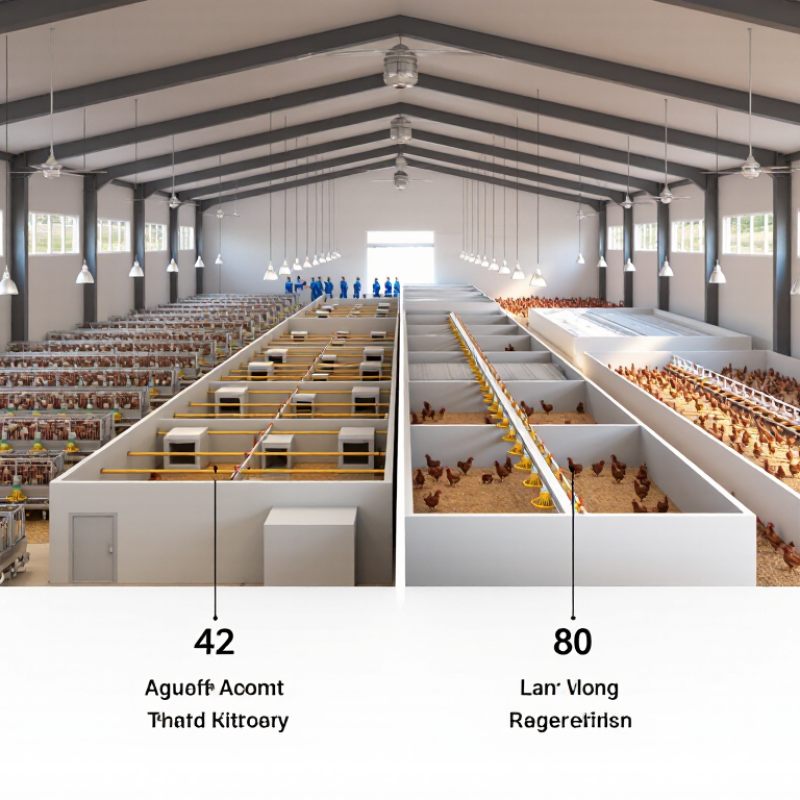
Poultry cage systems differ in space, equipment, and the way birds use the house. Conventional cages have a compact layout, with feeders and drinkers placed along the cage front. Their simple arrangement can make daily checks straightforward, but offers fewer opportunities for nesting, perching, and scratching. Small details matter. A blocked drinker or uneven feed line can affect an entire row.
Enriched systems add features such as nest areas, perches, and scratch zones. These give hens more ways to move and express natural behaviors, while requiring careful layout and maintenance. Colony systems house larger groups and often combine similar features in shared spaces. The term can cover different designs, so compare usable floor area, group size, nest access, and inspection routes rather than relying on the label alone. A crowded nest entrance can create avoidable competition.
Rearing designs are intended for pullets before they enter the laying phase. Perches, ramps, and tiered levels can help young birds learn to move through a multi-level house. Match the rearing setup to the later laying system where possible; otherwise, birds may need time to adapt. Check that staff can reach birds, remove manure, and spot wet litter during routine rounds. No layout is perfect. Airflow and daily care still shape the outcome.
| Cage type | Typical bird stage | Layout and features | Space and equipment benchmarks | Practical considerations |
|---|---|---|---|---|
| Conventional (unenriched) cage | Adult laying hens, where permitted | Small groups in wire enclosures, commonly arranged in rows or tiers. Feeders and drinkers are provided; nest boxes, perches, and litter areas are generally absent. | Space allowances depend on the applicable law. As a historical reference, the EU’s former conventional-cage minimum was 550 cm² of cage area per hen; conventional cages have been prohibited for laying hens in the EU since 2012. | Compact and straightforward to manage, but provides fewer opportunities for nesting, perching, dust bathing, and other natural behaviours. Legal status varies by country and region. |
| Enriched cage | Adult laying hens | Group cage with added facilities such as a nest area, perches, and litter or scratching area. Feed and water are accessible within the cage. | Under EU rules, each hen must have at least 750 cm² of cage area, including at least 600 cm² of usable area. The rules also specify a nest, litter, and at least 15 cm of perch per hen. | Includes more behavioural resources than a conventional cage. Requirements and permitted housing systems differ between jurisdictions; check current local standards. |
| Colony cage | Usually adult laying hens | A larger group enclosure, often designed with enriched features such as perches, nest areas, and litter space. The term commonly describes a larger-scale group cage rather than one universal technical specification. | Group size, usable area per bird, and equipment vary by design and local regulations. There is no single internationally uniform “colony cage” standard. | Larger groups can change flock management and inspection needs. Confirm the stocking density, equipment layout, and legal classification for the specific system. |
| Rearing cage | Growing pullets before transfer to the laying house | Designed for young birds, with age-appropriate feeding and drinking equipment. Depending on the system, it may include perches, platforms, or other structures to support movement and development. | Space allowances and required features depend on bird age, housing method, and local regulations. Pullets should be reared in a system that prepares them for the facilities and equipment they will encounter as layers. | Good transfer planning helps birds adapt to the laying environment. Monitor growth, uniformity, access to feed and water, and the condition of feet and feathers. |
Note: Cage terminology and legal requirements vary by jurisdiction. The EU figures shown are regulatory benchmarks, not universal recommendations; always verify current local animal-welfare and housing rules.

© Shipham Valves 2025. All Rights Reserved.
Website By PS Website Design Ltd
Request a Quote/Further Information
Download