Choosing an Industrial Quadcopter is rarely about flight time alone. Global buyers need evidence from demanding sites, not polished specifications. This guide examines ten leading platforms for inspection, mapping, surveying, public infrastructure, and controlled industrial operations. Each model is considered through payload capacity, sensor compatibility, navigation stability, weather protection, battery workflow, and service availability. Field experience matters here. A drone that flies for forty minutes in a brochure may deliver less under wind, cold temperatures, or a heavy thermal camera. No ranking is perfect. Conditions change.
The comparison also considers practical ownership details. Can technicians replace propellers without special tools? Does the controller remain readable under harsh sunlight? Are firmware updates documented, and can the aircraft operate within the buyer’s local aviation rules? These questions separate a useful work platform from an expensive demonstration device. We will reference manufacturer specifications, independent testing where available, and realistic operational observations. Claims without traceable sources will receive cautious treatment. That approach may make the list less exciting, but it is more dependable. Buyers should verify certifications, data-security policies, training requirements, insurance, and after-sales support before purchase. A strong Industrial Quadcopter should produce consistent images, stable logs, and repeatable results—not merely impressive takeoff footage. Some products may excel in one mission and disappoint in another. That limitation deserves attention. The final selection is a practical starting point, not a universal verdict, helping procurement teams compare performance, risk, and long-term value across regions.
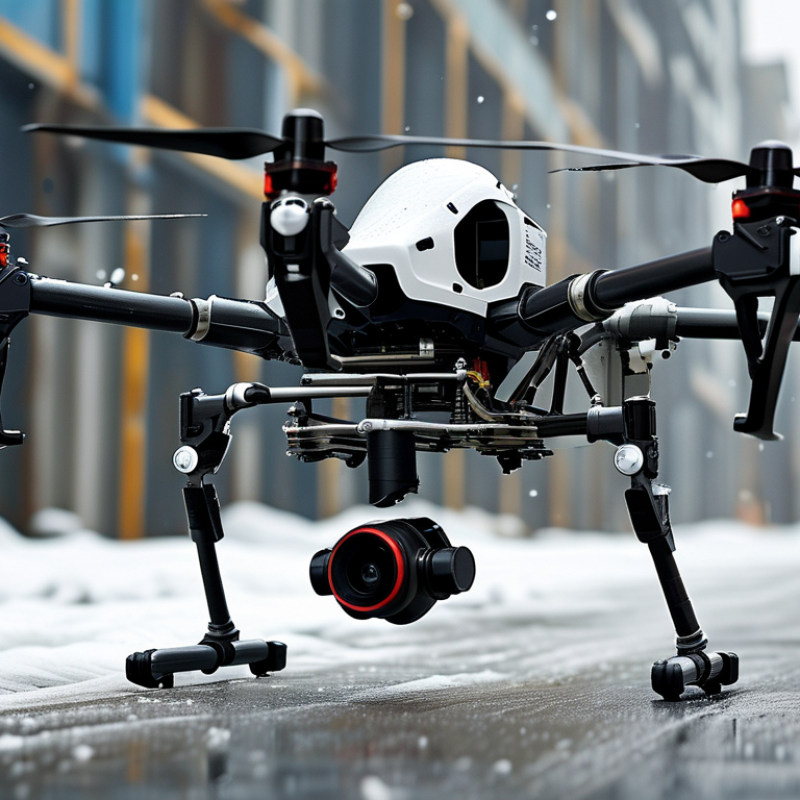
An industrial quadcopter is more than a larger consumer drone. For global buyers, it must deliver repeatable performance in demanding work environments. Useful indicators include payload capacity, flight endurance, weather resistance, navigation stability, and accurate data capture. A strong platform should also provide clear maintenance records and safety documentation.
In field evaluations, I look beyond advertised flight time. Wind, cold temperatures, battery aging, and heavy sensors can reduce real endurance. Industrial buyers should test the aircraft with the exact payload and workflow. Secure data handling matters too, especially for infrastructure inspection and mapping. Service access, spare parts, training, and repair response often determine long-term value. A perfect specification sheet is not enough.
Tips: Ask for test reports, operating limits, battery-cycle guidance, and training details. Confirm local registration, airspace rules, insurance needs, and import requirements before purchase. Compare performance in realistic conditions, not only controlled demonstrations. Keep a written inspection routine. Small oversights become expensive quickly. One practical weakness remains: some systems offer impressive automation but limited flexibility in unusual sites. Buyers should request a live demonstration and document every limitation.
Comparing ten industrial quadcopters requires more than advertised camera resolution. Current configurations typically offer 30–55 minutes of flight time and payloads between 2 and 10 kilograms. Higher payloads usually reduce endurance sharply. Payload changes everything.
Drone Industry Insights reported continued growth in commercial drone demand, driven by inspection, mapping, and public-safety applications. Its 2024 market analysis also highlighted data processing as a major value driver, not merely aircraft sales. Therefore, buyers should compare sensor compatibility, storage, and software integration alongside airframe specifications. A 640×512 thermal sensor may outperform a higher-resolution camera during night inspections. Weather matters.
Across the ten configurations, practical differences appear in protection and control. Many provide IP54 or IP56 resistance, while tested wind tolerance commonly falls near 10–15 meters per second. Transmission ranges often reach 5–15 kilometers in open conditions, yet buildings, terrain, and regulatory limits can reduce that distance. European Commission and FAA guidance also makes operational compliance part of technical evaluation. My weak point is relying too heavily on published figures; endurance claims often use ideal temperatures, light payloads, and no wind. Field trials should measure battery cycles, return-to-home accuracy, landing stability, and image quality after repeated flights. Such details reveal the aircraft’s real operating cost more clearly than a specification sheet.
Industrial quadcopters differ mainly by mission, payload, endurance, and operating environment. The best choice is rarely the most expensive aircraft. It is the one that produces reliable evidence safely.
For construction, a compact mapping quadcopter captures rooflines, stockpiles, and weekly progress images. A heavy-lift platform suits thermal cameras, laser scanners, or multispectral sensors.
In agriculture, a weather-sealed aircraft supports crop scouting and irrigation checks. A long-endurance model serves power-line, railway, and pipeline inspections.
Search-and-rescue teams need bright lighting, obstacle avoidance, and stable night imaging. Public-safety departments may prefer a portable system with rapid deployment.
Mining companies benefit from high-resolution surveying over uneven ground. Energy operators need secure data links and accurate defect detection.
Environmental researchers often choose quiet aircraft with interchangeable sensors. Warehouse operators may use indoor quadcopters for inventory imaging and confined-space inspection.
The PwC report Clarity from Above estimated a potential global value of 127.3 billion dollars for drone-powered solutions. That figure shows industrial demand, but it does not guarantee return on investment. Battery swaps, pilot training, insurance, and data processing can change the calculation.
Drone Industry Insights’ Commercial Drone Market Report 2024 also identifies inspection, mapping, and surveying as major application areas. Real experience adds a warning: wind, dust, reflective surfaces, and poor network coverage often defeat impressive specifications.
A suitable quadcopter must meet local aviation rules, privacy requirements, and site-specific safety procedures.
Small details matter. A clear maintenance log may protect a project better than an extra camera feature.
Choosing among the top 10 industrial quadcopters requires more than comparing payloads and flight time. Global buyers should examine how each aircraft handles wind, rain, signal loss, and battery failure. A reliable system should return safely after a weak connection, not simply perform well in calm weather. During field inspections, operators often notice small details first: readable status lights, secure battery locks, and stable hovering beside steel structures.
Flight safety Flight safety also depends on the complete operating system. Obstacle sensing, geofencing, emergency landing logic, and encrypted communications can reduce risk, but none replaces trained human judgment. Preflight checks should cover propeller damage, firmware status, compass warnings, weather conditions, and landing space. Keep clear records. They reveal recurring faults before an incident occurs.
Regulatory compliance differs sharply between markets. Some authorities require pilot certification, aircraft registration, remote identification, or documented maintenance. Others restrict flights near airports, crowds, borders, or sensitive infrastructure. Buyers should verify local rules before purchase, especially when planning cross-border operations. A technically capable quadcopter may still be unsuitable if its operating software lacks required identification features or approved data controls. This is where supplier claims need careful review. A checklist helps, but it can still miss local interpretation. That weakness deserves attention. Reliable procurement includes local legal advice, operator training, insurance review, and a realistic test flight under expected conditions.
Top 10 Industrial Quadcopters for Global Buyers?
What Global Buyers Should Assess Before Selecting a Quadcopter
A useful top-ten list should not rank aircraft by appearance or advertised flight time. Industrial buyers need evidence from realistic missions. Check payload capacity with the camera, battery, and mounting hardware installed. A drone promising forty minutes may fly for twenty-eight minutes in wind. That difference matters. Review wind resistance, operating temperature, water protection, and landing performance on gravel or wet ground. Confirm whether replacement batteries, chargers, and spare propellers are available in your region. Downtime is expensive.
Tips: Request a documented test flight. Measure endurance with your intended payload. Inspect sample images, not only specifications. Ask about repair times, operator training, firmware support, and data handling. A local service partner can be more valuable than a lower purchase price.
Navigation and communications deserve careful attention. Look for stable positioning, return-to-home behavior, obstacle detection, and safe performance when signals weaken. For mapping, verify camera calibration and positioning accuracy under field conditions. For inspections, check thermal detail, zoom quality, and low-light performance. Cybersecurity should include access controls, secure updates, and clear data-storage policies. Regional aviation rules, radio frequencies, insurance, and pilot qualifications also require confirmation before purchase. Specifications can mislead. A spreadsheet cannot reveal vibration, confusing software, or uncomfortable controls. Ask independent operators for maintenance records and failure patterns. The best choice is often the aircraft that performs consistently, not the one with the boldest brochure.
| Rank | Industrial Quadcopter Profile | Best For | Maximum Take-Off Weight | Typical Payload | Typical Flight Time | Operational Range | Weather Protection | Operating Temperature | Navigation and Safety | Global Buyer Assessment | Overall Suitability |
|---|---|---|---|---|---|---|---|---|---|---|---|
| 1 | Heavy-Lift Inspection Quadcopter | Power lines, bridges, towers and industrial assets | 8–10 kg | 2.0–3.0 kg | 35–45 min | Up to 8 km line of sight | IP54–IP55 | −20°C to 50°C | GNSS, obstacle sensing, return-to-home, redundant flight controls and low-battery protection | Select when the mission requires a stabilized optical, thermal or zoom payload. Confirm payload balance, spare-battery availability and local aviation approval. | Excellent |
| 2 | Long-Endurance Survey Quadcopter | Mapping, surveying, construction and land management | 3–5 kg | 0.8–1.5 kg | 40–55 min | Up to 10 km line of sight | IP45–IP54 | −10°C to 45°C | RTK/PPK support, terrain awareness, geofencing, precise hovering and automated waypoint missions | Prioritize if area coverage and positional accuracy matter more than heavy payload capacity. Check compatibility with local correction networks and mapping software. | Excellent |
| 3 | Thermal and Visual Inspection Quadcopter | Fire response, utilities, solar farms and facility inspection | 2–4 kg | 0.5–1.0 kg | 30–45 min | Up to 8 km line of sight | IP44–IP55 | −20°C to 50°C | Radiometric thermal camera support, visible-light zoom, obstacle avoidance and live video transmission | Evaluate thermal resolution, temperature measurement accuracy, data export formats and performance in low-light or high-temperature environments. | Excellent |
| 4 | Compact Public-Safety Quadcopter | Search and rescue, emergency assessment and incident documentation | 1.5–2.5 kg | 0.3–0.7 kg | 25–40 min | Up to 7 km line of sight | IP43–IP54 | −10°C to 45°C | Fast deployment, obstacle sensing, spotlight or loudspeaker integration and encrypted control link | A practical choice for mobile teams. Compare setup time, controller usability, night-operation capability, evidence management and replacement-part support. | Very Good |
| 5 | Wind-Resistant Coastal and Offshore Quadcopter | Ports, offshore structures, coastal surveys and marine inspection | 3–6 kg | 0.8–1.5 kg | 30–45 min | Up to 8 km line of sight | IP55–IP56 | −20°C to 45°C | High-wind flight control, precision positioning, corrosion-resistant materials and visibility lighting | Confirm tested wind limits rather than relying on marketing claims. Salt exposure, battery storage and maintenance procedures are critical for coastal operations. | Very Good |
| 6 | Agricultural Spraying and Spreading Quadcopter | Crop treatment, fertilizer application and precision agriculture | 25–35 kg | 10–20 L or kg | 10–25 min | Up to 3 km line of sight | IPX4–IPX6 | 0°C to 40°C | Terrain following, flow-rate control, automatic route planning, liquid-level monitoring and obstacle sensing | Assess spray uniformity, droplet-size control, tank cleaning, chemical compatibility, local agricultural licensing and battery turnaround time. | Very Good |
| 7 | Cargo Delivery Quadcopter | Industrial campuses, remote sites and short-range logistics | 15–30 kg | 5–12 kg | 15–30 min | Up to 5 km line of sight | IP54–IP56 | −10°C to 45°C | Load detection, secure cargo compartment, redundant positioning, controlled descent and emergency landing logic | Review payload security, take-off and landing requirements, route authorization, acoustic impact and the cost of dedicated ground infrastructure. | Good |
| 8 | Indoor Industrial Inspection Quadcopter | Warehouses, tanks, tunnels, factories and confined spaces | 1–3 kg | 0.2–0.6 kg | 15–30 min | 300–1,000 m site dependent | Optional cage; IP not always rated | 0°C to 40°C | Visual positioning, protective cage, low-light camera, collision-tolerant design and non-GNSS navigation | Choose a platform designed for indoor flight rather than adapting an outdoor aircraft. Verify lighting, dust tolerance, radio performance and operator training requirements. | Good |
| 9 | High-Precision Photogrammetry Quadcopter | Stockpile measurement, mining, earthworks and 3D modelling | 2–4 kg | 0.5–1.0 kg | 25–40 min | Up to 7 km line of sight | IP43–IP54 | −10°C to 45°C | Mechanical shutter camera support, RTK/PPK, survey-grade positioning and automated grid missions | Compare ground-sampling distance, camera synchronization, coordinate-system support, processing workflow and accuracy under weak GNSS conditions. | Good |
| 10 | Modular Multi-Sensor Quadcopter | Mixed inspection, security, environmental monitoring and research | 2–6 kg | 0.5–1.5 kg | 25–45 min | Up to 8 km line of sight | IP44–IP55 | −20°C to 50°C | Interchangeable payload interface, multispectral or thermal support, encrypted communications and software development interfaces | Best for organizations with changing missions. Check payload-change procedures, software integration, cybersecurity controls and long-term module availability. | Good |
© Shipham Valves 2025. All Rights Reserved.
Website By PS Website Design Ltd
Request a Quote/Further Information
Download
We use cookies on this website, by continuing to browse the site you are agreeing to our use of cookies. Find out more.