Ultimate Tips for Choosing a Deluge Valve for Your System?

Choosing the right deluge valve is critical for any fire protection system. This component plays a key role in controlling water flow during emergencies. The effectiveness of your system depends heavily on this choice.

When selecting a deluge valve, consider factors like size and pressure. Each system has unique requirements. You might face challenges if these details are overlooked. Understanding your specific needs is vital for optimal performance.

The deluge valve must meet the system's demands. Quality and reliability are crucial, but they are often taken for granted. Don't rush the selection process. Careful consideration will lead to a safer environment.
Ultimate Tips for Choosing a Deluge Valve for Your System?

Understanding Deluge Valves: Function and Importance in Fire Protection

Deluge valves play a crucial role in fire protection systems. They work by releasing large volumes of water rapidly, suppressing fires effectively. Understanding their function helps in selecting the right valve for your needs. Correct installation is vital for optimal performance.

When choosing a deluge valve, efficiency is key. Look for a model that provides quick activation, ensuring immediate response during a fire. The material of the valve should withstand high pressure and temperatures. Some users overlook this, leading to failures when needed most. Regular testing and maintenance can prevent such issues.

Consider your specific environment. Is it prone to freezing temperatures? If so, choose valves designed for cold weather to avoid freezing issues. Each system has unique requirements. Research thoroughly and consult with experts if unsure. A small oversight can lead to catastrophic consequences, so be meticulous.

Key Factors to Consider When Selecting a Deluge Valve for Your System

When selecting a deluge valve for your system, several key factors demand attention. The valve’s size is crucial. Too small a valve can restrict flow, affecting the entire system's efficacy. On the other hand, an oversized valve might lead to operational issues. It’s a delicate balance that requires precise calculations.


Consider the environmental conditions. Deluge valves often face extremes. Temperature fluctuations can impact performance. Ensure the chosen valve can withstand your specific conditions. Installing a valve without proper consideration might lead to failures during critical moments.


Maintenance is another vital element. Some valves require frequent checks and adjustments to operate correctly. Involving a professional for installation is imperative. A poorly installed valve can lead to significant malfunctions. Take time to assess these factors before making a decision. Making an impulsive choice may result in regrets later on.

Types of Deluge Valves and Their Applications in Various Environments

When selecting a deluge valve, understanding the types available is crucial. Deluge valves are often classified into two main types: electronic and mechanical. Electronic deluge valves offer quick response times. They are ideal for environments requiring rapid suppression. Mechanical valves, however, work on a more straightforward hydraulic principle. They can be more reliable in harsh conditions.

Different applications dictate the choice of deluge valve. In industrial settings, such as oil refineries, electronic valves are preferred. They can easily integrate with fire alarm systems. In chemical plants, mechanical valves are often used. These environments may demand more robust and less electronic-dependent solutions.

While choosing a deluge valve, consider the environment carefully. Factors like temperature, pressure, and potential exposure to corrosive substances matter. Sometimes, the decision-making process can feel overwhelming. You might overlook critical details, like installation requirements. Reflect on how these factors play a role in the valve's effectiveness. Always think of the long-term implications; it’s not just about immediate response.

Ultimate Tips for Choosing a Deluge Valve for Your System

Valve Type Application Environment Temperature Range Pressure Ratings
Standard Deluge Valve Fire Suppression Systems Industrial Plants -20°C to 80°C 150 PSI
Electric Actuated Deluge Valve Automatic Fire Control High-Rise Buildings 0°C to 70°C 200 PSI
Air-Operated Deluge Valve Chemical Processing Corrosive Environments -10°C to 60°C 250 PSI
Hydraulic Deluge Valve Industrial Fire Systems Outdoor Installations -20°C to 70°C 300 PSI
Custom Deluge Valve Specialized Applications Data Centers -20°C to 60°C Varies (Custom Design)

Installation and Maintenance Best Practices for Deluge Valves

Ultimate Tips for Choosing a Deluge Valve for Your System?

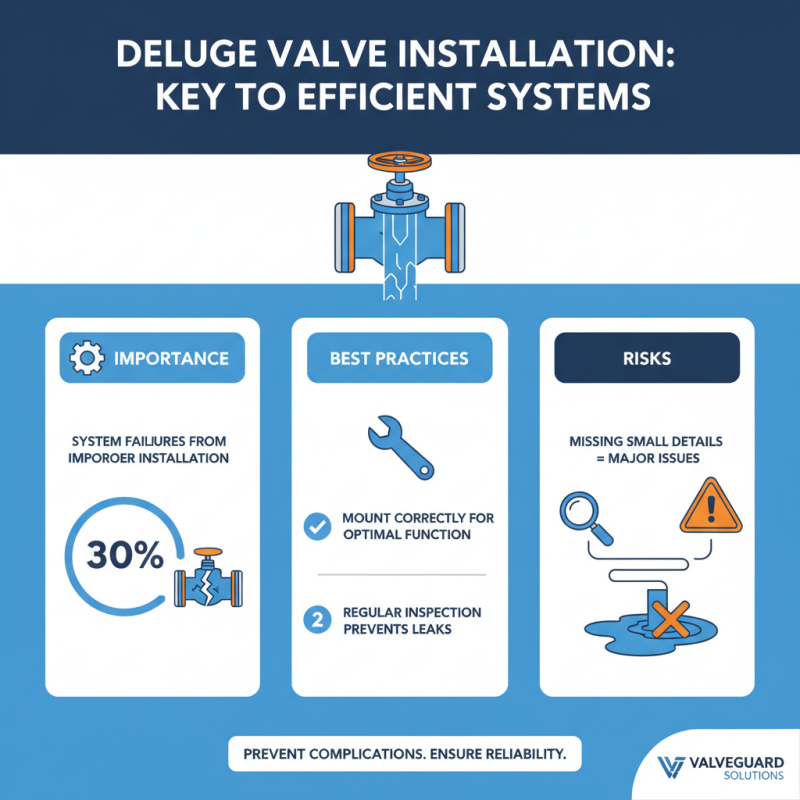
When it comes to deluge valves, proper installation is key. An efficient system relies on well-chosen components, yet common mistakes can lead to complications. According to a recent industry report, almost 30% of system failures come from improper valve installation. Valves must be mounted correctly to ensure optimal functionality. Regularly inspecting valve components can prevent leaks. Missing a small detail can lead to big issues.

Maintenance practices are equally crucial. Industry guidelines suggest that deluge valves should be tested quarterly. This advice comes from data showing that regular testing reduces failure rates significantly. In many cases, valves that go untested can fail when most needed. Keeping mechanisms clean and replacing worn-out parts is essential. Don’t overlook the connections and seals; they are often the first points of failure.

Documentation plays an important role. Keeping accurate records of maintenance schedules and tests provides valuable insights. Without this, understanding the history of performance can become challenging. Engage with troubleshooting resources if issues arise. While many systems perform well, each should be treated as unique. Each installation can tell a story about what works and what doesn’t.

Common Mistakes to Avoid When Choosing a Deluge Valve for Your System

When selecting a deluge valve, many make critical errors. Recognizing these missteps can save time and money. One common mistake is underestimating your system's flow requirements. According to industry reports, incorrect flow rates can lead to system inefficiencies. Ensuring accurate flow calculations is crucial.

Another frequent error is neglecting the valve’s compatibility with your existing components. A mismatch can lead to failures and safety hazards. It's vital to assess materials and performance ratings closely. Always consult technical specifications before making a choice.

Tip: Review your system design thoroughly. Consult with engineers or specialists who can provide insights into specific configurations. Regular maintenance checks also prevent many potential problems. Remember, a small oversight can lead to significant costs down the line. Aim for efficiency and compatibility to enhance the reliability of your deluge system.

Common Mistakes to Avoid When Choosing a Deluge Valve

Request a Quote/Further Information

    Download