Call us on: +44 (0) 1482 323163
Request a Quote
Buying a safety valve is not a catalog exercise. It is a decision about pressure protection, operating conditions, and the people who depend on reliable equipment. Safety expert James Reason wrote, “We cannot change the human condition, but we can change the conditions under which humans work.” That principle matters during procurement: clear specifications and careful verification can reduce avoidable mistakes. Small details matter.
Global buyers face practical challenges. A valve that looks suitable in a product photo may not match the medium, temperature, set pressure, or connection requirements. Ask suppliers for documented performance data, material details, and evidence of relevant testing. Check whether the proposed design fits the system’s operating range, not just its nominal pressure. Then review service access, replacement parts, and technical support across the equipment’s expected life. A low purchase price can become expensive when a plant needs a component it cannot readily source.
This guide outlines seven checks to make before placing an order. It covers application data, sizing, materials, certifications, supplier capability, documentation, and lifecycle support. No checklist is perfect. Buyers should also involve qualified engineering personnel and verify specifications against the actual installation. A useful question to revisit is whether the supplier’s evidence answers the site’s real operating needs—or merely fills a folder.
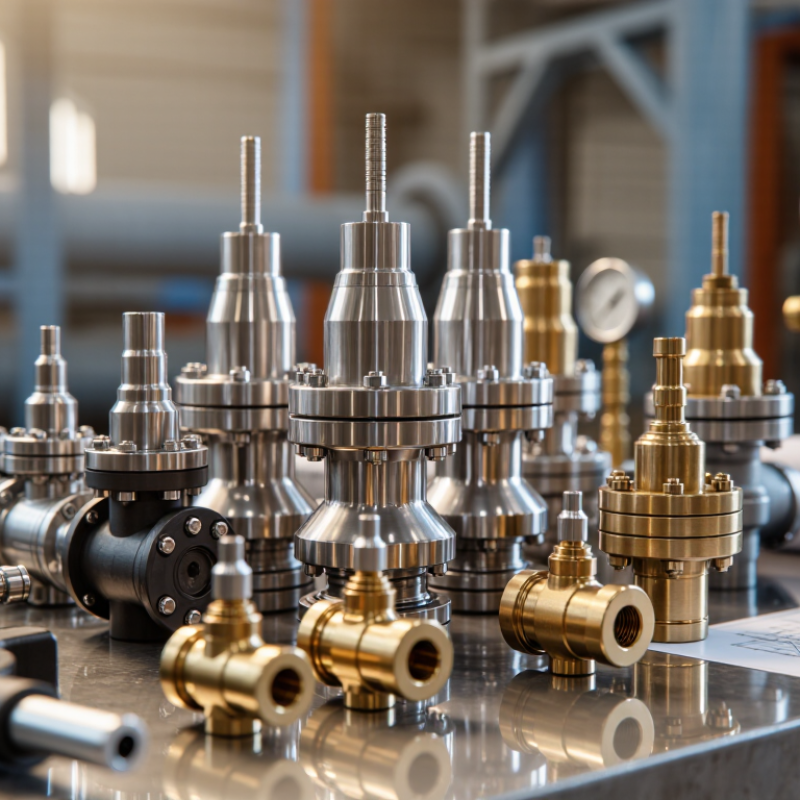
Safety valves protect equipment by releasing excess pressure before vessels, boilers, or pipelines exceed their design limits. Spring-loaded valves are common in steam and gas systems; pilot-operated designs can suit larger flows or tighter operating tolerances. Thermal relief valves handle liquid trapped between closed valves, where heat expansion can raise pressure quickly. Small details matter.
Match the valve to the fluid, required capacity, set pressure, operating temperature, and discharge conditions. A valve sized for gas may not protect a liquid system correctly. Backpressure and narrow inlet piping can also affect performance. API Standard 520 provides guidance on pressure-relief device sizing and selection; buyers should verify calculations against the actual process data, not a catalogue example. The U.S. Chemical Safety Board’s 2005 BP Texas City investigation documented 15 deaths and 180 injuries. Its findings underscore the need to assess protection and discharge arrangements as a complete system, rather than treating the valve as an isolated component. Ask suppliers for certified capacity data, materials compatibility, inspection records, and clear installation requirements. Then check that the proposed valve’s function fits the application: overpressure protection is not the same as pressure regulation. I’d still review unusual service conditions with a qualified engineer; a neat specification can miss a messy plant reality.
| Buying Tip | What to Check | Valve Type and Function | Typical Applications |
|---|---|---|---|
| 1. Match the valve to the fluid and service | Identify the process medium, phase, temperature, corrosion potential, and whether the service is clean or contains particles. Confirm that the body, trim, seat, and seals are suitable for these conditions. | A spring-loaded valve is commonly used for pressure protection in liquid, gas, and steam services. A pilot-operated valve may be considered where stable operation at higher operating pressures or larger capacities is required, subject to the application and applicable standards. | Steam systems, compressed-air receivers, gas equipment, liquid process lines, and pressure vessels. |
| 2. Select the correct pressure-relief behavior | Specify the set pressure, allowable overpressure, required blowdown or reseating behavior, and the protected equipment’s maximum allowable working pressure. Have the required relieving capacity determined for credible overpressure scenarios. | A conventional spring-loaded safety valve discharges against the outlet pressure. A balanced-bellows design helps reduce the effect of variable superimposed backpressure. A pilot-operated design uses process pressure to control the main valve. | Choose based on system pressure conditions, outlet arrangement, process stability, and the equipment being protected. |
| 3. Verify capacity and sizing assumptions | Provide the process data needed for sizing, including fluid properties, relieving temperature and pressure, required mass or volumetric flow, and the governing overpressure scenario. Do not size by connection size alone. | Certified capacity and sizing methods depend on the fluid and service. Applicable requirements may include ASME Boiler and Pressure Vessel Code Section VIII, API 520/521, or ISO 4126, as required by the project and jurisdiction. | Pressure vessels, boilers, pipelines, storage systems, and process equipment exposed to blocked outlets, fire, thermal expansion, or other credible scenarios. |
| 4. Check inlet and outlet piping conditions | Confirm connection type, nominal size, pressure rating, orientation, inlet pressure loss, discharge routing, and expected backpressure. Review the complete installation, not just the valve data sheet. | Conventional, balanced-bellows, and pilot-operated valves respond differently to outlet backpressure. The selected design must suit the calculated conditions and the manufacturer’s installation limits. | Installations with long discharge lines, common headers, elevated outlets, or other sources of built-up or variable backpressure. |
| 5. Confirm materials and temperature limits | Compare pressure-containing materials, internal parts, seat materials, and seals with the fluid chemistry and operating temperature. Check corrosion allowance and any low-temperature or high-temperature requirements. | Material selection is service-specific. The pressure-temperature rating of the complete assembly must meet the design conditions; a material name alone does not establish suitability. | Corrosive chemical services, hot steam, low-temperature gas, and applications with changing process temperatures. |
| 6. Check standards, approvals, and traceability | Identify the destination country, industry, and equipment classification. Request applicable certificates, design and capacity documentation, material records, inspection records, and serial-number traceability. | Requirements vary by jurisdiction and equipment category. Examples include ASME certification where required, the Pressure Equipment Directive (PED) for applicable European markets, and ISO 4126 requirements where specified. | International projects, regulated pressure equipment, boiler installations, and facilities with owner or inspection-body requirements. |
| 7. Plan testing, maintenance, and documentation | Confirm inspection and testing procedures, serviceability, spare-part availability, storage requirements, and the documentation supplied with each valve. Establish maintenance intervals based on regulations, service severity, and operating history. | Safety valves require suitable inspection and maintenance to help preserve their protective function. Testing methods and intervals should follow applicable codes, regulations, and site procedures. | All installations where overpressure protection is required, especially critical or difficult-to-access equipment. |


© Shipham Valves 2025. All Rights Reserved.
Website By PS Website Design Ltd
Request a Quote/Further Information
Download