Robot Warehouse Picking is changing how warehouses move products from storage locations to shipping cartons. Instead of relying only on manual workers, these systems combine robotic arms, mobile robots, cameras, grippers, warehouse management software, and safety controls. A robot may identify a blue package, calculate its position, grasp it, and place it into a tote within seconds. The process looks simple. It is not.
Industry data shows why interest is growing. The MHI 2024 Annual Industry Report identifies robotics and automation as major supply chain investment priorities, while 83% of surveyed leaders expect supply chain technology investment to increase. The International Federation of Robotics also reports continued growth in professional service robots, including logistics applications, in its World Robotics reports. These figures support a clear direction: warehouses are becoming more automated, but adoption remains uneven.
The workflow usually begins when warehouse software sends a picking order to the robot. Sensors then scan shelves, products, obstacles, and human activity. Artificial intelligence helps select suitable grasping points, while conveyor systems or autonomous mobile robots transport completed totes. Performance is measured through pick rate, accuracy, uptime, and exception frequency. Yet automation is not perfect. Reflective packaging, damaged labels, irregular shapes, and crowded shelves can still cause errors. Human oversight remains valuable, especially during system changes and unusual orders. The best solution is rarely “robots everywhere.” It is a carefully tested partnership between people, machines, and reliable operational data.
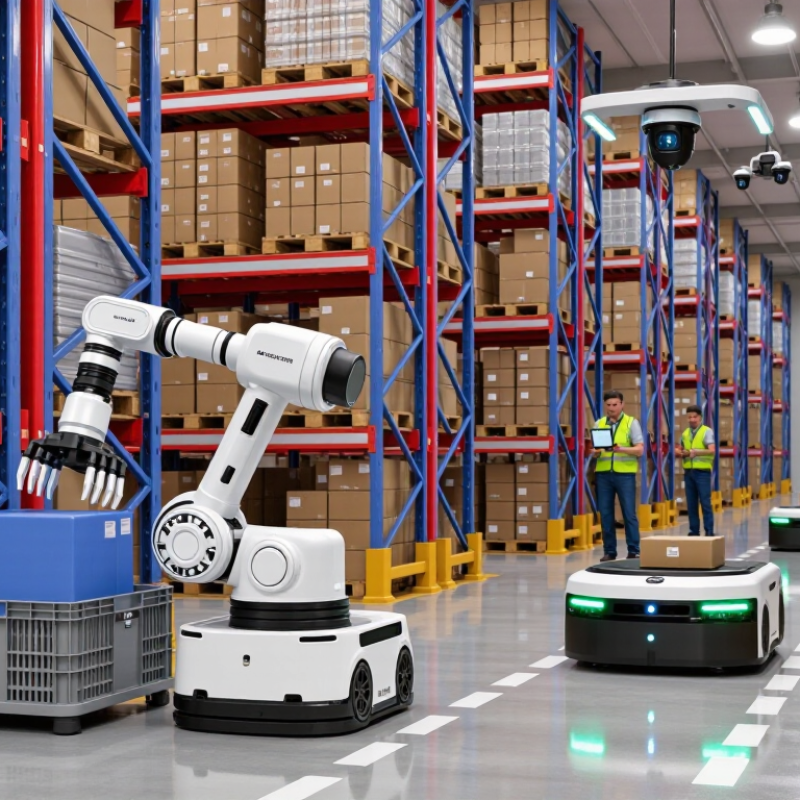
Robot warehouse picking means using machines to locate, grasp, move, and place items for customer orders. It connects physical handling with inventory software and warehouse controls. The goal is not simply to replace workers. It is to make repetitive picking more consistent, measurable, and less physically demanding.
A typical system receives an order digitally. Sensors identify the item, its position, and its shape. A robotic arm then selects the product and places it into a tote, carton, or sorting tray. Cameras check labels, edges, and possible damage. Software records each movement and updates inventory records. In a working warehouse, small details matter. A dusty lens, a bent package, or poor lighting can reduce accuracy.
It is physical.
Reliable picking requires testing with real products, not only clean demonstrations. Different weights and slippery packaging can change the robot’s grip. Human staff still monitor exceptions, refill work areas, and handle unusual items. Errors still happen. A system may pause when two products overlap or when a barcode becomes unreadable. That weakness deserves honest attention. Better results usually come from careful layout, regular maintenance, clear safety procedures, and measured performance data. Managers should track pick accuracy, stoppages, damage rates, and worker feedback before expanding automation.

Robot warehouse picking uses robotic arms, cameras, sensors, and warehouse software to identify, grasp, move, and verify items. The chart shows representative picking throughput levels commonly used when comparing manual, robot-assisted, and highly automated workflows.
Throughput is measured in completed picks per hour. Actual performance varies with item size, shape, order mix, robot design, and warehouse layout.
Robot warehouse picking is built from several connected components, not one intelligent machine. The first is perception: cameras, depth sensors, and lighting capture an item’s shape, position, and surface condition. Software then identifies the product and selects a grasp. The robotic arm provides movement, while the end effector, such as a vacuum tool or adaptive gripper, makes contact. Small details matter. A crushed carton can defeat an otherwise accurate pick.
The control layer links warehouse software with robots, conveyors, storage locations, and order data. It decides which item to pick, where to place it, and when to release it. According to the International Federation of Robotics’ World Robotics 2024 report, 541,302 industrial robots were installed worldwide in 2023. That figure includes many industries, but it shows the expanding automation base supporting warehouse operations. MHI’s 2024 Annual Industry Report also reported that 55% of supply-chain leaders planned to increase technology investment, creating stronger demand for integrated picking systems.
Safety is another core component. Sensors must detect people, unexpected objects, and unsafe motion. Guarded zones, emergency stops, speed limits, and documented procedures reduce operational risk. Standards such as ISO 10218 help structure these controls. Human workers still supervise exceptions, replenish goods, and handle unusual packaging. It still fails. Reflective plastic, tangled items, and poor lighting can confuse vision systems. A pilot should therefore measure grasp success, recovery time, damage rates, and worker interventions before expansion. Clean laboratory results are not enough.
| System Component | Primary Function | Typical Data or Specification | How It Works in the Picking Process | Important Considerations |
|---|---|---|---|---|
| Warehouse Management System | Controls inventory records, orders, locations, and fulfillment priorities. | Stores stock-keeping units, quantities, bin locations, order lines, and task status. | Releases picking orders and sends the required task information to the warehouse control layer. | Accurate inventory data and synchronized order status are essential for reliable automation. |
| Warehouse Control System | Coordinates robots, conveyors, storage equipment, and picking workstations. | Manages task queues, equipment availability, routing logic, and exception messages. | Translates warehouse orders into executable movement and picking tasks, then monitors completion. | Interfaces should support real-time communication and safe recovery from equipment faults. |
| Mobile Robot | Moves inventory containers, shelves, pallets, or picked orders between locations. | Common navigation methods include laser-based mapping, visual navigation, or fixed markers. | Receives a destination, travels through designated paths, avoids obstacles, and reports its position. | Battery capacity, charging strategy, payload, floor conditions, and traffic rules affect throughput. |
| Robotic Manipulator | Grasps and transfers individual items or cases. | Usually specified by reach, payload, repeatability, joint configuration, and operating speed. | Moves to the target item, selects a grasp pose, lifts the item, and places it into a tote or order container. | The robot must match the product range, item weight, dimensions, surface, and packaging characteristics. |
| End-of-Arm Tooling | Provides the physical interface between the robot arm and the product. | Typical options include vacuum grippers, mechanical fingers, soft grippers, or hybrid tools. | Creates the required grip, confirms item contact when supported, and releases the item at the destination. | Tool design must limit product damage and maintain grip on irregular, porous, flexible, or reflective items. |
| Machine Vision | Identifies item location, orientation, shape, and visual features. | May use two-dimensional cameras, three-dimensional depth cameras, illumination, and image-processing software. | Builds a visual representation of the picking area so the robot can calculate a suitable approach and grasp. | Lighting, occlusion, transparent packaging, similar-looking items, and clutter can reduce recognition accuracy. |
| Barcode or RFID Identification | Confirms product identity and supports inventory traceability. | Barcodes require optical line-of-sight; RFID uses radio-frequency tags and readers. | Reads the item or container identifier before, during, or after the pick and compares it with the order. | Identification checks help detect wrong-item picks, but labels must remain readable and correctly associated. |
| Storage and Presentation Area | Holds products in a position that allows robots or workers to access them. | May include shelves, bins, totes, pallets, cartons, or goods-to-person presentation stations. | Positions inventory within the robot's operating envelope and supplies items to the picking point. | Consistent item presentation improves vision performance, grasp reliability, and cycle time. |
| Conveyor and Transfer Equipment | Moves totes, cartons, or completed orders between process stages. | Equipment can include belt conveyors, roller conveyors, lifts, diverters, and accumulation zones. | Transfers containers to picking, checking, packing, replenishment, or shipping areas according to system instructions. | Accumulation capacity, transfer timing, container compatibility, and access for maintenance influence flow efficiency. |
| Pick Verification System | Checks whether the correct item and quantity were placed in the correct order container. | Can combine barcode scanning, weight measurement, vision checks, or container identification. | Validates the pick and creates a confirmation or exception record before the order proceeds. | Verification reduces shipping errors and provides data for investigating failed or uncertain picks. |
| Safety System | Protects people, equipment, and products within the automated work area. | May include guards, safety scanners, emergency stops, interlocks, warning lights, and audible signals. | Monitors restricted zones and stops or limits equipment movement when an unsafe condition is detected. | Safety design should follow applicable workplace regulations and include documented risk assessment. |
| Human-Machine Interface | Allows operators and maintenance personnel to monitor and control the system. | Displays alarms, task status, robot locations, inventory exceptions, and maintenance information. | Guides users through replenishment, exception handling, manual recovery, and system restart procedures. | Clear instructions and role-based access help reduce downtime and prevent configuration errors. |
| Charging and Power Management | Maintains the operating availability of mobile robots and related equipment. | May use scheduled charging, opportunity charging, battery swapping, or a combination of methods. | Assigns robots to charging points or schedules charging during low-demand periods without disrupting tasks. | Power planning should account for duty cycle, travel distance, payload, battery age, and peak workload. |
| Data and Performance Monitoring | Measures system performance and supports continuous improvement. | Common measures include picks per hour, pick success rate, utilization, downtime, queue time, and exceptions. | Collects operational data from robots, software, sensors, and verification devices for analysis. | Performance figures should distinguish robot speed from total system throughput, which also depends on replenishment and downstream processes. |
Note: Actual capacity, accuracy, cycle time, and payload depend on product mix, layout, container design, software configuration, safety requirements, and operating conditions.
Robot warehouse picking starts with recognition, not movement. A robot scans a shelf, tote, or conveyor using cameras, depth sensors, and barcode readers. Software compares the image with stored item profiles. It checks shape, size, color, and position before selecting a grasping point.
The system then predicts whether an item is safe to lift. Soft packaging can collapse. Reflective surfaces can confuse cameras. A gripper may adjust its pressure while lifting, then verify the item with weight or vision sensors. Small errors remain common. A human may still resolve an unknown object or a badly placed package.
This process is becoming more practical as automation expands. The International Federation of Robotics reported 541,302 industrial robots installed worldwide in 2023. That figure includes many factory systems, but it shows the wider hardware trend. DHL’s 2024 Robotics in Logistics report also found strong interest in warehouse robotics, especially for repetitive handling tasks. In practice, reliable picking depends on clean item data, steady lighting, and frequent software updates. A robot can recognize a blue carton quickly. It may hesitate when that carton is crushed, hidden, or mixed with similar products.
Warehouse robot picking begins when the warehouse system releases an order. The software groups compatible orders and checks available inventory. It then assigns a storage location and picking priority. A mobile robot receives the task through a wireless control system. Sensors help it navigate aisles, avoid people, and maintain safe spacing. At this stage, accurate stock data matters. One wrong location can delay several orders, not just one.
The robot travels to the assigned shelf or rack and positions itself beneath, beside, or in front of the load. Depending on the equipment, a lift, arm, or conveyor transfers the tote. The robot carries the items to a picking station. A worker scans each product, confirms the quantity, and places it into the order container. Vision checks and barcode records create a useful audit trail. Still, human judgment matters when packaging is damaged or labels are unclear.
After verification, the container moves to packing, where weight and order details are checked again. Exceptions go to manual review instead of being forced through the system. The robot returns for another assignment or visits a charging point. Performance data reveals delays, empty locations, and repeated travel. The process is efficient, but not flawless. A blocked aisle or weak scan can expose poor planning. Reviewing those failures helps teams improve layouts, replenishment timing, and worker training.
What Is Robot Warehouse Picking and How Does It Work?
Robot warehouse picking uses automated machines to move shelves, bins, or individual products. Software assigns each order and guides the robot through the storage area. Cameras, sensors, and barcode scans help confirm locations and items. A worker may still handle fragile products, quality checks, or unusual orders. In practical trials, the clearest benefit is reduced walking. Workers spend more time picking and less time pushing carts across long aisles.
The system can also improve picking speed and consistency. Robots operate during extended shifts and follow repeatable routes. This may reduce physical strain, especially when workers handle heavy totes. Real-time inventory data can expose missing stock faster. Fewer location errors may also support more reliable shipping. Small details matter. A misplaced carton can delay an entire order.
However, robot warehouse picking is not effortless. Installation requires suitable floors, charging areas, software, and trained staff. Costs can be substantial before efficiency gains appear. Robots may struggle with soft packaging, reflective surfaces, or tightly packed products. They also depend on accurate inventory records. That assumption can fail. If a barcode is damaged, the robot may stop or request human help. Power interruptions and network problems can interrupt operations, too. Human judgment remains valuable when orders change suddenly or products arrive in unfamiliar packaging. In some warehouses, a simpler process may still be more practical.
© Shipham Valves 2025. All Rights Reserved.
Website By PS Website Design Ltd
Request a Quote/Further Information
Download
We use cookies on this website, by continuing to browse the site you are agreeing to our use of cookies. Find out more.