What Is a Lightning Arrestor and How Does It Work?

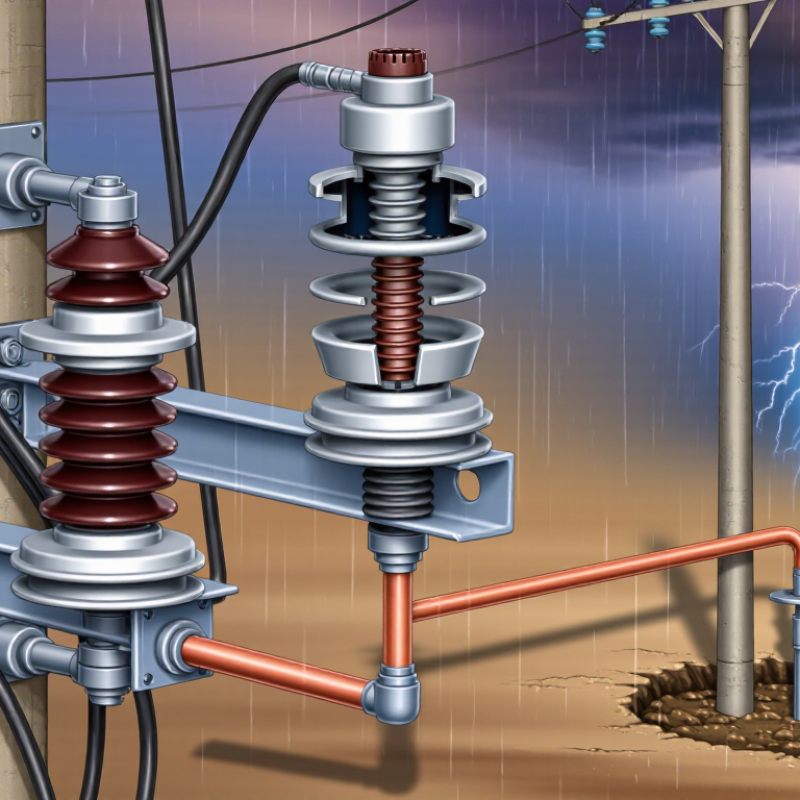
A Lightning Arrestor is a protective device designed to limit dangerous voltage surges caused by lightning. It gives excess electrical energy a controlled path toward the grounding system. Without this path, a surge may travel through power cables, communication lines, or metal equipment. The result can be damaged insulation, burned circuit boards, or a sudden power failure.

In practical installations, the device remains inactive during normal operation. When voltage rises sharply, its internal components respond within a very short time. Metal-oxide varistors and spark-gap designs are common examples. Each design behaves differently under heat, repeated surges, and electrical faults. Therefore, selecting a Lightning Arrestor requires more than checking its maximum voltage rating. System voltage, grounding quality, impulse current, and installation location all matter.

A strong protection plan also includes short conductors and proper bonding. Long, coiled wires can increase voltage during a lightning event. I have seen protective equipment installed correctly but connected to poor grounding, which greatly reduced its value. That detail is easy to overlook. No arrestor can guarantee complete protection. Lightning is unpredictable, and nearby strikes can create complex surge paths. Regular inspection should check loose connections, corrosion, heat damage, and the device’s status indicator. Manufacturer instructions and recognized electrical standards should guide every installation. This article explains how a Lightning Arrestor works, where it is used, and why grounding deserves equal attention. The technology is reliable, but the installation still needs careful judgment.
What Is a Lightning Arrestor and How Does It Work?

Definition and Purpose of a Lightning Arrestor

What Is a Lightning Arrestor and How Does It Work?

Definition and Purpose of a Lightning Arrestor

A lightning arrestor protects electrical systems from dangerous transient overvoltage. It does not stop lightning or absorb the entire strike. Instead, it redirects excess electrical energy toward ground.

Most modern arrestors use metal-oxide varistors. Under normal voltage, the device remains nearly inactive. During a surge, its resistance drops sharply. This action limits the voltage reaching transformers, control panels, cables, and sensitive equipment. The arrestor then returns to its normal state.

Terminology can be confusing. A lightning rod helps intercept a direct strike outside a structure. A lightning arrestor works mainly inside the electrical system. Both need effective grounding and bonding. Without them, the surge has nowhere safe to travel. A damaged grounding connection can make good equipment perform poorly.

NOAA’s National Severe Storms Laboratory estimates that the United States experiences about 25 million lightning flashes each year. NOAA also notes that lightning can reach around 1 billion volts. These figures explain why small voltage protection devices need correct installation. The International Electrotechnical Commission’s IEC 62305 series also emphasizes coordinated protection, earthing, and risk assessment.

Tips: Install protection at the service entrance and near sensitive loads. Keep grounding conductors short and straight. Check arrestors after major storms. A warning indicator should not be ignored. Protection ratings also deserve review; an oversized confidence can be dangerous. No arrestor makes a building completely lightning-proof.

Main Components and Their Protective Roles

What Is a Lightning Arrestor and How Does It Work?

A lightning arrestor protects electrical equipment by diverting sudden overvoltage away from sensitive circuits. It normally remains almost invisible to the system. During a surge, its internal components change behavior within microseconds.

The main component is often a metal-oxide varistor, or MOV. Under normal voltage, the MOV presents high resistance and carries very little current. When lightning raises the voltage, it becomes highly conductive. The surge then moves toward the grounding path instead of continuing into equipment. Fast action matters.

The grounding terminal provides the discharge route. A short, wide grounding conductor usually performs better than a long, narrow wire. Lead length creates inductive resistance during a fast surge, which can leave dangerous voltage at the equipment. The enclosure adds mechanical protection and helps prevent accidental contact. Some arrestors also include a thermal disconnect. If an MOV overheats after repeated stress, the disconnect separates it from the circuit.

It is not a magic shield. A poor ground can weaken the entire protection system. Loose connections, corrosion, and damaged insulation deserve careful inspection. In field checks, I would examine conductor length, bonding points, enclosure condition, and heat marks. The phrase “lightning-proof” is misleading. Even a correctly selected arrestor has limits, and its rating must match the system voltage and exposure. That detail is easy to overlook.

How a Lightning Arrestor Diverts Electrical Surges

What Is a Lightning Arrestor and How Does It Work?

A lightning arrestor diverts electrical surges away from sensitive equipment. It connects between an energized conductor and a grounding system. During normal operation, it presents very high resistance. Electricity continues through the intended circuit.

When lightning or a switching event creates a sudden voltage spike, the arrestor’s internal components respond quickly. A metal-oxide element can reduce its resistance as voltage rises. This creates a temporary path for surge current. The current moves toward ground instead of forcing through connected equipment. Some arrestors also use a controlled spark gap. The gap conducts only after the voltage reaches a dangerous level. The device does not stop lightning. It limits where the energy travels.

The grounding path matters greatly. A long, loose, or poorly bonded conductor can increase resistance and reduce protection. In practical inspections, this is often underestimated. The arrestor may look correct, yet the installation can remain vulnerable. No device is a magic shield. After a major surge, internal parts may weaken without visible damage.

Tips: Keep grounding conductors short, straight, and securely bonded. Ask a qualified electrical professional to inspect the system. Check for corrosion, loose connections, and physical damage. Replace an arrestor when testing shows degradation. Do not assume one device protects every cable entering a building. Power, communication, and data lines may need coordinated protection.

Common Types of Lightning Arrestors and Their Applications

What Is a Lightning Arrestor and How Does It Work?

A lightning arrestor limits dangerous overvoltage before it reaches electrical equipment. A metal-oxide arrester normally behaves like an insulator. During a surge, its resistance falls sharply and sends excess energy toward ground. The National Weather Service reports that lightning can heat air to about 30,000 K. That energy explains why insulation, cables, and transformers need coordinated protection.

Common Types of Lightning Arrestors and Their Applications

Air-terminal systems, often called lightning rods, protect buildings by providing a controlled discharge path. They suit homes, towers, warehouses, and open industrial structures. Their conductors must connect to a verified grounding network. A rod without a low-impedance ground is only partial protection.

Metal-oxide arrestors serve distribution poles, substations, transformers, and renewable-energy cabinets. They respond quickly and have no intentional spark gap. Older gap-type arrestors remain useful in selected networks, but their performance depends more heavily on spacing, contamination, and maintenance. IEEE C62.11 provides testing guidance for metal-oxide surge arresters, while IEC 62305 addresses broader lightning protection design.

Telecommunication sites often use compact arrestors on power, signal, and coaxial lines. Protection must match the system’s operating voltage and impulse environment. It is not magic. A field inspection should check bonding, cable routing, thermal damage, and ground resistance. The International Telecommunication Union has repeatedly identified lightning as a major cause of infrastructure faults in storm-prone regions. Yet product labels can mislead. A correctly rated arrestor may still fail when grounding is poor, coordination is ignored, or replacement intervals are forgotten.

Installation, Maintenance, and Safety Considerations

A lightning arrestor protects electrical equipment by directing surge energy toward the grounding system. It does not stop lightning from forming. Instead, it limits dangerous voltage reaching panels, appliances, and communication equipment. During installation, an electrician should inspect the service panel, grounding electrode, bonding connections, and conductor length. Short, straight connections usually reduce unwanted voltage during a surge. Local electrical codes and manufacturer instructions must guide every step.

A reliable installation also depends on location. The arrestor should sit close to the equipment it protects, with secure connections and suitable weather protection. Never work inside an energized panel without proper training and isolation procedures. Field inspections often reveal loose terminals, corroded grounding clamps, or undersized conductors. These details seem minor, but they can weaken the protection path. A tidy installation may still be unsafe if the grounding system is poor.

Tips: Schedule an inspection after major storms. Look for heat marks, cracked housing, moisture, or unusual buzzing. Do not touch damaged equipment. Ask a qualified electrician to test the arrestor and grounding continuity. Replacement timing is not always obvious, because some devices show no visible damage after a surge. Keep inspection records, though many homeowners forget this practical step. Reviewing those records can reveal repeated problems, such as frequent surges or deteriorating connections.

Request a Quote/Further Information

    Download