How to Choose a Wall Mounted Battery Harness?

Choosing a Wall Mounted Battery Harness is a practical decision, not a simple shopping exercise. The harness connects stored energy to an inverter, charger, or distribution panel. Its quality affects heat control, installation safety, service access, and long-term reliability.

Dr. Gregory L. Plett, a respected battery-management researcher, describes the battery as “a dynamic system, not a static box.” That perspective matters here. A wall-mounted battery can experience vibration, temperature changes, charging surges, and repeated daily cycling. The harness must handle these conditions without strained terminals, loose connectors, or sharp bends.

Start with the battery’s voltage, continuous current, peak current, and connector type. Check the cable gauge against the real installation distance. A short cable inside a cool utility room may need different protection from a longer cable passing through a warm garage. Look closely at insulation, crimp quality, bend radius, shielding, and strain relief. Small details matter.

They often decide reliability.

A suitable Wall Mounted Battery Harness should also match the manufacturer’s approved components. Do not rely only on attractive packaging or a high current label. Some product descriptions remain vague. That is a warning sign. Ask for testing information, connector specifications, temperature ratings, and installation instructions.

The choice can still involve uncertainty. Real sites are rarely perfect. Dust collects. Cables shift. Future upgrades happen. This guide examines those overlooked conditions, helping readers compare harnesses with practical judgment rather than marketing language.
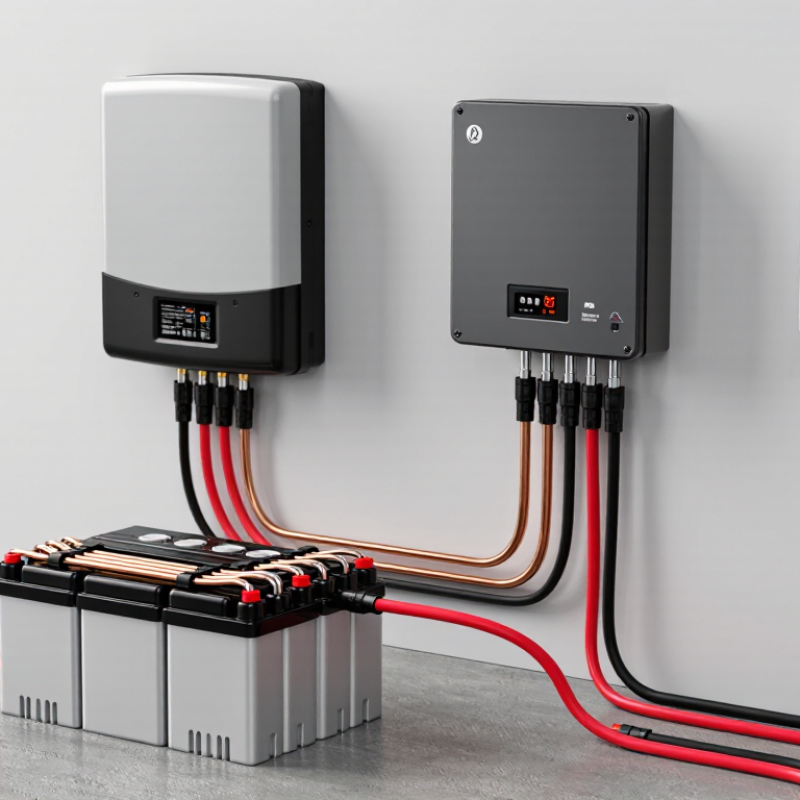
How to Choose a Wall Mounted Battery Harness?

Define the Battery Harness and Its Wall-Mounted Application

A battery harness is an assembled cable system connecting battery modules with the battery management system, inverter, and protection devices. It normally includes power conductors, signal wires, terminals, insulation, connectors, fuses, and strain relief. Unlike loose cables, a harness controls routing and reduces wiring errors during installation.

Wall-mounted applications place the battery close to a wall, often inside a compact residential or commercial energy-storage system. The harness must tolerate tight bend radii, limited service space, vibration, heat, and possible moisture exposure.

Measure continuous current first, not only peak current. Then verify voltage rating, conductor size, connector locking, insulation temperature, and the required clearance from sharp metal edges. A short service loop also helps technicians replace connectors safely.

The IEA’s Batteries and Secure Energy Transitions report states that battery storage additions in the power sector exceeded 40 GW in 2023, more than doubling from the previous year. Its Global EV Outlook 2024 reports battery demand above 750 GWh in 2023, rising about 40%. These figures show why harness reliability deserves engineering attention, even in small wall-mounted systems.

Choose components tested under relevant electrical and thermal conditions, and request traceable inspection records. Neat routing is not enough. In practice, installers sometimes focus on current capacity and overlook strain relief or bend radius. That mistake can age a connector faster than expected.

A qualified technician should review the final layout before energization.

Identify Battery Type, Load Requirements, and Compatibility

Choosing a wall mounted battery harness starts with the battery type, not the cable color. Lithium iron phosphate packs need different protection and connection practices than lead-acid batteries. Confirm nominal voltage, maximum charge voltage, continuous current, and peak current from the battery specification sheet. A 48-volt pack delivering 100 amps requires a harness rated for sustained 4.8 kilowatts, before inverter losses. Short surges still matter.

Load requirements should guide conductor size, fuse rating, and terminal selection. Use the expected continuous load, then check startup currents from pumps, compressors, or inverters. The IEA’s Renewables 2024 report states that global battery storage capacity must expand sixfold by 2030 in its tripling-renewables scenario. Higher deployment increases the importance of correctly engineered connections. Keep cables short. Reduce sharp bends. Add strain relief near the wall bracket and battery terminals. A tidy harness is not automatically a safe harness.

Compatibility involves more than matching voltage. Check connector gender, polarity, contact material, insulation temperature, enclosure clearance, and battery-management-system communication lines. For lithium systems, the harness must not bypass required monitoring or protection circuits. Standards-based testing, including thermal-abuse and propagation evaluation described in UL 9540A, can reveal risks that visual inspection misses. I once judged a harness by its thick insulation and overlooked an undersized terminal. That was a useful mistake. Verify every crimp with a pull test, torque terminals to the manufacturer’s value, and inspect for heating after the first full-load cycle. Test again.

Evaluate Harness Materials, Connectors, and Safety Features

A wall mounted battery harness should begin with its materials.

Choose flexible copper conductors with insulation rated for the battery’s voltage, current, and temperature range. Thicker cable is not always better. Excessive stiffness can pull terminals from the battery during installation. In a warm utility room, heat-resistant insulation offers useful protection. In a damp location, sealed jackets and suitable ingress protection reduce moisture problems. Check the datasheet, not just the product photograph.

Connectors deserve equal attention.

Select polarized connectors with clear positive and negative markings. Locking mechanisms help prevent loosening from vibration or accidental contact. The terminal should match the cable gauge and battery post size. Poorly crimped terminals can become hot under load. A professional crimp should hold firmly without cutting conductor strands. I would also inspect strain relief near the connector, because repeated bending often starts there.

Safety features should include insulation around exposed metal, overcurrent protection where required, and a cable length that avoids sharp bends.

Route the harness away from hot surfaces and moving panels. Secure it with non-abrasive clips. Never rely on color alone; verify polarity with a suitable meter before connection. A small labeling error can cause serious damage. One practical weakness remains: installers sometimes choose a connector by appearance. I have seen attractive fittings fail because their current rating was unclear. Documenting ratings, inspection results, and installation conditions makes the harness easier to trust and maintain.

Select the Correct Length, Mounting Method, and Cable Capacity

Choosing a wall mounted battery harness starts with length, not appearance. Measure the real route, including bends, service loops, and terminal clearance. A harness that is too short can strain lugs and insulation. One that is too long may create loops against the wall. Leave a modest service loop, but avoid loose cable hanging near hot surfaces or sharp edges. The International Energy Agency reported that stationary battery storage demand grew by more than 130% in 2023, reaching about 85 GWh. More installations mean fewer tolerances for careless routing.

Mounting method affects safety and maintenance. A rigid wall rail suits a fixed battery cabinet, while a bracket with adjustable clamps works better on uneven masonry. Use insulated supports, rounded cable paths, and fasteners rated for the battery assembly’s weight. Keep the harness visible enough for inspection. Hidden wiring looks tidy, but it can conceal abrasion. That trade-off is easy to underestimate.

Cable capacity must match continuous current, peak current, conductor size, ambient temperature, and bundling. Do not select capacity from battery voltage alone. Apply the correction factors required by IEC 60364 or applicable local electrical rules. The NREL Storage Futures Study projects major growth in energy storage deployment, making standardized installation practices increasingly important. In practical checks, installers often choose a larger conductor after calculating voltage drop over the full route. That costs more, but undersizing costs more later. I would also recheck the calculation after changing the mounting position; a small route change can alter length, heat exposure, and terminal stress.

How to Choose a Wall Mounted Battery Harness? - Select the Correct Length, Mounting Method, and Cable Capacity

Installation Profile Recommended One-Way Length Typical System Voltage Suggested Copper Conductor Recommended Continuous Current Preferred Mounting Method Cable Entry Requirement Best Use Case
Compact low-current setup 0.5–1.0 m 12 V or 24 V 4 mm² flexible copper, approximately AWG 11 Up to 25 A Direct wall bracket or pre-drilled mounting plate One positive and one negative cable; strain relief recommended Small backup batteries, control equipment, and lighting circuits
Standard residential battery connection 1.0–1.5 m 24 V or 48 V 10 mm² flexible copper, approximately AWG 8 Up to 50 A Wall-mounted metal or reinforced polymer bracket Two power cables with insulated lugs and separate cable clamps Home energy storage and inverter battery connections
Medium-power inverter system 1.0–2.0 m 24 V or 48 V 16 mm² flexible copper, approximately AWG 5 Up to 75 A Heavy-duty wall bracket with two-point or four-point fixing Large-radius bend relief and protected positive terminal Medium inverters, battery banks, and DC distribution panels
High-current battery bank 0.5–1.5 m 24 V or 48 V 25 mm² flexible copper, approximately AWG 3 Up to 100 A Reinforced bracket with load-bearing wall anchors Crimped heavy-duty lugs, abrasion protection, and secure strain relief High-output inverter systems and larger DC bus connections
Extended cable route 2.0–3.0 m 48 V preferred 35 mm² flexible copper, approximately AWG 2 Up to 125 A Wall bracket combined with cable tray or conduit supports Cable separation, bend-radius control, and protection from sharp edges Battery installations positioned away from the inverter or distribution board
Very high-current short run 0.5–1.0 m 24 V or 48 V 50 mm² flexible copper, approximately AWG 1/0 Up to 150 A Structural wall rail or custom load-rated mounting frame Dedicated terminal cover, heavy-duty lugs, and mechanically supported cables High-power DC systems requiring short, low-resistance connections
Selection note: Cable current ratings are indicative continuous values for flexible copper conductors under typical ventilated installation conditions. Final sizing must account for ambient temperature, bundling, insulation rating, fuse or circuit-breaker size, installation regulations, connector ratings, allowable voltage drop, and the battery manufacturer's requirements. Measure the complete positive and negative route before ordering; the electrical path length is twice the one-way distance.

Check Installation Standards, Maintenance Needs, and Future Expansion

How to Choose a Wall Mounted Battery Harness?

A wall-mounted battery harness should follow local electrical codes, equipment instructions, and recognized safety standards. Check requirements linked to NFPA 855, IEC 62477-1, or equivalent regional rules. The correct harness needs suitable voltage, current, temperature, and fire-resistance ratings. It should also include secure strain relief, clear polarity labels, and protected connectors. During installation, keep cables within their specified bend radius. Tight bends can damage insulation before faults become visible. A qualified electrician should verify torque settings and isolation procedures. Small installation errors matter.

Maintenance planning is equally important. Leave access for visual checks, connector inspection, and thermal scanning. The International Energy Agency reported that global battery-storage additions reached about 42 GW in 2023, rising roughly 130% from the previous year. That growth suggests more systems will operate for longer periods and face changing loads. Choose a harness that supports inspection without removing major panels. Record torque readings, temperature observations, and replacement dates. In practice, records are often incomplete. That weakness deserves attention.

Tips: Reserve conduit space, mounting points, and terminal capacity for future modules. Confirm the inverter and protection equipment can accept expansion. Do not simply add longer cables later; resistance and voltage drop may increase. Use matching cable sizes, approved glands, and spare labeled positions. Review the design annually, especially after adding storage or changing operating loads.

Request a Quote/Further Information

    Download