What Are Electronic Pouring Sealants and How Do They Work?
Electronic Pouring Sealants are liquid compounds poured around or over electronic assemblies to create a protective barrier. As they cure, they form a solid or flexible layer that can reduce exposure to moisture, dust, vibration, and accidental contact. The process is often called potting or encapsulation. It is common in sensors, power supplies, and control modules where exposed components need added protection.
The material’s behavior depends on its chemistry. Epoxy often cures into a firm, durable mass. Silicone tends to remain flexible and can handle temperature changes. Polyurethane offers a different balance of flexibility and resistance. No type suits every device. Not a universal fix. Engineers must consider operating temperature, electrical insulation, heat flow, and compatibility with plastics or circuit boards. A small test pour can reveal trapped air, poor adhesion, or unexpected curing behavior before production begins.
Application sounds simple: mix, pour, and wait. Details matter. Incorrect mixing, damp surfaces, or rushed curing can weaken the result. A cured layer may also make later repairs difficult, an honest trade-off that deserves attention during design. Product data sheets provide useful limits, but real assemblies may behave differently. Check the manufacturer’s instructions and test under relevant conditions. Understanding how Electronic Pouring Sealants cure—and what they cannot protect against—helps teams choose a dependable solution rather than relying on appearance alone.
What Electronic Pouring Sealants Are
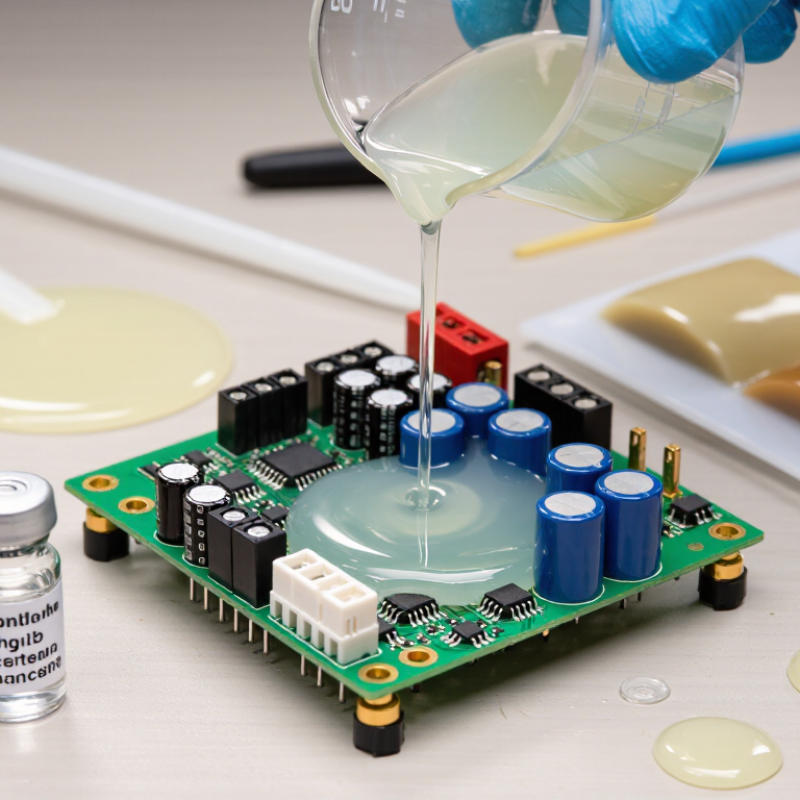
Electronic pouring sealants are liquid or paste-like materials applied around electronic components inside a housing. They cure into a solid or flexible layer, often called a potting compound. A technician may pour the material over a circuit board, letting it flow between components and settle around wires. That is the point. After curing, the layer can help limit exposure to moisture, dust, vibration, and accidental contact.
These sealants are commonly made from epoxy, silicone, or polyurethane, and each behaves differently. Epoxy often cures into a rigid shell; silicone usually stays more flexible. The right choice depends on the device, its operating temperature, and the stresses it may face. A thick mixture can trap air bubbles, while a very fluid one may leak through gaps. Small details matter. Surface preparation and measured mixing ratios affect how reliably the material cures. Sealants can also make later repairs difficult, and some types transfer heat better than others.
Not quite a universal fix.
A useful selection starts with the actual assembly, not just the word “protective” on a specification sheet.
Key Materials and Components in the Sealant
Key Materials and Components in the Sealant
Electronic pouring sealants, often called potting compounds, protect circuit assemblies inside an enclosure. Their main ingredient is a resin, commonly epoxy, silicone, or polyurethane. Each behaves differently. Epoxy can form a hard, rigid block, while silicone usually stays more flexible. Polyurethane can offer a middle ground, but performance depends on the specific formulation.
Many two-part products combine resin with a curing agent. Once mixed, they react and gradually solidify around components and wiring. Fillers may improve heat transfer, adjust thickness, or reduce shrinkage during curing. Additives can help with flame resistance or air release. These details matter: a thick compound may trap bubbles around fine connectors, while a rigid cure can stress delicate parts as temperatures change. No single material suits every assembly.
Tips: Check the product’s technical data for mixing ratio, working time, and cure conditions. Pour slowly, and inspect corners for trapped air. Test compatibility with plastics and coatings first. Small details count. A brief test on a sample board is useful, though it cannot reproduce every real-world condition.
How the Sealant Cures and Forms a Protective Barrier
Electronic pouring sealants begin as liquids that flow around wires, circuit boards, and small components. After application, a chemical reaction or moisture exposure starts the curing process. The material gradually changes from a pourable liquid into a solid or flexible layer. It may take hours or longer, depending on the formulation, temperature, and depth of the pour. Patience matters.
As curing continues, the sealant forms a protective barrier around the electronics. This layer can help limit contact with dust, splashes, and vibration. Some cured materials remain slightly flexible, which can reduce stress when parts expand or contract with heat. Protection is not automatic, though. Voids, poor adhesion, or trapped air can leave weak spots beneath the surface.
Tips: Clean and dry the assembly before pouring. Measure components carefully, and mix only as directed. Pour slowly to reduce bubbles. Check the recommended cure conditions, and avoid powering the device until the material has cured. A small test sample can reveal whether the sealant hardens as expected. It is easy to assume a firm outer surface means the inside is ready; that assumption deserves a second look.
How Electronic Components Are Prepared and Encapsulated
Electronic components are prepared before any pouring sealant touches the board. Technicians inspect solder joints, remove dust and residue, and confirm that connectors, test points, and heat-sensitive parts are masked. Moisture matters: trapped water can form bubbles during curing. The resin and hardener are measured by weight, mixed slowly, then degassed if the process allows. A small mixing error can leave a soft patch. It is worth checking the actual batch, not just trusting the dispenser.
The assembly is filled in a controlled path, often from a low point upward, so air can escape around components. Cure time and temperature depend on the material and board design; forcing a faster cure may create stress. IPC-CC-830C provides a qualification framework for protective coatings, while IEC 60068-2-78 describes damp-heat testing, including a 40°C, 93% relative-humidity condition. These references help engineers define verification, but they do not replace testing on the finished assembly. A neat fill is not proof of reliable protection.
Tips: Use a witness sample from each batch. Check for bubbles under tall components, resin creeping into connectors, and incomplete cure at the center. Record mix ratio, ambient temperature, and cure time. The extra notes can feel tedious, but they often explain a failure later.
Typical Thermal Conductivity of Electronic Potting Sealants
Thermal conductivity affects how effectively an encapsulant transfers heat away from electronic components. The ranges shown are representative values in watts per meter-kelvin; actual properties vary with formulation, fillers, and test conditions. Before pouring, components are typically cleaned and dried, then the sealant is mixed, dispensed around them, and cured according to its technical specifications.
Applications and Factors That Affect Sealant Performance
What Are Electronic Pouring Sealants and How Do They Work?
Electronic pouring sealants are flowable materials dispensed into housings or around components, then cured to form a protective layer. They can help shield circuit boards, sensors, cable joints, and connectors from moisture, dust, vibration, and accidental contact. The cured material may also provide electrical insulation or help spread heat, depending on its formulation.
Applications vary with the assembly. A small sensor enclosure may need a low-viscosity sealant that reaches narrow gaps, while a power module may need better thermal transfer. Small details matter. Sealant that flows too slowly can leave unfilled corners; material that flows too freely may escape through openings. In practice, this is where neat drawings meet messy production.
Performance depends on both the sealant and the process. Surfaces should be clean and dry, since oil or residue can weaken adhesion. Mixing accuracy, pouring speed, trapped air, cure temperature, and layer thickness also affect the result. A thick pour may cure unevenly, while rushed curing can leave soft areas. Temperature cycling and vibration can stress the bond over time. It is easy to blame the compound; the enclosure design or preparation may be the real issue. Small trial pours and checks on representative assemblies can reveal problems before full production.