What is a Dual Check Valve and How Does It Work?
In the world of plumbing and fluid mechanics, understanding a dual check valve is essential. Expert John Smith states, “A dual check valve is not just a component; it’s a safeguard.” This component plays a crucial role in preventing backflow, ensuring that water systems operate efficiently.
A dual check valve consists of two independent check valves. These valves work together to provide maximum protection against contamination. In practice, they are vital in residential and commercial applications where water quality is a priority. Daily experiences, like the water pressure fluctuating unexpectedly, can raise concerns about the effectiveness of such systems.
However, maintenance is often overlooked. Many people may not realize the importance of regular checks. A dual check valve can fail silently, leading to potential issues. Ignoring this component increases risks. Thus, understanding its function — and potential faults — is crucial for effective plumbing systems. A proactive approach can help avoid costly repairs and maintain water safety standards.
What is a Dual Check Valve?
A dual check valve is a crucial component in plumbing and fluid systems. It acts as a backflow prevention device. This valve helps to ensure that flow only goes in one direction. By doing so, it protects water supplies from contamination.
In many applications, such as irrigation and water treatment, these valves are essential. According to industry reports, their use has increased by nearly 20% in recent years. The rise can be attributed to heightened awareness of water safety. However, the effectiveness of dual check valves depends on proper installation and maintenance. Many systems still face issues due to improper use.
The valve typically contains two-check mechanisms. These mechanisms allow for flexibility and reliability in various pressures. Reports indicate that failures can occur if the valves are not regularly inspected. The risk of backflow contamination can be significant, raising concerns among operators. Continuous education about maintenance is needed. Users must understand how these valves work to maximize their benefit.
What is a Dual Check Valve and How Does It Work?
| Feature |
Description |
| Definition |
A Dual Check Valve is a device that prevents backflow in plumbing systems by allowing flow in only one direction. |
| How It Works |
It uses two parallel check valves that operate simultaneously to block reverse flow. |
| Applications |
Commonly used in water supply systems, irrigation, and HVAC systems. |
| Materials |
Often made from brass, PVC, or stainless steel, depending on the application and environment. |
| Advantages |
Provides effective backflow prevention, reduces risk of contamination, and ensures system efficiency. |
| Maintenance |
Typically requires periodic checks for debris buildup and proper function. |
| Installation |
Should be installed in a horizontal position in accordance with the flow direction indicated on the valve. |
Components of a Dual Check Valve
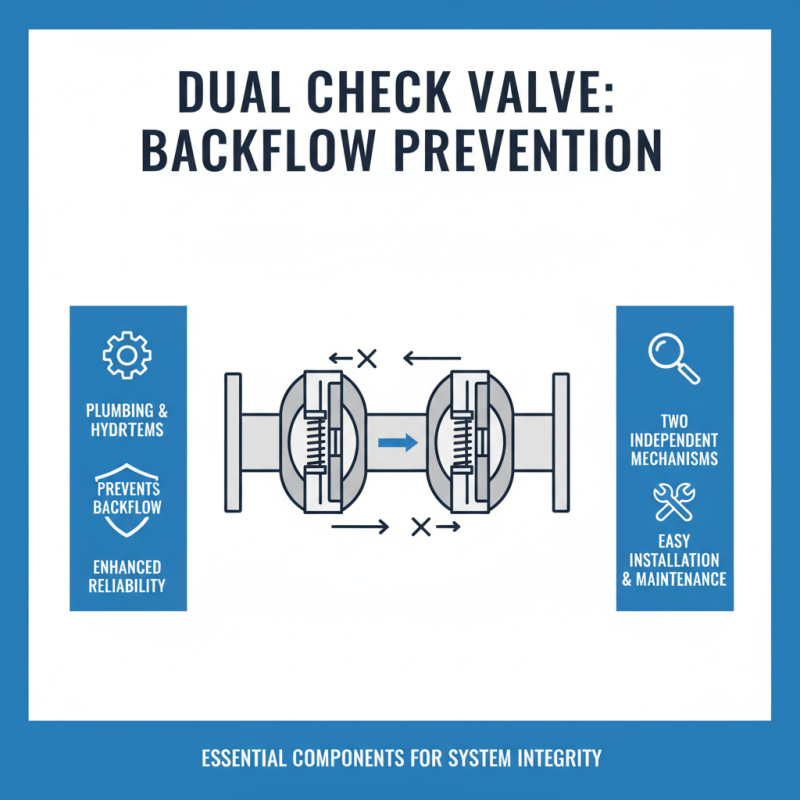
A dual check valve is essential in plumbing and hydraulic systems. It prevents backflow by utilizing two check mechanisms. Each valve operates independently, enhancing reliability. Understanding its components is crucial for proper installation and maintenance.
The primary components include the valve body, spring, and two check disks. The valve body is typically made of robust materials like brass or PVC. This durability ensures longevity in various conditions. The springs apply pressure to the check disks, keeping them closed during non-flow periods. This prevents contaminated water from entering the clean supply line. According to industry studies, improper installation can lead to a 30% increase in backflow incidents, underscoring the need for attention to detail.
The check disks are often made of rubber or plastic, allowing for flexibility. They must seal tightly but still allow for easy movement. Regular inspection is vital; wear and tear can result in leaks and reduced efficacy. Failure to maintain these components can create hazards. A study from the American Water Works Association indicates that aged valves experience performance drops up to 40%, stressing the importance of routine checks.
How a Dual Check Valve Operates
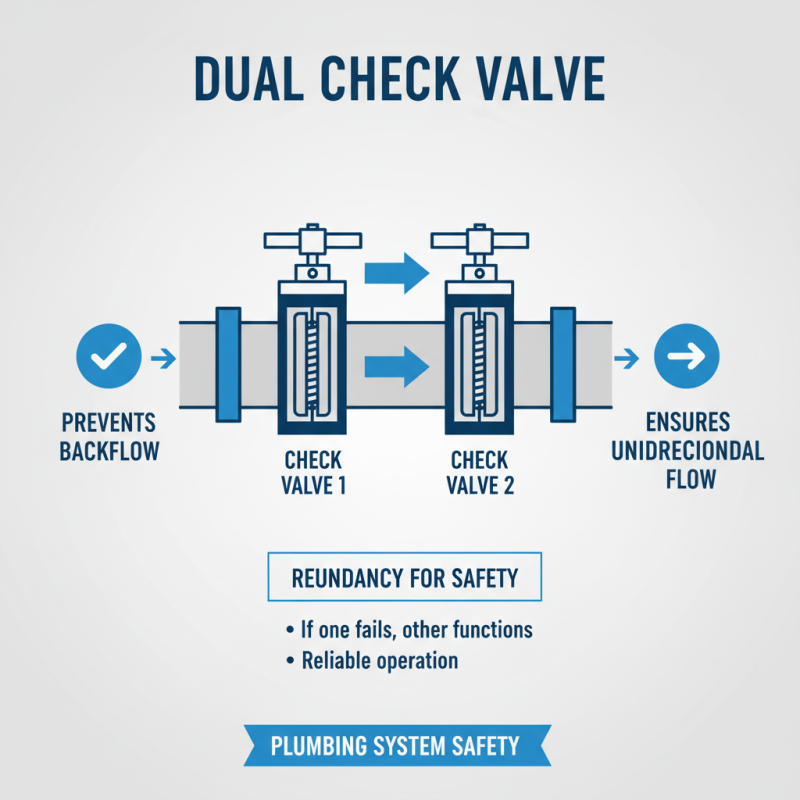
A dual check valve is a vital component in plumbing systems. It prevents backflow, ensuring that water flows in one direction only. The design features two independent check valves, allowing for reliable operation. If one valve fails, the other can still function. This redundancy enhances system safety.
When water flows in the correct direction, both valves open. Water pressure pushes against the valve discs, allowing fluid to pass through. If back pressure arises, the discs close tightly. This action stops any reverse flow. The entire process is quick and efficient, but sometimes, it can be affected by debris in the system. Small particles can jam the valves, hindering their movement.
Maintenance of a dual check valve is essential yet often overlooked. Regular checks can ensure smooth operation. However, many ignore this aspect, leading to potential problems. Ensuring valves are clean and functioning may seem trivial, but neglect can have bigger consequences. It's crucial to recognize that even simple components require care for optimal performance.
Benefits of Using a Dual Check Valve
A dual check valve serves a crucial role in plumbing systems. It prevents backflow, which can contaminate water supplies. This simple yet effective device encourages fluid flow in one direction only. If pressure changes or backflow attempts occur, the valves close tightly. The design often includes two spring-loaded disc valves. This redundancy ensures reliable operation and minimizes risks.
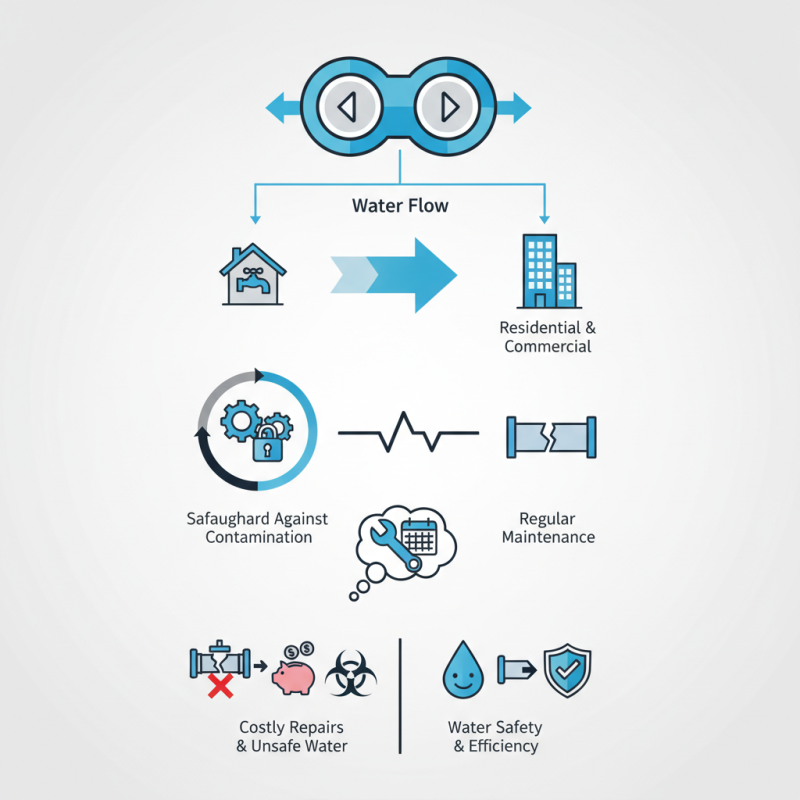
Using a dual check valve can bring several benefits. For one, it enhances safety by guarding against potential contamination. This is vital in systems where clean water is essential. Additionally, these valves are low maintenance. They typically require minimal attention, ensuring longevity. Installation is often straightforward. Many people appreciate how easy it is to incorporate this valve into existing systems.
Despite their utility, some issues can arise. It’s important to regularly check that the valves function properly. Accumulation of debris can hinder performance. A lack of maintenance may lead to more significant concerns down the line. Users must remain vigilant to avoid potential failures in the system.
Common Applications of Dual Check Valves
Dual check valves are commonly used in various systems where fluid flow control is essential. One prevalent application is in irrigation systems. In these systems, dual check valves prevent backflow, ensuring that clean water does not mix with contaminated sources. Gardeners benefit from this setup, promoting efficient and safe watering practices.
Another notable application is in plumbing. Dual check valves help protect the drinking water supply from pollutants. They work effectively within residential settings. It's crucial for homeowners to regularly inspect these valves. Over time, wear can affect their performance. A simple visual inspection can make a difference.
Industrial systems also utilize dual check valves. In manufacturing, maintaining fluid integrity is vital. These valves help ensure that hazardous materials do not leak back into mainlines. This enhances safety measures and compliance. However, relying solely on these systems without regular checks can lead to critical failures. Awareness of potential issues is essential in any setting.
Common Applications of Dual Check Valves