What Is a DTH Boring Machine and How Does It Work?

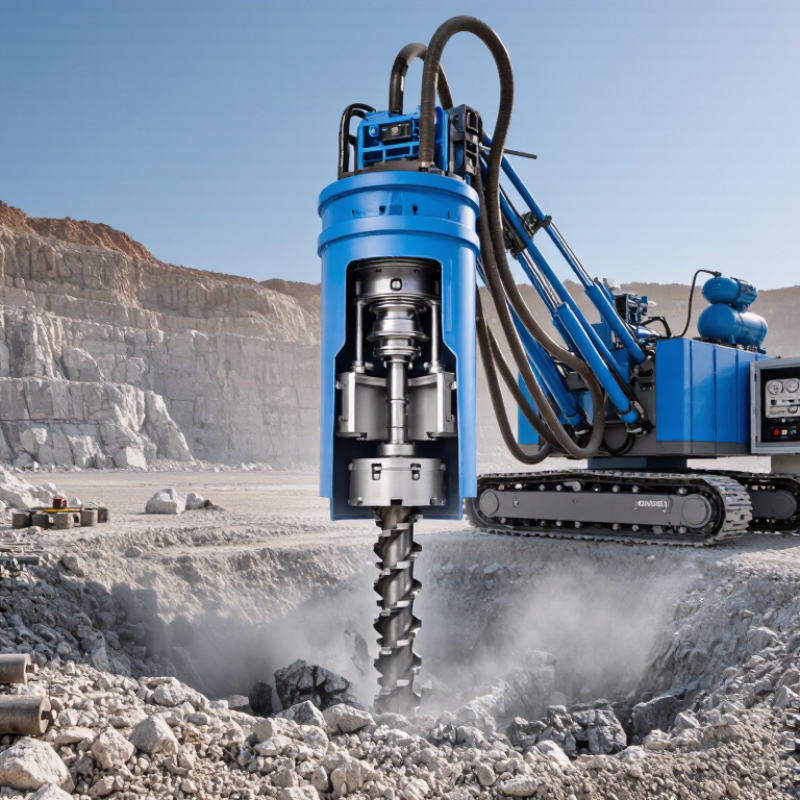
A Dth Boring Machine uses compressed air to drive a hammer inside, or close to, the drill bit. This design transfers impact energy directly to the rock face. It differs from top-hammer drilling, where energy travels through long drill rods. The distinction matters in hard, fractured ground.

The drilling cycle is practical and visible. A compressor sends air through the drill string. The down-the-hole hammer strikes the bit repeatedly. Cuttings then return through the annular space around the rods. On a dusty site, the process looks simple: steel rotates, the hammer beats, and broken rock rises in a grey stream. However, accuracy depends on more than impact force. Bit selection, air pressure, flushing velocity, rod alignment, and operator judgment all influence penetration and hole quality.

Industry demand gives this equipment wider importance. The International Energy Agency’s Global Critical Minerals Outlook 2024 reports strong projected growth in minerals needed for electrification. The U.S. Geological Survey’s Mineral Commodity Summaries 2025 also shows continued global dependence on mined materials. These trends support investment in productive exploration and construction drilling systems. They do not guarantee one machine will suit every project.

A Dth Boring Machine can perform well in hard formations, deep holes, and challenging benches. Yet performance claims should be tested against local geology, compressor capacity, fuel use, and maintenance records. Manufacturer brochures may simplify these limits. Field data is often less flattering. Understanding how the hammer, bit, air circuit, and rig interact provides a more reliable basis for equipment selection.

What Is a DTH Boring Machine and How Does It Work?

What Is a DTH Boring Machine?

A DTH boring machine is a drilling system that uses a down-the-hole hammer to break rock. “DTH” means the hammer works at the bottom of the borehole. A surface-mounted rig pushes threaded drill rods into the ground. Compressed air travels through the rods and powers the hammer. The hammer strikes the bit repeatedly, while the bit crushes hard rock into smaller fragments.

The broken material returns through the gap between the rods and the borehole wall. Operators can control drilling speed, air pressure, rotation, and feed force from the rig. This arrangement usually provides steady energy transfer in deep holes. It can also produce accurate holes for foundations, water wells, site investigation, and ground anchoring. In field conditions, dust, vibration, and changing rock layers strongly affect performance.

It is not a perfect system. Wet formations may slow debris removal, while fractured rock can cause hole deviation or rod damage. More air pressure does not always mean better drilling. Excessive pressure can increase wear and disturb nearby ground. Experienced operators check cuttings, machine sounds, penetration speed, and pressure changes together. Small clues matter. Maintenance is equally important, especially for rod threads, seals, filters, and the hammer’s internal parts. A DTH boring machine is powerful, but its results depend on suitable settings, careful observation, and honest assessment of the ground.

Core Components and Their Functions

What Is a DTH Boring Machine and How Does It Work?

A down-the-hole, or DTH, boring machine drills hard ground with a hammer positioned near the bit. Compressed air travels through the drill pipe and drives the hammer piston. The piston strikes the bit repeatedly. Rotation and controlled feed force then break rock into fragments. This design transfers impact energy directly to the hole bottom. It can improve drilling accuracy and reduce energy loss in deep holes.

Core components determine performance. The air compressor supplies clean, steady pressure for hammer action and cuttings removal. Drill pipes carry air, torque, and impact loads. The DTH hammer converts air pressure into rapid piston movement. The bit uses hardened buttons or cutting edges to fracture rock. A rotation motor turns the drill string at a controlled speed. The feed system pushes the assembly forward without excessive force. Sensors and operator controls help monitor pressure, torque, depth, and alignment. In field work, I have found that small pressure changes can reveal blocked passages or worn seals. Still, readings alone are not enough. Ground conditions can mislead even experienced operators.

Tips: Match bit design to the rock formation. Keep air passages clean. Inspect threads before every shift. Excessive feed pressure can damage the hammer and produce crooked holes. Dust control also matters, especially near workers and nearby equipment. A careful operator records drilling speed, pressure, and vibration, then compares those details with maintenance findings. This routine is simple, but it is often overlooked.

How the DTH Drilling Process Works Step by Step

What Is a DTH Boring Machine and How Does It Work?

A DTH boring machine drills rock with a hammer positioned directly behind the bit. Unlike top-hammer equipment, it delivers impact energy at the hole bottom. Compressed air drives a piston inside the hammer. The piston strikes the bit repeatedly, breaking hard rock into chips. The same air carries cuttings upward through the space around the drill rods. Control starts at the surface.

The DTH drilling process begins with site inspection and accurate rig alignment. The operator checks ground conditions, nearby structures, access, and the planned hole angle. A short starter section helps stabilize the collar. Air pressure then activates the hammer after the bit contacts rock. Rotation and feed force must match the formation. Excessive feed can jam the bit. Insufficient pressure may cause slipping and poor penetration. The operator adds drill rods as depth increases, recording torque, pressure, penetration rate, and abnormal vibration.

At the target depth, the hammer continues flushing briefly to clear loose debris. The rods are then withdrawn carefully, and the hole is inspected for collapse, deviation, or water inflow. Geological changes can alter drilling behavior within minutes. A pressure reading alone may mislead, especially when fractures absorb air. Field judgment still matters. In practice, the sequence rarely stays perfectly clean. Experienced crews adjust slowly, document changes, and avoid forcing equipment through unstable rock.

Main Applications and Suitable Ground Conditions

A DTH boring machine uses a hammer positioned behind the drill bit. Compressed air drives rapid impacts at the rock face while rotating torque breaks and removes material. Cuttings return through the drill pipe, often as a visible dust plume or wet slurry. The method is highly productive in competent rock, including granite, limestone, and hard sandstone. It performs less reliably in loose sand, soft clay, and fractured formations with heavy water loss.

Its main applications include water wells, geothermal boreholes, mining exploration, anchoring, and foundation drilling. The International Energy Agency’s 2024 geothermal report estimates that geothermal power could reach 800 GW globally by 2050. This growth will increase demand for dependable rock drilling. The U.S. Department of Energy also reports that geothermal heat pumps can reduce heating and cooling energy use by 25% to 50%. However, DTH is not automatically the best choice. Weak layers may collapse around the hole, while highly fractured rock can consume excessive air and slow cleaning.

Tips: Check a geological log before selecting the hammer. Measure water inflow, rock strength, and fracture frequency. Use casing systems where unstable ground threatens borehole integrity. Field trials remain valuable. A perfect specification can still fail underground. Operators should also control dust, noise, and compressor pressure through a documented site plan. These details protect productivity and nearby workers, although site conditions often expose gaps in the original design.

What Is a DTH Boring Machine and How Does It Work? - Main Applications and Suitable Ground Conditions
Dimension Technical Description Typical Operating Characteristics Main Applications Suitable Ground Conditions Key Limitations or Considerations
Definition A down-the-hole (DTH) boring machine uses a pneumatic percussion hammer positioned directly behind the drill bit inside the borehole. Compressed air powers the hammer, while the drill string rotates and advances the bit. Deep drilling, rock excavation, water-well construction, foundation work, and blasting-hole preparation. Most effective in competent, consolidated formations, especially hard and abrasive rock. Performance depends on adequate compressor capacity, drill-pipe stability, and effective removal of cuttings.
How the Drilling Action Works The hammer repeatedly strikes the bit while rotation indexes the impact points across the rock surface. Impact energy breaks the formation into chips; compressed air transports the chips to the surface through the annular space. Quarrying, mining exploration, geotechnical investigation, and rock-socket drilling. Hard rock, competent limestone, sandstone, granite, basalt, and similar formations. Very soft or highly plastic formations may reduce percussion efficiency and can cause clogging or poor hole cleaning.
Energy Transfer The hammer is located at the bottom of the hole, so impact energy is delivered close to the bit rather than transmitted through the entire drill string. Energy loss is generally lower than with a surface hammer when drilling deep holes in hard rock. Long blast holes, deep water wells, and drilling where straight-hole performance is important. Deep, relatively stable rock formations with sufficient access for the drill rig and compressor. Deviations can still occur in fractured or dipping formations; proper bit selection and alignment remain important.
Hole Diameter Range DTH systems are commonly used for small- to medium-diameter holes, although larger systems are available for specialized work. Typical applications often use approximately 90–300 mm hole diameters; actual capacity varies by hammer, bit, and rig. Blast holes, water wells, ground anchors, micropiles, and exploration holes. Rock formations where the selected bit diameter can maintain adequate penetration and air return. Larger diameters require substantially greater air volume, torque, pullback, and hole-cleaning capacity.
Drilling Depth DTH drilling is suitable for shallow to deep holes, with achievable depth governed by equipment configuration and formation conditions. Depth capability is affected by hole diameter, drill-pipe size, compressor pressure, water inflow, and borehole stability. Water wells, mineral exploration, geothermal investigation, and deep foundation drilling. Stable rock that supports the borehole wall and allows compressed air to circulate effectively. Unconsolidated overburden, severe fracturing, and high groundwater inflow may require casing or alternative drilling methods.
Hard and Competent Rock DTH percussion is particularly effective because repeated high-frequency impacts fracture strong rock efficiently. Provides good penetration and generally consistent hole geometry when the bit is correctly matched to the rock. Quarry production, controlled blasting, mining development, and rock anchoring. Granite, basalt, quartzite, hard limestone, competent sandstone, and other consolidated rocks. Highly abrasive rock accelerates button and gauge wear, increasing maintenance and tooling costs.
Fractured Rock DTH drilling can penetrate fractured rock, but air and cuttings may escape into open joints or cavities. Penetration can be fast, but loss of circulation may reduce cleaning efficiency and make depth control difficult. Rock-slope stabilization, exploration, anchoring, and investigation of fractured formations. Moderately fractured rock when casing, foam, water, or other circulation-control measures are available. Severe lost-air zones may require casing advancement, drilling additives, grouting, or a different drilling system.
Loose Overburden Unconsolidated soil, gravel, sand, and weathered material are not the natural strength of open-hole DTH drilling. Hole walls may collapse, and cuttings may not be transported efficiently without casing or specialized tooling. Overburden drilling, well installation, and site investigation when casing-advancement systems are used. Loose ground can be drilled with temporary casing, casing advancement, or dual-rotary arrangements. Open-hole drilling may produce unstable holes, excessive air loss, stuck tooling, or incomplete sampling.
Clay and Plastic Soil Plastic clay can adhere to the bit and hammer components and may restrict air passages. Penetration and cuttings discharge may deteriorate as moisture content and stickiness increase. Limited use in mixed formations, usually with casing, modified drilling fluids, or alternative tooling. Dry, firm, or partially weathered clay layers may be manageable for short intervals. Wet, highly plastic clay is generally unfavorable for standard air-driven DTH operation.
Water-Bearing Formations Groundwater can enter the borehole and interfere with compressed-air return and cuttings transport. Water inflow may be manageable at moderate rates but can reduce air velocity and hole-cleaning performance. Water-well drilling, hydrogeological investigation, and geothermal exploration. Competent aquifer rock where casing and air-management procedures can maintain borehole stability. High inflow may require foam, mist, water injection, casing, or a drilling method designed for fluid circulation.
Typical Applications DTH rigs are used where percussion drilling, reliable hole cleaning, and accurate rock penetration are required. Common work includes blast-hole drilling, water wells, mineral exploration, geotechnical drilling, anchors, and micropiles. Construction, mining, quarrying, civil engineering, environmental investigation, and infrastructure projects. Best suited to sites with accessible working space and formations ranging from weathered rock to hard rock. Site access, noise, vibration, dust, compressed-air supply, and spoil disposal must be planned before drilling.
Air and Compressor Requirements Compressed air must supply the hammer and lift broken rock or soil particles out of the hole. Required pressure and volume vary with hammer size, hole diameter, depth, ground permeability, and water inflow. All DTH operations, especially deep-hole and large-diameter drilling. Permeable but stable rock where air can circulate and return cuttings to the surface. Insufficient air pressure or volume can cause slow drilling, poor cleaning, excessive bit wear, and stuck rods.
Advantages Direct-bottom impact, effective rock penetration, good depth performance, and generally straight holes in suitable formations. Often maintains useful penetration at greater depths than surface-impact systems because the hammer is near the bit. Deep rock drilling, production blasting, exploration, and foundation support. Competent and moderately fractured rock with manageable groundwater conditions. Capital cost, compressor demand, airborne dust, noise, and reduced suitability in unstable soft ground must be considered.
Environmental and Site Factors DTH drilling produces exhaust air, rock dust, noise, vibration, and drill cuttings. Dust suppression may use water injection, mist, foam, dust collectors, or enclosed handling systems. Urban construction, infrastructure, quarrying, mining, and environmentally controlled projects. Sites where access, ventilation, water management, and spoil containment can be properly arranged. Noise limits, dust regulations, nearby structures, groundwater protection, and cuttings disposal may affect method selection.
Method Selection Guidance DTH is generally selected when the formation is sufficiently hard for percussion and the borehole can be kept stable. Engineers compare geology, hole diameter, depth, groundwater, casing needs, access, production rate, and environmental constraints. Preliminary design of drilling programs for construction, mining, water, and geotechnical projects. Strong or moderately weathered rock with predictable air return and manageable borehole stability. Rotary, rotary-percussive, mud-circulation, casing-advancement, or other systems may be more suitable in soft, unstable, or highly water-bearing ground.

Key Benefits, Limitations, and Maintenance Needs

A down-the-hole (DTH) boring machine drills with a hammer positioned inside the borehole. Compressed air drives the hammer against the rock face, while the drill string transfers rotation and downward pressure. Cuttings travel back to the surface through the air stream. This arrangement delivers strong impact energy at depth and usually creates straight, clean holes in hard rock.

Its main benefit is dependable penetration through granite, dense limestone, and similar formations. Operators can achieve accurate hole spacing for foundations, water wells, and ground investigation. DTH drilling also produces less vibration than some surface-hammer methods. In practice, results vary. Wet ground may slow cuttings removal, and fractured rock can cause hole collapse or excessive air loss. The machine also needs a large compressor, steady fuel supply, and trained control. It is not a magic solution.

Maintenance begins after every shift. Inspect hammer seals, drill threads, air hoses, and bit buttons for wear or cracks. Clean dust from filters and check compressor oil levels before operation. Lubrication must match the equipment manual; too little increases friction, while too much can foul the air system. Replace worn parts before they damage the hammer body. A simple service log helps track pressure, drilling speed, and unusual vibration. Operators sometimes blame the rock when poor maintenance caused the problem. That assumption deserves review. Safety checks should include hose connections, mufflers, guarding, and stable ground around the rig.

What Is a DTH Boring Machine and How Does It Work?

Down-the-hole (DTH) drilling places the impact hammer directly behind the drill bit. Compressed air drives the hammer while also lifting cuttings out of the borehole. The chart shows representative industry planning ranges for common DTH borehole applications.

Borehole sizes are typical ranges rather than fixed limits. Actual selection depends on rock strength, required casing, drilling depth, hammer size, compressor capacity, and project specifications.

Key Benefits

High impact energy at the bit, effective cuttings removal, accurate hole alignment, and good performance in hard or fractured rock.

Limitations

DTH systems require substantial compressed air, may generate dust and noise, and can lose efficiency in very soft, unconsolidated, or water-sensitive formations.

Maintenance Needs

Inspect the bit, hammer, threads, seals, and air lines regularly. Maintain clean, dry lubrication and replace worn parts before impact performance declines.

Request a Quote/Further Information

    Download