Call us on: +44 (0) 1482 323163
Request a Quote
Choosing a Fuse Holder starts with a practical question: what fuse must it safely accommodate? The answer depends on more than the fuse’s shape. Current rating, operating voltage, fault-current capacity, mounting method, available space, and environmental conditions all matter. A holder that fits neatly may still be unsuitable for the circuit.
The wider context is changing, too. The International Energy Agency’s Electricity 2025 report says global electricity demand grew by 4.3% in 2024, driven by factors including industry, cooling, and data centres. That figure does not determine which holder you need. It does underline why designers should check real operating conditions rather than rely on a familiar part number. Small component. Important decision.
This guide compares common holder styles, including panel-mounted, inline, PCB-mounted, and cartridge-fuse options. It also explains how to check fuse dimensions, ratings, terminals, and installation constraints. Standards such as IEC 60127-6 and the UL 4248 series provide useful technical reference points, but the applicable requirements depend on the product and market. Always confirm details against the manufacturer’s datasheet and the equipment design. One easy detail to miss is clearance around the holder. There may be more than one right choice, and catalog descriptions are not always as clear as they should be.
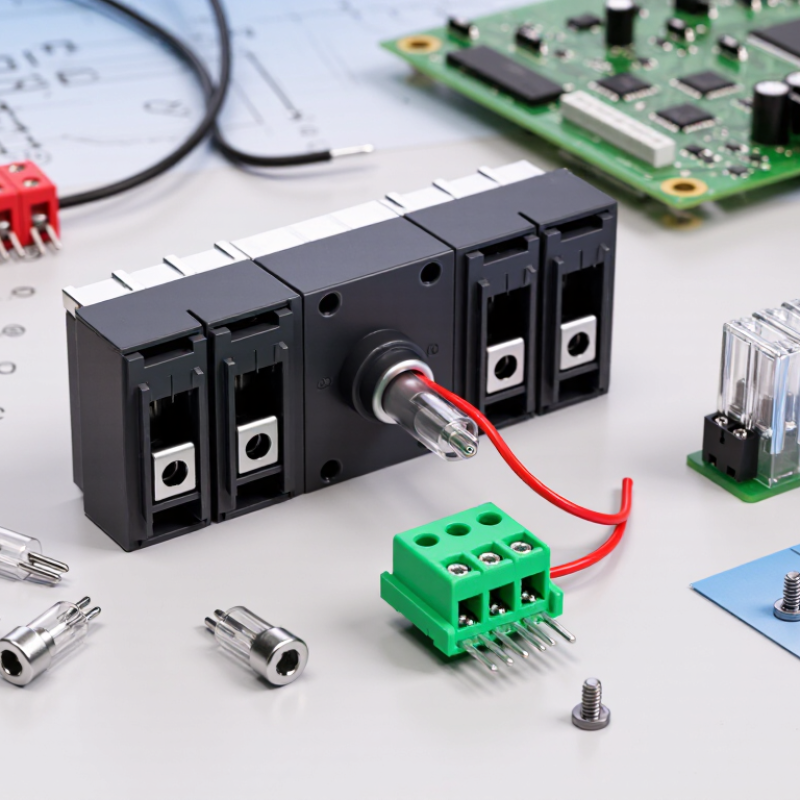
A fuse holder secures a replaceable fuse and connects it electrically to the circuit. It is usually wired in series, between the power source and the section being protected. If current exceeds the fuse’s rating long enough, the fuse element melts and interrupts the circuit. The holder itself does not detect faults. It provides stable electrical contacts and keeps the fuse accessible. That distinction matters.
The right holder depends on the fuse’s shape, dimensions, current rating, and voltage rating. It must also suit the circuit’s wire size and expected temperature. An inline holder may sit close to a battery or power supply, where it can protect the wire running downstream. A panel-mounted holder places the fuse behind an accessible opening. Small circuit boards may use compact clips or enclosed holders. Fit matters.
A loose contact can heat up, even when the fuse is correctly rated. Check for secure terminals, corrosion, and signs of discoloration during inspection. Before replacing a fuse, disconnect power when practical and investigate why it opened. Never install a higher-rated fuse just to stop repeated interruptions. Read the equipment documentation; real installations can have details that a general guide misses.
| Holder type | Where it fits | Typical fuse format | Useful for | Key selection checks |
|---|---|---|---|---|
| Inline holder | Installed in series with a wire, commonly close to the power source for the circuit being protected. | Varies by design; may accept a cartridge, blade, or other specified fuse. | Adding fuse protection to a cable or a small, separately wired circuit. | Match the holder to the fuse format and wire size. Check current and voltage ratings, insulation, mounting, and suitability for the environment. |
| Panel-mount holder | Mounted through an enclosure panel, with terminals connected to the circuit behind the panel. | Often a cartridge fuse; the accepted dimensions and contact style depend on the holder. | Equipment that needs a fuse accessible from the outside of an enclosure. | Check panel cutout and thickness, fuse dimensions, terminal arrangement, ratings, and whether the enclosure needs a specified ingress-protection level. |
| PCB fuse clips | Soldered to a printed circuit board, holding an exposed fuse directly on the board. | Cartridge fuse of the specified size and terminal style. | Board designs where the fuse should be visible and replaceable without a separate enclosure-mounted holder. | Confirm fuse dimensions, clip spacing, board layout, current and voltage ratings, and clearance from nearby components. Consider protection from accidental contact. |
| Enclosed PCB fuse holder | Mounted on a printed circuit board, with a cover or body around the fuse. | Cartridge or other fuse format specifically listed for that holder. | Board-level fuse protection where the fuse needs more shielding or a defined replacement method. | Check the exact fuse type, board footprint, access method, ratings, and any required temperature or flammability specifications. |
| Automotive-style fuse block | Fastened to a panel or support and wired between the supply and one or more protected branches. | Blade fuses of the size and profile specified for the block. | Vehicle or mobile-equipment circuits designed for compatible blade fuses. | Verify fuse profile, circuit count, terminal and wire capacity, total current limits, mounting, and suitability for vibration, temperature, and moisture exposure. |
| DIN-rail fuse holder | Mounted on a DIN rail inside an electrical cabinet, in series with a panel circuit. | Cartridge or other fuse format specified for the terminal block. | Organized, serviceable protection for industrial or control-panel wiring. | Check the compatible fuse, conductor range, rated voltage and current, available fault-current requirements, and cabinet spacing or applicable standards. |
| Fuse clips or open fuse base | Fixed to a chassis, board, or insulating support, leaving the fuse exposed. | Usually a specified cartridge fuse. | Applications where simple access is needed and the design provides suitable guarding. | Confirm clip compatibility and contact pressure, secure mounting, ratings, and protection against contact with live parts. |
How to choose: A fuse holder keeps a fuse electrically connected in series with the circuit; the fuse opens the circuit when current exceeds its operating limits. Select a holder that accepts the exact fuse format and is rated for the application. Check the fuse’s current, voltage, time-current behavior, and interrupting rating, as well as the holder’s ratings and installation requirements. For DC circuits, confirm that the fuse is specifically rated for the circuit’s DC voltage. Follow the equipment documentation and applicable electrical codes.

© Shipham Valves 2025. All Rights Reserved.
Website By PS Website Design Ltd
Request a Quote/Further Information
Download