How to Choose the Right Farrowing Pen for Your Farm?
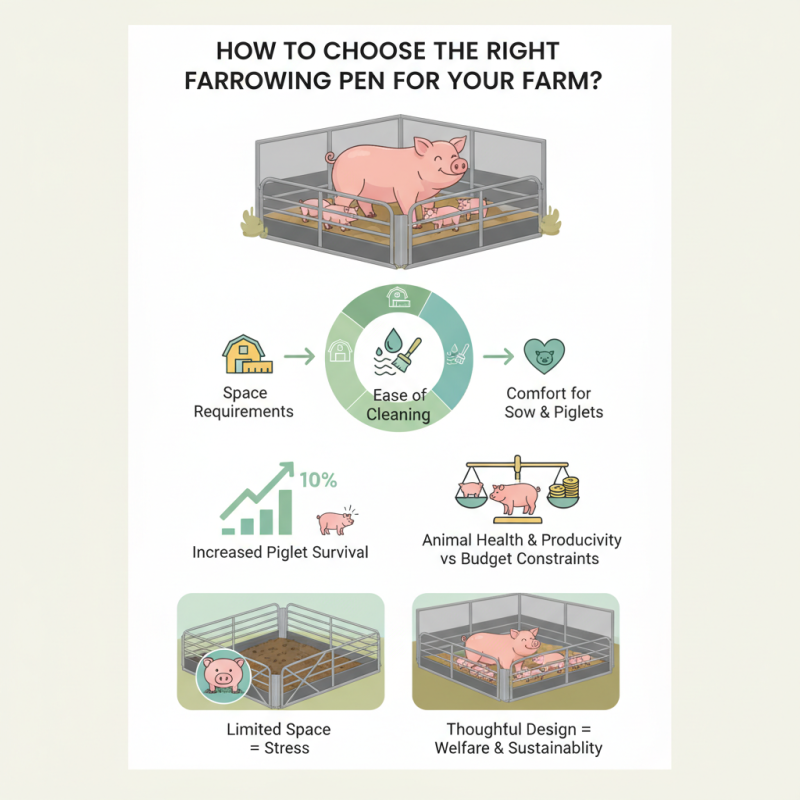
Selecting the right Farrowing Pen is crucial for swine production. A well-designed farrowing pen improves sow welfare and enhances piglet survival rates. According to research by the National Pork Producers Council, proper pen design can increase piglet survival by up to 10%. This is a significant statistic that farmers should consider when investing in their facilities.
Many factors influence the selection process for farrowing pens. These include space requirements, ease of cleaning, and comfort for the sow and piglets. The American Association of Swine Veterinarians emphasizes that the right pen improves not only animal health but also overall farm productivity. Farmers must balance these needs with budget constraints.
Some existing designs may not fully address animal behavior. For example, limited space can lead to stress among sows, affecting their maternal instincts. It’s essential to reflect on current practices and adapt them based on new insights. In this evolving agricultural landscape, a thoughtful approach to farrowing pen selection will promote better welfare and lead to more sustainable farming.
Identifying the Key Features of an Effective Farrowing Pen
When selecting a farrowing pen, it's essential to focus on key features that promote both sow and piglet welfare. A well-designed pen should provide ample space for the sow while ensuring the piglets are safe. The pen dimensions are critical; typically, it should be large enough for the sow to move comfortably. A cramped environment can lead to stress and aggression. It's vital to consider the layout, which should allow easy access for the farmer and sufficient room for the sow to lie down.
Another important aspect is the design of the creep area. This space should be easily accessible for the piglets but separate enough to prevent the sow from accidentally laying on them. The flooring must offer comfort as well. Hard floors can cause joint issues in sows. Rubber mats or straw bedding can create a more forgiving surface. It's worth reflecting on past experiences to identify any shortcomings in previous pen setups.
Ventilation plays a significant role as well. Proper airflow can reduce stress and disease transmission. This is something farms often overlook. Lastly, evaluate the cleanliness and ease of maintenance of the pen. A design that traps waste or is difficult to clean can lead to poor hygiene. Keeping these features in mind can significantly improve the farming experience.
Assessing Space Requirements for Farrowing Pens on Your Farm
When choosing the right farrowing pen, assessing space requirements is crucial. Each pen must provide enough room for sows and piglets. Generally, a pen should allow for at least 20 square feet per sow. This space ensures comfort and reduces stress during farrowing.
Consider the layout of your farm. The distance between farrowing pens impacts management efficiency. If pens are too far apart, moving between them becomes cumbersome. Also, ensure easy access to feeding and watering systems. Properly designed space can enhance animal welfare and productivity.
Reflect on your current space utilization. Are your pens overcrowded? Overcrowding can lead to increased aggression and competition for resources. Evaluate if you need to adjust the size of your pens or reallocate space. Finding the right balance can lead to better outcomes in pig health and overall farm success.
How to Choose the Right Farrowing Pen for Your Farm? - Assessing Space Requirements for Farrowing Pens on Your Farm
| Dimension | Recommended Size (ft) | Notes |
| Width | 5 - 7 | Should allow mother and piglets to move comfortably. |
| Length | 7 - 8 | Sufficient space for the sow to lie down and stand. |
| Height | 4 - 5 | Preventing injuries from overhead structures. |
| Space per Pig | 1.5 - 2 | This is the ideal space allocated for piglets. |
| Total Area | 35 - 50 | Total minimum area for farrowing pens. |
Evaluating Materials and Construction of Farrowing Pens
Choosing the right materials for farrowing pens is crucial for swine production. The quality of materials directly impacts the health of sows and piglets. Reports suggest that 30% of piglet mortality can be traced back to poor housing conditions. It’s essential to evaluate options like metal, plastic, and wood. Each has its pros and cons.
Metal pens are durable and easy to clean. However, they can be cold and uncomfortable. In contrast, plastic options are gentler on piglets but may wear out quicker. Wood provides warmth and comfort but can harbor bacteria if not maintained well. A study indicates that pens with smoother surfaces can reduce disease transmission significantly.
Construction quality also matters. The layout should facilitate natural behaviors while ensuring safety. Research reveals that overcrowded pens can lead to increased stress and aggression. Aim for designs that allow adequate space and easy access for feeding and watering. Imperfections in design should be addressed to minimize risk and enhance animal welfare.
Farrowing Pen Material Evaluation
Understanding Animal Welfare Considerations in Farrowing Pen Design
Designing a farrowing pen requires careful thought about animal welfare. A well-designed pen allows sows to express natural behaviors. It should provide space to move comfortably. A stressed animal can lead to various health issues. Pens that are too cramped can affect sow and piglet health negatively.
Temperature control is another critical factor. Sows need a warm environment for optimal comfort during farrowing. Cold conditions can lead to complications. Adequate bedding also fosters a healthier space for the sow and her piglets. However, too much bedding can cause moisture buildup, leading to other problems.
Visibility plays a vital role in welfare. Farmers need to monitor their animals without causing stress. Transparent side panels can help monitor without intruding. Yet, safety features must protect both animals and farmers. Reflecting on the balance between visibility and security can lead to a better-designed pen. This is a challenge but essential for a thriving farming operation.
Comparing Cost and Maintenance of Various Farrowing Pen Options
Choosing the right farrowing pen for your farm can greatly impact productivity. When comparing costs, it’s essential to look beyond the initial purchase price. Consider ongoing maintenance costs, as well. Some materials may be cheaper upfront but require frequent repairs or replacement.
For example, metal pens may last longer than wooden ones. However, metal can be prone to rust or breakage. Think about how each option fits into your farm’s budget. Evaluate the lifespan of materials and any additional costs for repairs.
Tips: Always calculate the long-term costs before purchasing. This includes materials, labor, and upkeep. Look for pens that offer easy cleaning to save time and resources. Ensure your choice promotes the health and well-being of the sows.
Consider ease of assembly as well. Some designs require more time and labor to set up. Reflect on your farm's workflow and how the pen will fit into your operations. The right farrowing pen should strike a balance between cost, maintenance, and functionality.