Choosing Diaphragm Wall Equipment in 2026 means balancing site conditions, wall design, and verified machine performance. Demand for resilient urban infrastructure is one reason this decision matters. The Global Infrastructure Outlook, published by Oxford Economics in 2017, estimated that global infrastructure investment needs could reach $94 trillion by 2040, with a potential $15 trillion shortfall. UN DESA’s 2018 World Urbanization Prospects projected that 68% of the world’s population would live in urban areas by 2050. These figures describe broad pressure on infrastructure, not guaranteed demand for any specific equipment. Projections are not purchase orders.
For project teams, the practical question is whether a machine can excavate the specified panel safely and consistently under actual site conditions. Compare grab or cutter systems against soil layers, panel dimensions, required depth, groundwater, and available working space. Check the manufacturer’s stated cutting capacity, verticality controls, slurry circulation, and compatibility with the proposed crane and power supply. Then ask for service records, parts availability, operator training, and references from comparable projects. A brochure is not enough.
Field experience matters. A compact site beside existing buildings may reward precise control and reliable spoil handling more than headline output. In harder ground, cutter performance and tool wear deserve close review. Yet no equipment choice removes uncertainty: geology can change between boreholes, and productivity estimates may prove optimistic. That deserves a second look. Use project-specific geotechnical data, independent engineering review, and documented performance evidence before selecting Diaphragm Wall Equipment for 2026.
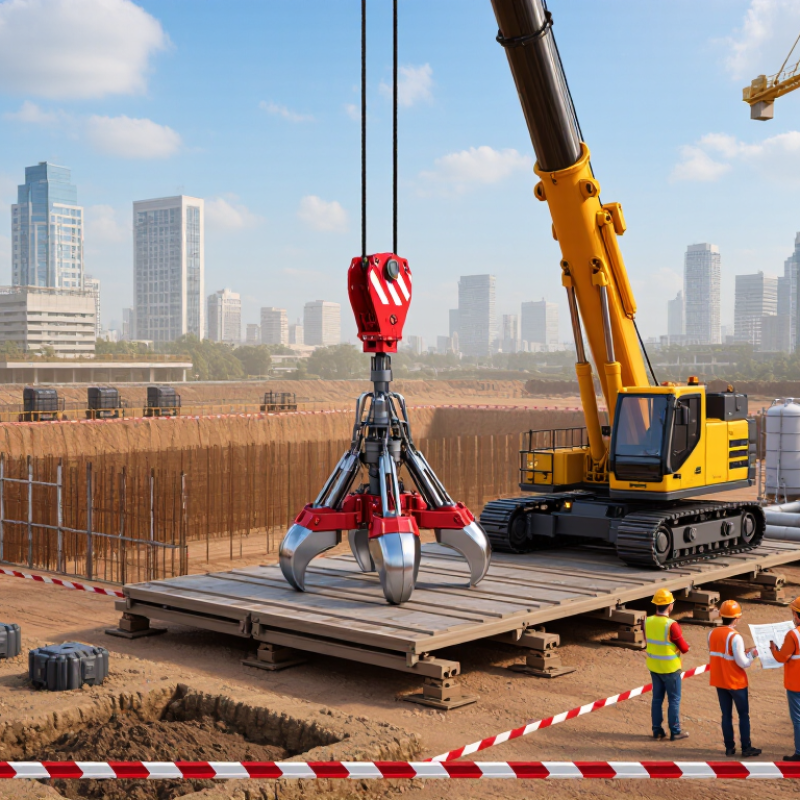
Diaphragm wall equipment creates deep, reinforced concrete walls used to support excavations and control groundwater. The work begins with excavating a narrow trench in measured sections. Depth matters. Ground conditions, wall dimensions, and nearby structures all affect equipment selection.
A hydraulic grab removes soil in many common conditions, while a trench cutter can help maintain alignment in harder ground. Cranes lift equipment and reinforcement cages. Slurry mixing and cleaning systems keep the trench supported and remove sediment. Tremie pipes place concrete from the bottom upward, helping limit contact with slurry. Each component has a distinct job, but performance depends on coordination. A well-equipped site can still lose time if slurry handling or cage lifting is undersized.
Choosing diaphragm wall equipment in 2026 starts with the wall, not the machine catalogue. Confirm the required depth, thickness, panel sequence, and tolerances before comparing rigs. A 30-metre panel in dense gravel creates different demands from a shallower wall in soft clay. Small differences matter.
Read the ground investigation closely, including soil layers, cobbles, groundwater levels, and any gaps between boreholes. A grab may suit some soils, while hard or mixed formations can require a cutting system. Check how the equipment handles slurry circulation and spoil removal, too. Mud has to go somewhere. On a confined site, truck access and storage space can become limiting factors before excavation begins.
Walk the site and check overhead clearance, working-platform capacity, nearby structures, buried utilities, and crane access. High groundwater or sensitive buildings may call for tighter controls and more monitoring. Ask contractors how their proposed setup performs under comparable ground conditions, and verify that the stated reach and lifting capacity match the planned sequence. Geotechnical reports are useful, but they are not perfect; conditions between investigation points may differ. A trial panel or updated site review can expose assumptions early, before equipment and schedules are locked in.
Match the excavation method to project requirements and site conditions.
The 1–5 scores are an indicative screening guide, not measured equipment performance. Clamshell grabs are often considered for more straightforward ground and constrained sites; hydromills may be better suited to deep, hard, or highly vertical excavations. Confirm the choice using the ground investigation, wall depth and thickness, access, slurry-handling needs, and project specifications.
Comparing Equipment Types, Capacities, and Operating Methods
Hydraulic grabs suit many projects with soft to moderately stiff soils and straightforward panel layouts. Cable grabs can be simpler to maintain, but their performance depends on crane capacity and site conditions. For deep panels or hard, uniform ground, hydromills can offer better control of verticality. They also need more specialist support.
The ground decides.
Compare equipment capacity against panel depth, width, soil strength, and the lifting load—not just the machine’s headline rating. A grab may excavate quickly in workable ground, while a cutter may maintain steadier progress through dense layers. Both methods require careful slurry management and spoil removal. Check available working space, crane access, and the expected panel sequence before choosing.
A neat chart can still mislead.
Tips:
Ask for project-relevant performance data, including excavation rates in comparable ground. Confirm the required slurry plant, cutting tools, and maintenance access. Track verticality during excavation, not only after panel completion. Small delays matter. Even experienced teams can underestimate site logistics.
Choosing diaphragm wall equipment in 2026 means judging the whole working system, not just digging speed. Check operator visibility, emergency stops, guarding, hose routing, and safe access for cleaning. At a crowded site, a poorly placed service point can turn routine maintenance into a hazard. A useful warning: safety features matter only when crews can inspect and use them consistently. The U.S. Bureau of Labor Statistics recorded 1,075 construction fatalities in 2023; this sector-wide figure is not specific to diaphragm wall work, but it underscores the consequences of weak controls.
Reliability is best assessed through operating records: unplanned stoppages, repair frequency, and performance in the ground conditions expected on site. Ask how quickly wear parts can be changed, and whether routine checks can be done without dismantling major assemblies. For total cost, include transport, fuel or power, slurry-system demands, consumables, scheduled maintenance, downtime, and end-of-project removal. The International Labour Organization’s 2017 global estimates reported 2.78 million work-related deaths annually across all sectors, reinforcing why safety cannot be treated as a secondary cost. Compare suppliers’ maintenance assumptions against your own shift pattern and local service capacity. A spreadsheet can still flatter a poor choice. Estimates are imperfect; revise them when site data becomes available.
| Equipment option | Best-suited ground and application | Operational safety risk | Reliability considerations | Maintenance burden | Typical cost tendency | Key selection checks |
|---|---|---|---|---|---|---|
| Hydraulic diaphragm wall grab | Common choice for soft to medium soils and many mixed ground conditions; suitability depends on the grab design, depth, and obstructions. | Moderate Manage suspended-load, pinch-point, and slurry-handling hazards. Stability of the trench and guide walls remains critical. | High when well matched Established operating method; performance can be affected by hard layers, cobbles, and significant deviations from vertical. | Moderate Inspect hydraulic hoses, cylinders, teeth, cutting edges, and lifting components; wear increases in abrasive ground. | Moderate Often a practical baseline for projects without unusually hard ground or stringent verticality demands. | Check required depth and panel dimensions, ground profile, grab capacity, service support, and verified verticality-control arrangements. |
| Cable-hung mechanical grab | Generally suited to accessible sites and ground that can be excavated efficiently with a mechanical grab; harder or obstructed layers may reduce progress. | Moderate to high Requires disciplined control of suspended loads, hoisting operations, exclusion zones, and communication between crew members. | Moderate Mechanically straightforward, but output and trench accuracy depend strongly on operator skill and ground conditions. | Low to moderate Fewer complex hydraulic systems on the grab itself, but ropes, sheaves, teeth, and lifting gear need regular inspection. | Low to moderate Can be economical where crane capacity and local operating expertise are available. | Confirm crane capacity at the required working radius, lifting-plan requirements, trench-depth limits, and achievable alignment tolerance. |
| Hydraulic trench cutter (hydromill) | Often selected for deep, stiff, or heterogeneous ground and projects with demanding verticality requirements; suitability depends on cutter configuration and geology. | Moderate Enclosed cutting operations reduce some exposed-tool hazards, but heavy lifts, high-pressure systems, and slurry circulation still require controls. | High with specialist support Can deliver controlled excavation, but depends on correctly maintained cutting wheels, pumps, desanding equipment, and monitoring systems. | High Specialist servicing, cutter-wheel and tooth wear management, hydraulic-system checks, and slurry-plant upkeep are important. | High Higher equipment and support-system costs may be offset on suitable projects by accuracy, depth capability, or reduced rework. | Assess geology, required verticality, depth, slurry-plant capacity, spare-parts access, specialist crew availability, and expected utilization. |
| Combined grab-and-cutter fleet | Useful when ground conditions vary significantly between panels or along the alignment and a single method may not be suitable throughout. | Moderate Safe method changes require coordinated lifting plans, clear equipment zones, and consistent site procedures. | High when planned Provides flexibility, although results depend on matching each method to the relevant ground conditions. | High Maintaining and coordinating multiple equipment types increases inspection, spares, and crew-planning demands. | Moderate to high Additional mobilization and standby costs may be justified where ground variability creates significant production or quality risks. | Use ground investigation data to define changeover criteria; compare mobilization, standby, operator, and maintenance costs in the project estimate. |
| How to read this table: Ratings are qualitative, planning-level comparisons—not measured performance guarantees. Actual safety risk, reliability, maintenance needs, production, and total cost depend on the site, equipment condition, crew competence, ground investigation, project depth, and contract requirements. Obtain project-specific quotations and complete a site risk assessment before selection. | ||||||
Selecting diaphragm wall equipment in 2026 means matching the machine to the ground, the wall geometry, and the site’s actual constraints. A hydraulic grab may suit variable strata and straightforward panels; a cutter can offer better control in hard or deep ground, but needs skilled operators and dependable slurry support. Check working-platform capacity, overhead clearance, crane reach, and room for spoil handling before comparing nominal output. A machine that fits on paper may still lose hours to truck queues or slurry-treatment bottlenecks.
Track panel cycle time, verticality, slurry loss, fuel use, and rework. Small daily delays add up. McKinsey’s 2017 report, Reinventing Construction, found construction productivity had grown about 1% annually over two decades, versus 3.6% in manufacturing. That gap makes realistic production planning more useful than headline machine capacity. GlobalABC’s 2023 Global Status Report attributed 37% of global energy- and process-related CO₂ emissions in 2022 to buildings and construction, reinforcing the value of measuring fuel use and avoiding unnecessary plant idling. Still, one metric cannot rank every rig. I would not treat this as a perfect formula: local ground records, operator capability, maintenance access, and a trial panel can change the choice. That matters.
© Shipham Valves 2025. All Rights Reserved.
Website By PS Website Design Ltd
Request a Quote/Further Information
Download
We use cookies on this website, by continuing to browse the site you are agreeing to our use of cookies. Find out more.