How to Choose Galvanized Nails for Your Project?
When selecting galvanized nails for construction projects, understanding the specifics is crucial. Galvanized nails are coated with zinc, which provides excellent corrosion resistance. According to a report by the American Galvanizers Association, using galvanized nails can extend the life of your structures by up to 50% in harsh environments. However, not all galvanized nails are created equal.
There are various types available, each suited for different applications. For instance, hot-dipped galvanized nails have a thicker coating than electro-galvanized nails, making them ideal for outdoor use. It's essential to match the type of galvanized nails with your project's requirements. A mismatch can lead to premature failure or rusting.
Many professionals still overlook these details. They might choose based on cost alone, neglecting the long-term implications. Remember, investing in quality galvanized nails can save time and money down the line. Therefore, it's worth reflecting on the choices you make before starting your project.
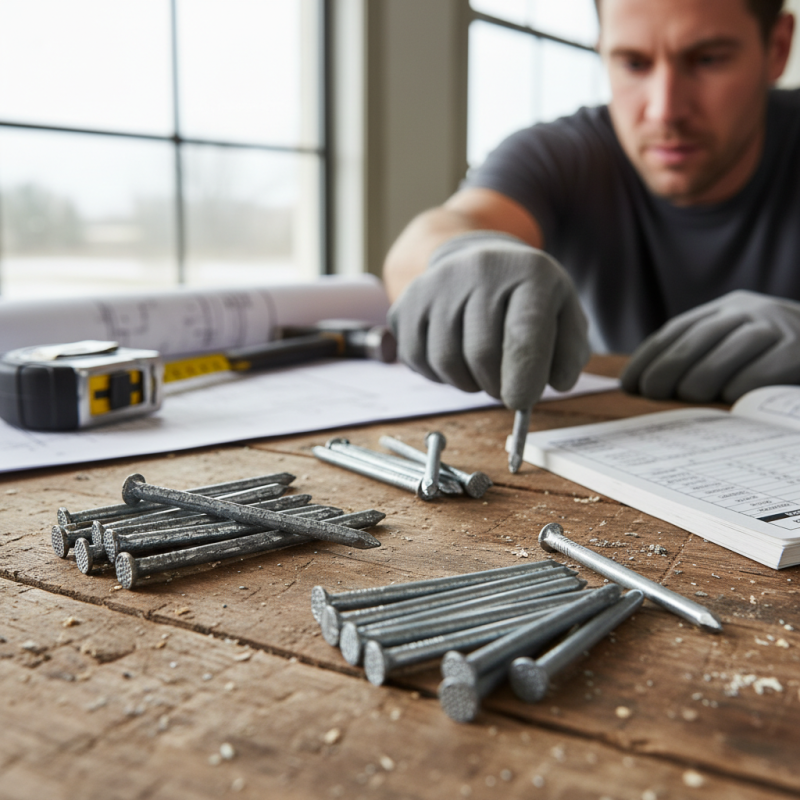
Understanding the Basics of Galvanized Nails and Their Uses
Galvanized nails are crucial for outdoor projects. They resist rust and corrosion, prolonging the lifespan of your work. These nails are made from steel coated with zinc. This process helps protect them from moisture. It's important to choose the right size and type for your specific task.
Common uses include roofing, decking, and fencing. For instance, a homeowner might choose galvanized nails for a wooden deck to ensure longevity. However, using the wrong size can lead to structural issues. Some may overlook this detail, resulting in a less secure finish. Reflecting on your choices is key.
The gauge and length of the nail matter significantly. A thicker nail can hold more weight but might cause splitting in thinner wood. Consider the environment too. Coastal areas with salty air can accelerate corrosion, impacting your project. It’s a frustrating lesson if you don’t account for these factors.
Identifying Different Types of Galvanized Nails for Specific Projects
When selecting galvanized nails for a project, understanding the various types available is critical. Galvanized nails are coated with zinc to enhance rust resistance. According to the National Nail Association, choosing the right type can significantly affect the durability of the assembly. Common types include smooth shank, ring shank, and spiral shank nails. Each type serves a different purpose depending on the material being used.
Smooth shank galvanized nails are suitable for lightweight applications. They offer good penetration but may not hold as firmly in softwoods. Ring shank nails provide more gripping power. They are ideal for attaching materials that need extra holding strength, like siding or roofing. For heavy-duty projects, spiral shank nails are often recommended. They create a stronger hold, reducing the risk of pull-out failure. However, they can be harder to drive into dense materials.
Despite their benefits, galvanized nails can sometimes corrode if used in the wrong environment. In coastal areas with high humidity, stainless steel may be a better option. Moreover, while galvanized nails are versatile, the wrong choice can lead to project failure. Always consider the specific needs of your project before deciding. Evaluate environmental factors, material compatibility, and load-bearing requirements closely to avoid costly mistakes.
Evaluating Coating Thickness and Corrosion Resistance in Galvanized Nails
When selecting galvanized nails, one key factor is coating thickness. The thickness can vary significantly. Thicker coatings provide better corrosion resistance, which is crucial for outdoor projects. For instance, nails with a coating of 1.5 mils are suitable for indoor use. But in exposure-sensitive environments, look for at least 3 mils.
Another aspect to consider is overall corrosion resistance. Not all galvanized nails withstand the same conditions. Some might rust quickly in damp areas. It's important to think about the environment where the nails will be used. Nails used in coastal areas need higher resistance due to salt exposure. A thorough inspection of the nail's finish can prevent future issues.
Choosing the right galvanized nail involves more than just the coating. Testing out samples before a big project could help avoid mistakes. Reflecting on past experiences can guide better choices. Each project might require different specifications. Do thorough research to find what fits your needs best.
Selecting the Appropriate Size and Length for Your Fastening Needs
Selecting the right size and length of galvanized nails is crucial for any project. The diameter of the nail, measured in gauge, significantly affects its holding capacity. A common rule is that the larger the gauge number, the thinner the nail. For most applications, a 16 or 18-gauge nail is often recommended. According to industry standards, 16-gauge nails can hold more than their 18-gauge counterparts, making them suitable for heavier materials.
Length is equally important. A general guideline suggests that the nail should penetrate the base material by at least three times its thickness. That means a 1-inch thick board would require a nail of at least 3 inches in length. However, this may not always be practical. Sometimes, nails that are too long can split the wood or create unintended gaps. Balancing length and gauge can be tricky, and not all projects allow for perfect solutions.
Choosing galvanized nails also depends on the environmental conditions. Humidity and exposure to moisture can affect the material properties. A report from the Fastener Technology International highlights that improper sizing can lead to project failure up to 30% of the time. This underscores the need for careful planning and execution in selecting nails. Crafting a list of requirements based on your specific needs can be beneficial. But remember, even the best choices require ongoing assessment as the project evolves.
Best Practices for Proper Installation of Galvanized Nails in Various Materials
When installing galvanized nails, proper techniques are essential for ensuring the durability and effectiveness of your project. For wood materials, angle driving the nails minimizes splitting. The Forest Products Laboratory reports that misaligned nails can lead to significant wood weakness, compromising structural integrity. It’s crucial to select the right nail length for the thickness of the wood. Nails should penetrate at least twice the thickness of the material being joined.
In metal applications, pilot holes are advised. The American Institute of Steel Construction suggests that pre-drilling reduces risk of nail bending or breaking. For concrete, specialized corrosion-resistant nails are essential. They withstand high moisture levels, achieving up to 50% longer life compared to standard options. However, over-driving nails can result in damage. Proper care during installation is vital to avoid costly repairs later. Overall, attention to detail during the installation can dramatically influence the longevity of your project.
Choosing the Right Galvanized Nails for Different Materials