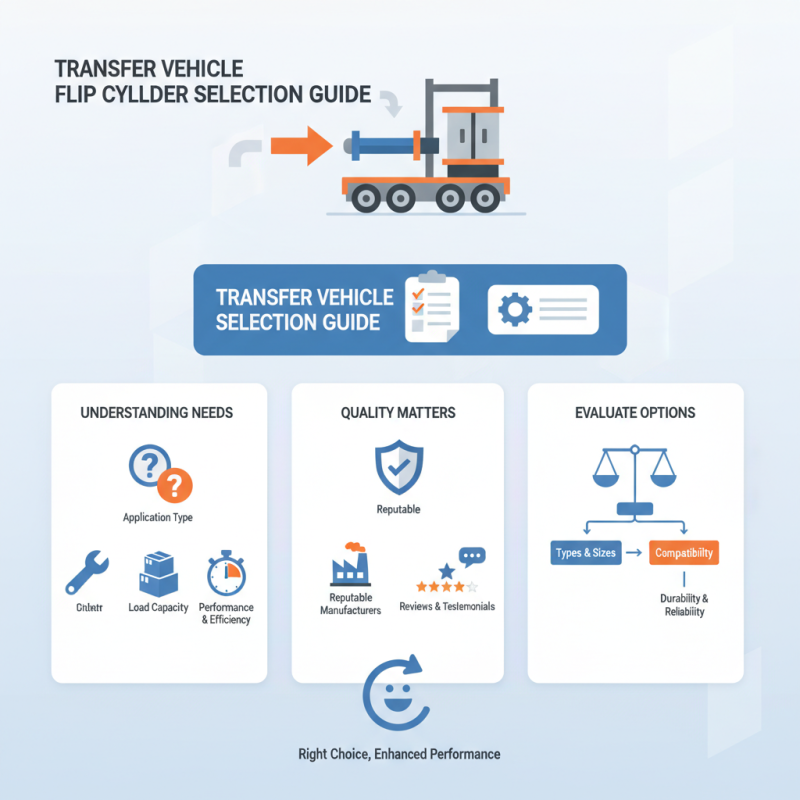
Choosing the right Transfer vehicle flip cylinder can be challenging. Different types and sizes exist, making selection complex. Understanding your specific needs is essential. The right cylinder enhances performance and efficiency.
Quality matters when selecting a transfer vehicle flip cylinder. A well-made cylinder ensures durability and reliability. Look for reputable manufacturers. They provide guarantees that their products will perform as expected. Reviews and testimonials can offer valuable insight.
Consider factors like load capacity and application type. Not every flip cylinder is suitable for every vehicle. Take time to evaluate your options. It’s worth the effort to avoid costly mistakes later. Reflect on your requirements carefully.
When selecting a transfer vehicle flip cylinder, understanding its functionality is key. These cylinders play a crucial role in maintaining safety and efficiency during vehicle operations. According to a recent industry report, nearly 30% of equipment failures are related to hydraulic cylinder issues. Proper maintenance can reduce this risk.
Flip cylinders allow for seamless loading and unloading of materials. Their design enables vehicles to manage heavy loads with ease. Advanced engineering has improved their strength and durability, with some models featuring capacity ratings of over 30 tonnes. However, not all cylinders are created equal. A mismatch in specifications can lead to operational challenges, including increased wear and tear or even accidents.
In practice, the choice of flip cylinder should consider specific needs. Factors such as weight capacity, installation requirements, and compatibility with existing equipment are vital. A survey showed that 45% of operators experience difficulties with improper size selection. Regularly assessing your operational requirements can prevent costly mishaps. Understanding these complexities is essential for optimal performance and safety.
When selecting a transfer vehicle flip cylinder, assess your specific application needs. Consider the weight and size of the materials you will transport. If you handle heavy loads, prioritize a robust design. Look for hydraulic systems that offer dependable performance for intensive tasks.
Evaluate the environment where the cylinder will operate. Will it face extreme temperatures or exposure to chemicals? Durability is crucial. Check the materials and construction quality. Poor choices can lead to failures, impacting your operations. Research customer reviews to gauge reliability based on real-world use.
Think about maintenance requirements. Some cylinders may need regular servicing, while others are low-maintenance. Understanding these aspects will help you make informed choices. Be aware that your initial decision may not be perfect. Testing different models could provide insights for future improvements.
When choosing a transfer vehicle flip cylinder, several key features are essential. Start by examining the material. High-quality cylinders are often made from durable materials like steel or aluminum. These materials ensure strength and longevity. A good finish on the cylinder is also crucial. It prevents corrosion and wear over time. Consider the weight capacity as well. If the cylinder can’t handle your vehicle’s load, it’s not worth having.
Next, look for user-friendly design elements. A cylinder with a simple locking mechanism makes operation easier. Ensure it offers quick release options. This feature can save time during loading and unloading. You might want to check for compatibility with various vehicle types. A versatile flip cylinder can be an advantage when using different transfer vehicles.
Don’t overlook the importance of customer reviews. Real-life experiences can provide insight into the reliability of the cylinder. Reading through both positive and negative reviews can reveal common issues. This can help you avoid products that may fail to meet expectations. Finally, ensure there is a warranty. A solid warranty reflects confidence in the product’s quality and durability. These aspects are vital for making an informed choice.
Choosing the right transfer vehicle flip cylinder can be challenging. Various brands offer distinct features, making it crucial to compare them thoroughly. Before making a decision, consider the specific needs of your operation. Pay attention to the weight capacity, size, and durability of each model. Testing different cylinders can reveal unexpected strengths or weaknesses.
Examine user reviews and expert opinions. This information can provide insight into reliability and performance over time. Some brands may excel in certain conditions, while others may not meet expectations. It is also essential to assess warranty options. A reliable warranty often indicates confidence in product quality.
Some flip cylinders might claim to offer superior functionality, but real-world performance can vary. Don't overlook the importance of proper installation and maintenance. Even the best products can underperform if not handled correctly. Always be prepared to adapt your choice based on trial experiences.
Maintaining flip cylinders for optimal performance requires attention and care. Regular inspections are crucial. Check for signs of wear or damage, as even small issues can lead to bigger problems. Look at the seals and bushings; they should be intact and free from cracks. If you notice anything unusual, it’s best to address it sooner rather than later.
Lubrication is another important aspect. Proper lubrication reduces friction and prevents premature wear. Aim for a schedule that fits your usage frequency. Using too much or the wrong type of lubricant can create more problems. Ensure you are applying the right amount and type for your specific needs.
Cleaning the flip cylinder also plays a vital role. Dust and debris can accumulate and affect performance. A regular cleaning routine will help in maintaining smooth operation. Sometimes, we overlook such basic tasks. It’s easy to forget, but neglecting these steps might lead to malfunctions down the road. By focusing on these maintenance tips, you can prolong the life of your flip cylinder and ensure it operates efficiently.
| Dimension | Value | Maintenance Tip |
|---|---|---|
| Cylinder Size | 3.5 in (diameter) | Ensure proper fitting to avoid leaks. |
| Operating Pressure | 1500 psi | Regularly check and maintain pressure levels. |
| Material | Steel | Inspect for rust and corrosion regularly. |
| Stroke Length | 24 in | Lubricate frequently to maintain smooth motion. |
| Cycle Time | 10 seconds | Monitor for decreased performance. |
© Shipham Valves 2025. All Rights Reserved.
Website By PS Website Design Ltd
Request a Quote/Further Information
Download
We use cookies on this website, by continuing to browse the site you are agreeing to our use of cookies. Find out more.