Choosing an LED Mood Light Manufacturer in 2026 requires more than comparing prices and polished product photos. The market is mature, but product quality still varies. The International Energy Agency’s “Lighting” analysis reports that LEDs represented about 50% of global lighting sales in 2020, up from roughly 5% in 2013. That shift makes careful supplier evaluation more important, not less. A bright sample on a showroom table proves little about color consistency, dimming performance, or reliability after months of use.
Look for documented test results, stable production processes, and clear answers about LED bins, drivers, color rendering, and flicker. Ask for a sample you can test at low brightness, not only at full output. Check whether the manufacturer can explain its warranty, inspection steps, and customization limits in plain language. The U.S. Department of Energy’s lighting research also highlights the value of efficient LED technology; however, efficiency alone does not guarantee a comfortable mood-lighting experience. One detail is easy to overlook: a light may look warm in a product photo yet feel harsh in a dim bedroom.
Lighting researcher Dr. Mariana Figueiro has described light as “the most powerful synchronizer of the circadian system.” Her work is a useful reminder that color and timing matter, alongside appearance. A capable LED Mood Light Manufacturer should discuss these trade-offs without promising that one lamp suits every room or routine. Ask for evidence. Compare the actual samples. And leave room for doubt: supplier claims still need independent checking.
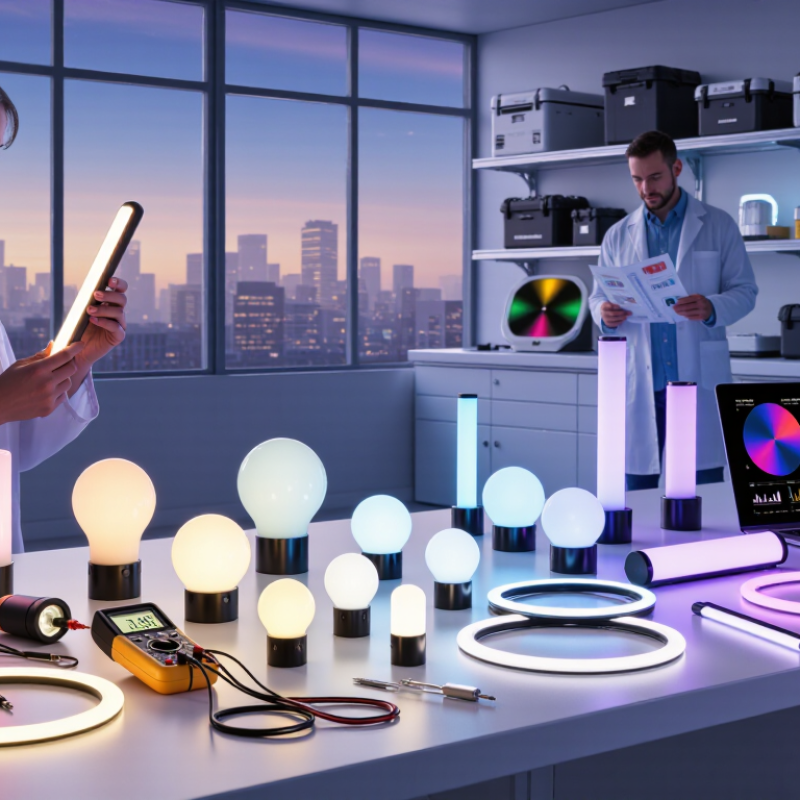
Before choosing an LED mood light manufacturer, define the room, use, and desired atmosphere. A bedside lamp needs gentle, low-level light; a café wall wash may need wider coverage and consistent color. Record mounting distance, beam angle, brightness in lumens, color temperature, dimming range, and control method. These details make “warm and relaxing” testable. Useful, but not glamorous.
The U.S. Department of Energy reports that LEDs use at least 75% less energy and can last up to 25 times longer than incandescent lighting. The International Energy Agency estimates lighting accounts for about 15% of global electricity use. Efficiency matters, but it cannot guarantee good mood lighting. Ask for measured lumen output, color-rendering index (CRI), flicker data, and performance at low dimming levels. Request a sample and test it in the actual room; wall color can shift the effect, and a neat specification sheet may not reveal that.
Tips: Share a simple room sketch and target color range. Ask whether the manufacturer can provide a dimming test and sample. Check the light at night, not only in a bright showroom.

How to Choose an LED Mood Light Manufacturer in 2026
Assessing a manufacturer’s experience means looking beyond years in business. Ask about completed mood-light projects with similar controls, materials, and order sizes. Review sample records, product specifications, and how the team handles design changes. Clear answers matter. A supplier should explain LED color consistency, dimming behavior, heat management, and expected service life without relying on vague promises. Request a working sample and test it in the room where it will be used.
Technology is only useful when production can repeat it. Ask how the manufacturer checks color variation between units and verifies performance after assembly. A pilot run can reveal loose connectors, uneven light diffusion, or controls that behave differently across samples. Check whether the factory has enough trained staff, assembly stations, and component supply for your forecast. Request recent quality-control records and ask how defects are tracked. Some details may be imperfect; note them, then see whether the team responds with evidence and a practical correction plan.
Tips: Compare a sample with a pilot batch, not just a polished prototype. Ask for the production schedule, inspection points, and packaging test method. Small details matter. A rushed answer is worth questioning.
| Assessment Dimension | What to Evaluate | Practical Evidence to Request | Suggested Screening Indicator | Score (1–5) |
|---|---|---|---|---|
| Relevant Manufacturing Experience | Experience producing comparable LED mood lights, such as ambient lamps, color-changing fixtures, or connected lighting products. | Product catalogs, anonymized project histories, sample records, and references from comparable product categories. | Look for documented experience with similar optics, controls, materials, and intended use. Years in business alone do not establish product-specific capability. | ____ / 5 |
| LED and Color Performance | Color consistency, dimming behavior, light output, and the availability of white or RGB color modes. | LED specifications, color-bin information where applicable, dimming test results, and sample units tested at low and high brightness. | Check for smooth dimming without visible flicker, unwanted color shifts, or abrupt steps. Compare samples under the same test conditions. | ____ / 5 |
| Optical and Thermal Design | Diffuser quality, glare control, light uniformity, heat dissipation, and the design’s effect on LED life. | Optical drawings or test reports, thermal measurements, material details, and an operating sample. | Ask how the design manages heat during extended use and how the diffuser reduces visible hotspots. Confirm performance in the intended enclosure. | ____ / 5 |
| Controls and Connectivity | Control options such as buttons, remote controls, timers, touch interfaces, or wireless connectivity. | Control-function matrix, compatibility details, firmware update process, and tests of the selected functions. | Verify that each requested feature works reliably and that wireless or app-dependent functions are tested with the intended configuration. | ____ / 5 |
| Customization and Engineering Support | Ability to adapt housing, colors, light modes, packaging, controls, and product specifications. | Design-for-manufacturing feedback, prototype process, revision records, tooling details, and a written scope for requested changes. | Agree on prototype stages, approval samples, ownership of custom tooling, and the process for engineering changes before placing a production order. | ____ / 5 |
| Production Capacity | Available production lines, current utilization, staffing, equipment, and ability to meet forecast volumes. | Capacity statement by product or line, recent output records, production schedule, and a documented plan for peak demand. | Assess capacity against your own order size and delivery schedule. Request evidence that stated capacity is available, not just theoretical maximum output. | ____ / 5 |
| Quality Management | Incoming-material checks, in-process inspection, final testing, defect tracking, and corrective actions. | Quality procedures, sample inspection reports, test records, defect or return analysis, and corrective-action examples with sensitive details removed. | Confirm that inspection criteria are written, measurable, and agreed before production. Ask how nonconforming units are contained and rechecked. | ____ / 5 |
| Product Safety and Compliance | Whether the finished product and its electrical components meet the requirements of the intended sales markets. | Applicable test reports or certificates, model and component references, labeling details, and a compliance plan for the target market. | Requirements vary by market and product design. Verify that documentation applies to the exact model, power supply, and configuration being purchased. | ____ / 5 |
| Component and Supply-Chain Control | Availability and traceability of LEDs, drivers, controllers, plastics, and other key components. | Approved-component list, change-control procedure, supplier-risk review, and notification policy for substitutions or discontinuations. | Confirm that component changes require approval and that replacement parts are assessed for fit, electrical performance, and compliance impact. | ____ / 5 |
| Lead Time and Delivery Planning | Sample, tooling, production, and shipping timelines, including how delays are communicated. | Written project schedule, order milestones, capacity reservation details, and a process for reporting schedule changes. | Compare the quoted timeline with your launch plan and confirm which stages are included. Treat estimates as project-specific rather than universal benchmarks. | ____ / 5 |
| After-Sales Support | Warranty handling, spare parts, troubleshooting, repair options, and response ownership. | Written warranty terms, support contact process, spare-parts plan, and examples of issue-resolution workflows. | Clarify warranty coverage, claim documentation, response expectations, and responsibility for product or component investigations. | ____ / 5 |
Scoring guide: 1 = insufficient evidence; 3 = acceptable with follow-up; 5 = strong, verifiable evidence. Screening indicators are practical evaluation prompts, not universal industry standards. Confirm requirements for the product design and markets where it will be sold.
A reliable LED mood light should feel consistent from the first unit to the last. Ask the manufacturer for test reports tied to the exact model, not a similar-looking product. Check measured brightness, color consistency, flicker performance, and heat after several hours of operation. A warm glow can look calming, but uneven color or a hot plastic housing may signal weak process control.
Look closely at safety documentation. Depending on the sales market, relevant electrical safety and electromagnetic compatibility requirements may differ. Request current certificates or declarations, then confirm the issuing laboratory, model number, and report scope. Certification logos alone are not enough. Ask how the manufacturer controls changes to LED drivers, power supplies, and materials after testing. Small substitutions can affect safety. This detail is easy to miss.
Inspect a sample under realistic conditions: dim the room, run the light for an evening, and check the controls with dry hands. Review the cable, plug, enclosure seams, and instructions for clear voltage and care information. Ask for batch inspection records and a written process for handling defects. A polished sample is useful, but it cannot prove every production unit will match. I would still request a small pilot order; it takes time, and it may reveal issues no certificate can show.
When comparing LED mood light manufacturers, ask what “customization” includes. A supplier may offer color temperature, dimming, housing finishes, and logo placement, but these options can affect tooling costs and production time. Request a sample with the exact diffuser and control settings you plan to order. Check whether the light shifts visibly between low and high brightness. Small differences matter in a bedroom or reception area. Ask for written specifications, including input voltage, rated power, and test conditions. Vague claims are hard to compare.
Pricing needs the same detail. Compare itemized quotes, not just the unit price. Ask whether packaging, sample fees, custom molds, and shipping are included, and confirm the minimum order quantity. A lower quote may rely on a standard housing rather than your requested finish. That may be fine, but it should be clear. I would also ask how defects are handled and what inspection records are available. A polished sample is not proof that every production unit will match.
Delivery timelines often depend on approvals, component availability, and order size. Request separate estimates for sampling, production, and shipping, with the date each stage begins. Build in time for one revision; color matching can take longer than expected. Ask how schedule changes are reported. A precise timeline is useful. A guaranteed date without milestones is less reassuring, and even a careful plan can slip.
How to Choose an LED Mood Light Manufacturer in 2026
A reliable manufacturer makes technical conversations clear before production begins. Ask for written answers about color temperature, dimming behavior, cable length, and the materials used in the housing. A sample should match the approved specifications, not just look attractive in a showroom. Notice how quickly the team flags a limitation or asks for clarification. That matters. A polished sales call alone proves little; even experienced teams can miss details when requests stay vague.
After-sales support is easier to judge when responsibilities are specific. Ask who handles troubleshooting, what information they need, and how replacement parts are arranged. A useful answer might name a contact person and explain how to document a flickering unit with a short video and batch number. Check supply reliability, too: request realistic production timelines, update frequency, and a plan for material delays. Past delivery records can help, but they cannot guarantee the next shipment. I would keep a little schedule buffer, even when the forecast looks reassuring.
Tips: Send the same questions to each candidate. Compare response time, detail, and willingness to put commitments in writing. Ask for a small pilot order before relying on a large production run.
Suggested evaluation weights for comparing communication, after-sales support, and supply reliability.
Supply reliability receives the highest suggested weight because consistent production capacity, lead times, and delivery performance can affect the entire sourcing plan. These are illustrative evaluation weights, not results from an industry survey.
© Shipham Valves 2025. All Rights Reserved.
Website By PS Website Design Ltd
Request a Quote/Further Information
Download
We use cookies on this website, by continuing to browse the site you are agreeing to our use of cookies. Find out more.