Choosing China’s best manufacturer of Galvanized Self Drilling Screws takes more than comparing prices or catalogue photos. These fasteners must drill through the specified material, form a dependable thread, and resist corrosion in real service conditions. A screw that looks consistent in a sample box may perform differently across a large production batch. Small details matter.
The market context is substantial. Grand View Research’s Fasteners Market Size, Share & Trends Analysis Report estimated the global fasteners market at USD 90.7 billion in 2023 and projected a 4.5% compound annual growth rate from 2024 to 2030. This broad figure covers many fastener types, not galvanized self-drilling screws alone. Still, it reflects demand across sectors where reliable fastening supports construction and manufacturing. It should be treated as context, not proof that any single supplier is qualified.
For buyers, a useful comparison starts with the application: base-metal thickness, head style, point design, coating specification, and exposure conditions. Then review documented inspection procedures, material traceability, sample testing, and consistency between samples and production orders. Ask how coating thickness and drilling performance are checked. Request records. Verify the details.
No coating suits every environment, and a low unit price may hide costs from rework or premature corrosion. Manufacturer claims deserve careful review; independent test evidence is more persuasive. The strongest shortlist is built on verifiable specifications, responsive technical support, and repeatable quality—not a single “best” label. There is room for judgment, too. A capable supplier should explain where its product fits, and where it does not.
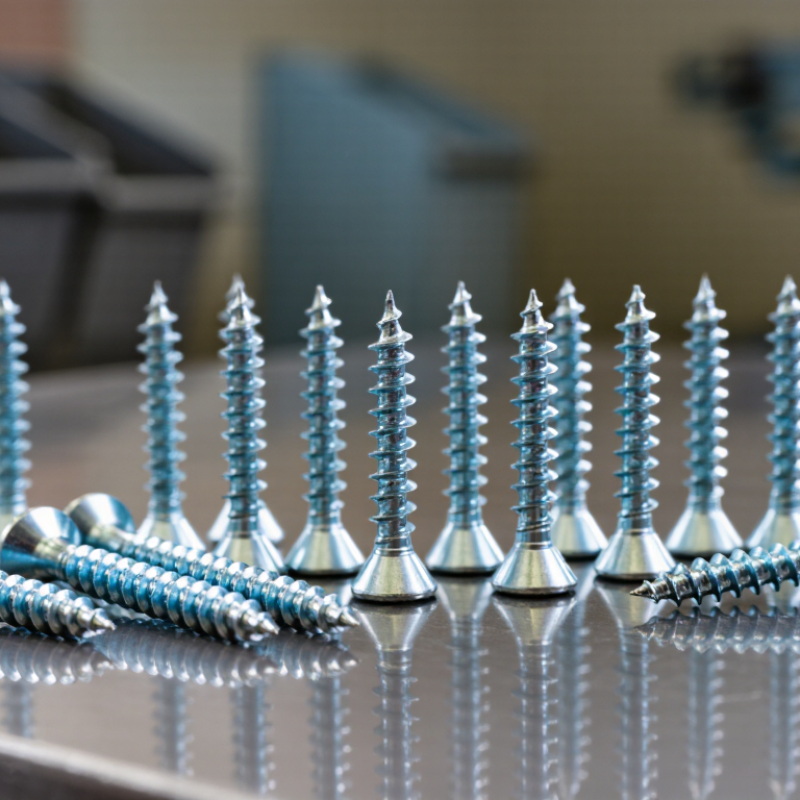
China Best Galvanized Self Drilling Screws Manufacturer?
What Are Galvanized Self-Drilling Screws?
Galvanized self-drilling screws are fasteners with a zinc-coated surface and a drill-shaped point. The point cuts through suitable materials, often removing the need to drill a pilot hole. Their threads then grip the material as the screw is driven. A time-saver, when chosen correctly.
The zinc coating helps slow corrosion by creating a protective barrier. Some coatings can also provide sacrificial protection if the surface is scratched, though performance depends on coating type and thickness. Galvanized finishes vary, so “galvanized” alone does not tell you how long a screw will last in a specific environment. That detail matters.
These screws are commonly used to fasten sheet metal to compatible supports, but not every screw suits every material or thickness. Check the manufacturer’s specifications for drilling capacity, coating, and recommended installation conditions. Use a steady driver and stop when the head is seated; overdriving can damage the coating or the material. A small test installation can reveal problems before a full job begins. It is easy to assume one screw will do it all. Usually, that assumption needs checking.
Typical maximum drilling capacity by self-drilling screw point size
Galvanized self-drilling screws have a zinc coating to help protect against corrosion, while their drill-point geometry determines the thickness of steel they can drill. The values shown are typical reference limits: actual capacity varies with screw design, steel grade, and installation conditions. Check the product datasheet before selection.
A self-drilling screw begins as steel wire, drawn to a consistent diameter and cut into blanks. World Steel Association’s World Steel in Figures 2024 reports 1,892.2 million tonnes of crude steel production worldwide in 2023. That scale matters: even small differences in wire quality can affect screw strength and drilling consistency. Cold heading forms the head, thread rolling shapes the threads, and a specialized operation cuts the drill point and flutes. The screws are then heat-treated to balance hardness with toughness. It starts with wire. Small errors matter.
After cleaning, zinc protection is applied. Depending on the design, this may use electroplating, mechanical zinc plating, or a zinc-flake coating; these processes are not interchangeable. ISO 4042:2022 specifies requirements for electroplated coating systems on fasteners, including controls relevant to hydrogen embrittlement. This risk deserves attention with hardened screws: acidic cleaning and plating can introduce hydrogen, so suitable process controls and post-treatment may be needed. The coating is checked for coverage and thickness, while sample screws may undergo corrosion testing. Salt-spray hours help compare samples, but they do not predict an exact outdoor service life. A thin, bright finish can look convincing. It is not proof of durable protection. Clear coating specifications and repeatable inspection matter more than appearance alone.
Quality standards make screw performance measurable, but they do not create a universal ranking of manufacturers. ISO 10666 sets mechanical and functional requirements for drilling screws with tapping threads. For cold-formed steel framing, ASTM C1513 may apply when specified by the project. Check the exact scope before comparing test reports.
Coating requirements matter just as much. ISO 4042 covers electrodeposited coatings, while ISO 10683 addresses zinc-flake coatings and ISO 10684 covers hot-dip galvanized coatings on fasteners. These finishes differ in thickness, application, and corrosion behavior. Ask for coating type, thickness results, and the relevant standard—not simply “galvanized.” A salt-spray result can help compare samples, but ASTM B117 exposure hours do not directly predict years of field life.
Useful checks include drill-point penetration through the specified steel thickness, drive performance, hardness, and resistance to torsional failure. Inspect sample screws for chipped coating around the head and threads. Small defects can matter. Request lot-specific inspection records and confirm the test setup matches your material and installation tool. Standards help, but they cannot replace a realistic trial on the actual assembly. I would still question any report that gives a pass result without showing test conditions.
Use the standards and acceptance requirements applicable to the screw design, base material, coating process, and intended application. Confirm the specified editions in the purchase documents.
| Quality Dimension | Relevant Standard | What It Covers | Useful Verification Evidence | Important Qualification |
|---|---|---|---|---|
| Product dimensions and head style | ISO 15480, ISO 15481, or ISO 15482 | Dimensions and product characteristics for specified hexagon washer head, pan head, or countersunk head drilling screws. | Dimensional inspection records for diameter, length, head, drive, and drilling point. | Select the standard that matches the screw’s head design; not every screw style is covered by each standard. |
| Mechanical and functional properties | ISO 10666 | Mechanical and functional requirements and test methods for drilling screws with tapping screw thread. | Test reports covering applicable properties, such as drilling and thread-forming performance. | Check that the screw type and stated scope match the ordered product and application. |
| Cold-formed steel framing applications | ASTM C1513 | Steel tapping screws used for connections in cold-formed steel framing. | Applicable material, dimensional, and performance test documentation against the specified edition. | A project or building-code requirement may call for additional evaluation beyond the screw specification. |
| Electroplated zinc coating | ISO 4042 or ASTM F1941/F1941M | Requirements for electrodeposited coatings on fasteners, including applicable coating and supplementary-treatment provisions. | Coating process records, coating-thickness results, and details of any specified passivation or supplementary treatment. | State coating type and acceptance requirements; “zinc plated” alone does not define a complete coating specification. |
| Zinc-flake coating | ISO 10683 | Requirements for non-electrolytically applied zinc-flake coatings on fasteners. | Coating-system specification, coating-thickness or mass results as applicable, and corrosion-test documentation when required. | Confirm the required coating system and any friction or topcoat requirements for the joint design. |
| Hot-dip galvanized coating | ISO 10684 | Requirements for hot-dip galvanized coatings on fasteners within the standard’s scope. | Coating inspection results and confirmation that the fastener’s dimensions and thread fit remain acceptable after coating. | Verify applicability to the screw size and design; coating buildup can affect thread engagement and assembly. |
| Corrosion-test method | ISO 9227 or ASTM B117 | Methods for conducting salt-spray corrosion tests on specimens or products. | A test report stating the method, exposure duration, specimen condition, and evaluation criteria. | These are test methods, not universal pass/fail coating specifications; salt-spray hours do not directly predict service life. |
| Product and batch consistency | Purchase specification and agreed inspection plan | Defines the ordered dimensions, steel and hardness requirements, coating, packaging, sampling, and acceptance criteria. | Batch identification, inspection records, test reports, and traceability to the production lot. | Standards do not replace a clear order specification; list all required properties and acceptance limits explicitly. |
Buyers evaluating Chinese manufacturers of galvanized self-drilling screws should look beyond a polished catalog. Ask for the factory’s process flow, quality-control records, and clear product specifications. These should state screw dimensions, steel grade, coating type, and applicable test methods. A reliable supplier can explain how each batch is checked and how defects are handled. Vague answers deserve follow-up.
Request samples from a regular production run, not only hand-selected pieces. Measure the screw length and head dimensions with basic calipers, then inspect the threads and drill point under good light. Ask for coating-thickness and corrosion-test reports, and check that the sample matches the stated specification. Useful evidence includes dated inspection records and traceable batch numbers.
Small details matter. Also discuss packaging, lead times, and how production changes are communicated. A factory visit or independent inspection can add context, but neither guarantees every shipment will be identical. Even a careful review leaves uncertainty; a checklist cannot observe every shift.
Buyers should compare several suppliers using the same questions, record unanswered points, and confirm key requirements in writing before placing an order.
Choosing the best galvanized self-drilling screw manufacturer starts with the project, not a catalog claim. Define the base material, sheet thickness, installation speed, and exposure conditions before comparing quotations. A screw that drills cleanly through thin steel may struggle with a thicker assembly. Ask for details on steel grade, coating type, coating thickness, and inspection records. Then request samples. Check the drill point, thread consistency, head seating, and whether the coating chips during driving. A polished sample alone proves little; consistency across production batches matters more.
Reliable manufacturers can explain how they control dimensions, hardness, coating coverage, and packaging. Ask for test data relevant to your use, such as drilling performance or corrosion resistance, and confirm the test method and sample batch. Salt-spray results can help compare products, but they do not perfectly predict service life in every environment. Be cautious of claims without supporting records. Production capacity and lead time matter, too, especially when several screw lengths or delivery dates are involved. Clear answers are useful. So is a supplier willing to discuss limitations. It is easy to focus on unit price and overlook installation time, damaged fasteners, or delays; those costs can change the decision.
© Shipham Valves 2025. All Rights Reserved.
Website By PS Website Design Ltd
Request a Quote/Further Information
Download
We use cookies on this website, by continuing to browse the site you are agreeing to our use of cookies. Find out more.