Best LED Silicone Face Mask 2026 for Global Buyers?
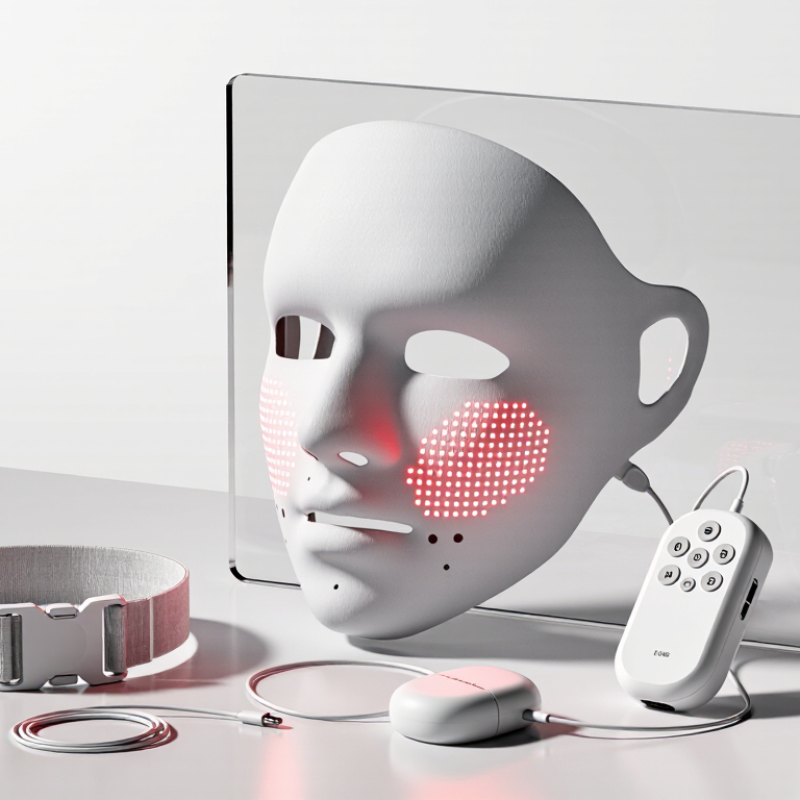
Choosing the Best LED Silicone Face Mask 2026 for Global Buyers requires more than comparing light colors or online ratings. A Led Silicone Face Mask should combine tested light output, comfortable materials, reliable controls, and clear safety information. Buyers should examine wavelength ranges, treatment duration, eye protection, charging methods, and skin-contact materials before placing an order.
The silicone should feel flexible, smooth, and easy to clean, especially around the nose and jawline. A secure fit matters. A loose mask may leave uneven coverage, while excessive pressure can make short treatments uncomfortable. Look for red and near-infrared settings supported by credible product documentation, not vague promises about instant results. Independent testing, electrical certifications, warranty terms, and traceable manufacturer details can help global purchasers reduce avoidable risks.
Real-world use can be less perfect. Some users may notice warmth, dryness, or inconsistent results after several sessions. Skin sensitivity also varies. Buyers with photosensitive conditions, implanted medical devices, or ongoing dermatological treatment should seek professional advice before use. Supplier claims should be checked against manuals, laboratory reports, and regional compliance requirements. A low price may hide weak after-sales support, limited replacement options, or unclear customs responsibilities. This guide compares practical performance, safety evidence, comfort, and supplier reliability, while recognizing that no device suits every face or every market.
LED Silicone Face Masks Explained: 630–660 nm Red and 810–850 nm NIR LEDs
LED silicone face masks are gaining attention as home-use phototherapy devices. Grand View Research estimated the global LED light therapy market at about USD 1.2 billion in 2023, with continued growth expected through 2030. Market growth does not prove equal clinical results. Device quality still varies widely.
Red LEDs around 630–660 nm target the skin’s surface and are commonly studied for appearance-related concerns, including fine lines and uneven tone.
Near-infrared LEDs around 810–850 nm penetrate more deeply and may support cellular energy pathways.
A 2023 systematic review in the Journal of Clinical Medicine found promising effects from red and near-infrared photobiomodulation, but noted inconsistent protocols and limited long-term evidence.
The numbers matter more than bright-looking LEDs.
Check irradiance, measured in mW/cm², and treatment dose, measured in J/cm². A ten-minute session at 20 mW/cm² delivers roughly 12 J/cm². Small math errors can change the exposure substantially.
Look for independent electrical-safety testing, wavelength tolerance data, timer controls, and clear eye-protection guidance.
Silicone should sit evenly on the cheeks, nose, and forehead, without sharp pressure points. Invisible NIR light is easy to underestimate. More power is not automatically better. I would also question masks that publish wavelength claims but hide irradiance measurements; transparency remains an industry weakness.
How 2–4 J/cm² Fluence and 10–20-Minute Sessions Affect Skin
Best LED Silicone Face Mask 2026 for Global Buyers?
Fluence matters more than a mask’s glow. A 2–4 J/cm² dose delivers measurable light energy to each square centimetre. Clinical photobiomodulation reviews commonly report facial protocols between 1 and 10 J/cm². Lower facial doses may suit regular home use. Higher doses are not automatically better. Biology can respond unevenly.
A 10–20-minute session usually requires about 1.7–6.7 mW/cm² irradiance. Buyers should check both figures, not only LED colour claims. For example, 3 mW/cm² for 15 minutes provides approximately 2.7 J/cm². The calculation is simple. The label may not be. Several dermatology reviews describe repeated sessions, often two or three times weekly, rather than aggressive daily exposure. Real skin can become dry, warm, or mildly irritated.
The 2023 International Society for Photobiomodulation Therapy consensus stresses accurate dosing, treatment consistency, and eye protection. IEC 62471 assesses photobiological safety, but it does not prove wrinkle reduction. That distinction is important for global buyers. Fit, distance, wavelength stability, and independent testing affect real-world fluence. Silicone comfort helps adherence, although comfort is not clinical evidence. I still question many dramatic before-and-after claims. Lighting, hydration, and camera angles can distort results. A careful buyer should record session time, skin reactions, and gradual changes for several weeks.
LED Silicone Face Mask: Fluence Delivered During 10–20-Minute Sessions
The chart illustrates the physical relationship between session duration and radiant exposure at a constant irradiance of 3.33 mW/cm².
Fluence is calculated as irradiance × exposure time. At 3.33 mW/cm², a 10-minute session delivers approximately 2 J/cm², a 15-minute session delivers 3 J/cm², and a 20-minute session delivers 4 J/cm². Actual delivered dose depends on the device’s measured irradiance, treatment distance, LED output, and skin coverage; these values are an illustrative calculation rather than a clinical recommendation.
Global Safety Checks: IEC 62471, FDA Clearance, and CE MDR Compliance
Choosing the best LED silicone face mask for global buyers requires more than checking light colors or flexible materials. IEC 62471 assesses photobiological risks, including retinal exposure and skin safety. Ask for the actual test report, not only a printed compliance logo. A credible report should identify the device, testing laboratory, optical measurements, and exposure limits.
FDA clearance applies to specific medical-device claims and intended uses. It does not automatically confirm every version, attachment, or marketing statement. CE MDR compliance requires stronger evidence, including risk management, technical documentation, clinical evaluation, post-market monitoring, and appropriate labeling. Requirements may differ by product classification and destination market. A careful supplier should explain these details clearly.
Tips:
Request wavelength data, irradiance, treatment duration, contraindications, and charger certifications. Check whether the user manual matches the tested model. Look for eye-protection guidance, automatic shutoff, and traceable batch information.
Real-world testing can reveal heat, strap pressure, or uneven illumination that documents miss. I would also question dramatic skin claims, because small studies and short follow-ups can create false confidence.
Compliance is not a permanent badge. Regulations, formulations, accessories, and claims can change.
Buyer Guide: Wavelength Accuracy, Eye Protection, Warranty, and Local Voltage
Choosing the best LED silicone face mask in 2026 requires more than counting diodes. Grand View Research valued the global LED lighting market at USD 78.9 billion in 2023, showing rapid technical growth, but lighting quality still varies between devices. Ask for measured wavelengths, not marketing labels. Red light near 630–660 nm and near-infrared light near 810–850 nm are common ranges. Request a test report showing output consistency across the mask. Small wavelength errors can change treatment exposure.
Eye protection deserves careful inspection. Look for built-in shielding, clear safety instructions, and photobiological testing under IEC 62471. The mask should not press against the eyelids. It should also include automatic session limits. I still prefer adjustable straps and removable eye covers, because comfort affects real-world use. Some product claims sound precise, yet provide no irradiance data in mW/cm². That is a warning sign.
Tips: Check the warranty length, repair process, and replacement policy before payment. A two-year warranty is more useful when service operates locally. Confirm voltage, frequency, plug type, and adapter certification for your country. A device marked 100–240V, 50/60Hz is usually easier for international buyers. However, an adapter alone does not guarantee compatibility. Keep the invoice and test the device briefly after delivery. My buying process is not perfect; I sometimes value comfort over measured output, which deserves more discipline.