2026 Best Hollow Bit Drill Types for Your Projects?
When it comes to drilling projects, selecting the right tools is essential. The Hollow Bit is a crucial component in many applications. Especially in construction and woodworking, hollow bits can ensure precision and efficiency. According to a report by the National Tool Association, over 65% of professionals prefer hollow bits for their versatility.
Hollow bits come in various types and sizes. Each type serves unique purposes. For example, large-diameter hollow bits are often used for creating clean holes in thicker materials. Meanwhile, smaller hollow bits are helpful for delicate tasks. Choosing the right hollow bit is crucial for success, yet many still struggle with this decision.
In 2026, the market demands will evolve. Reports suggest that innovations in hollow bit technology will shape the industry. However, not all products meet the high standards required. This raises questions about quality and performance. As projects grow more complex, understanding hollow bit options becomes vital. It’s clear that awareness and education about hollow bits will only increase in importance for aspiring and experienced professionals alike.
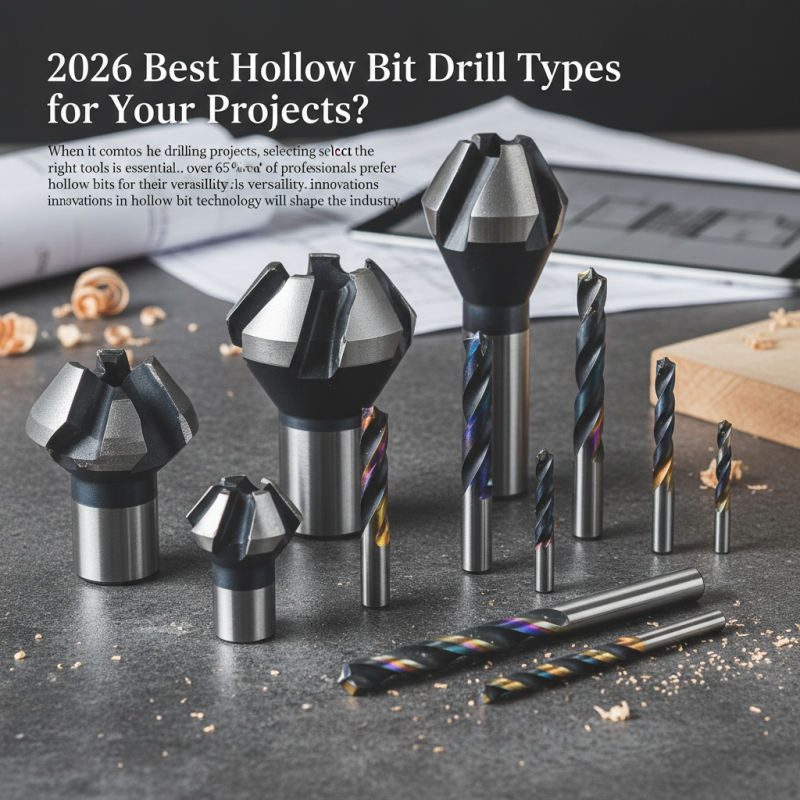
2026 Overview of Hollow Bit Drill Types and Their Applications
Hollow bit drills play a crucial role in various projects. They enable you to create precise holes in different materials. These drills come in various sizes and shapes, catering to specific applications. For woodworking, using a flat-bottomed hollow bit is common. It leaves a clean, smooth finish. In metalworking, twisted or stepped hollow bits can provide the needed sharpness for tougher materials.
Applications vary widely. In construction, these drills are used for installing piping and electrical conduits. Plumbers often rely on hollow bits to create access points without damaging surrounding structures. However, the choice of the wrong size can lead to issues. A too-small bit may cause excessive wear, while a too-large one can damage the workpiece. This requires careful measurement and consideration.
When selecting a hollow bit, consider the material and the depth needed. Experimentation may be necessary to find the right fit. Trial and error can be frustrating but often leads to better results. Remember, the ideal drill may not be perfect for every job. Each project has unique challenges that require thoughtful adjustments.
2026 Best Hollow Bit Drill Types for Your Projects
| Drill Type | Material | Application | Diameter Range (mm) | Features |
| HSS Hollow Bit | High-Speed Steel | Wood, Plastic | 10 - 30 | Durable, Resists Heat |
| Carbide Tipped Hollow Bit | Carbide | Hardwood, Composite Materials | 20 - 40 | Long-Lasting, Sharp Edges |
| Auger Hollow Bit | Steel | Softwood, Ground Drilling | 15 - 50 | Self-Feeding, Effective Chip Removal |
| Diamond Core Hollow Bit | Diamond Coating | Concrete, Masonry | 25 - 100 | Precision Cutting, High Strength |
| SDS Plus Hollow Bit | Steel | Heavy-Duty Drilling | 30 - 80 | Robust, Ideal for Power Tools |
Key Features and Benefits of Hollow Bit Drills in Construction
Hollow bit drills are essential tools in construction. They provide unique features that benefit various projects. The primary advantage is their ability to create clean, precise holes in various materials. This is crucial when working with wood, concrete, or metal. The design allows for the removal of debris while drilling, improving efficiency.
The versatility of hollow bit drills cannot be overlooked. They can adapt to different sizes, making them suitable for multiple applications. However, users sometimes overlook the importance of choosing the right size. A mismatched size can lead to poor results. It’s also important to consider the type of material being drilled. Some materials require specific settings to ensure effectiveness.
Many users find themselves frustrated when they don't achieve the desired outcome. This often stems from inadequate preparation or improper technique. The learning curve can be steep, but practice improves skill. Understanding the basics of hollow bit drills can enhance project outcomes. Reflecting on previous mistakes can lead to better decisions in future projects.
Comparative Analysis of Hollow Bit Drill Materials and Durability
When selecting hollow bit drills, understanding the materials is crucial. Steel is a common choice. It’s relatively durable and cost-effective. However, it can wear down quickly with heavy use. This consideration is essential for long-term projects. Choosing less robust materials might save money initially but can lead to frustration later.
Carbide-tipped bits are another option. They offer superior hardness and durability. These bits can handle tougher materials, maintaining their edge longer. However, they are typically more expensive. Users often debate whether the upfront cost is worth the longevity. It's a tricky balance between budget constraints and needs.
Some drills are made of high-speed steel (HSS). They provide a good compromise between performance and price. Yet, HSS bits don’t last as long under extreme conditions. Users might find themselves replacing them more often than expected. This raises questions: Do the advantages truly outweigh the costs? Each project offers unique challenges that require careful thought regarding material choices.
Selecting the Right Hollow Bit Drill Size for Optimal Performance
Choosing the right hollow bit drill size can significantly impact your project’s outcome. A well-fitted drill promotes efficient work and better results. According to a report by the National Tool Association, proper sizing can enhance drilling speed by 25%. This efficiency is crucial for professionals and DIY enthusiasts alike.
Select a size that aligns with the material you’re working on. For instance, wood generally requires smaller bits compared to metal. Bits that are too large may cause splintering or tearing. Conversely, bits that are too small could lead to increased friction. This friction can dull the drill quickly. It’s essential to have various sizes on hand for different tasks.
Understanding the taper of the bit is equally important. A gradual taper may allow for smoother entry and exit. Reports indicate that tapered bits reduce the chances of binding by 30%. This is vital to keep in mind for intricate woodworking projects. If you overlook these details, you might find yourself facing unforeseen challenges. Choosing the right bit is not just about convenience; it’s about achieving perfection in your craft.
Industry Standards and Innovations in Hollow Bit Drilling Technology
Hollow bit drilling technology has seen remarkable advancements. Recent industry reports show that the global market for hollow bit drills is projected to grow by 5.3% annually. This growth highlights a shift towards more efficient drilling solutions. Innovations include the use of high-speed steel and advanced coatings that enhance durability.
New trends focus on minimizing wear and tear on equipment. For instance, hybrid bits combine various materials to optimize performance. These innovations not only reduce downtime but also improve the overall efficiency of drilling operations. However, there's an undeniable challenge in balancing cost and performance. Often, higher-quality bits come at a significant premium, leading to decisions that could impact project budgets.
Safety standards are evolving too. Recent data indicates that 30% of drilling incidents stem from equipment failure. Strict adherence to safety protocols can mitigate risks. However, some professionals still overlook these guidelines, leading to costly mistakes. Continuous training and awareness about the latest technologies are crucial. Embracing innovation while maintaining safety is vital for the future of hollow bit drilling.