2026 Best Forklift Collision Detection System for Safety?
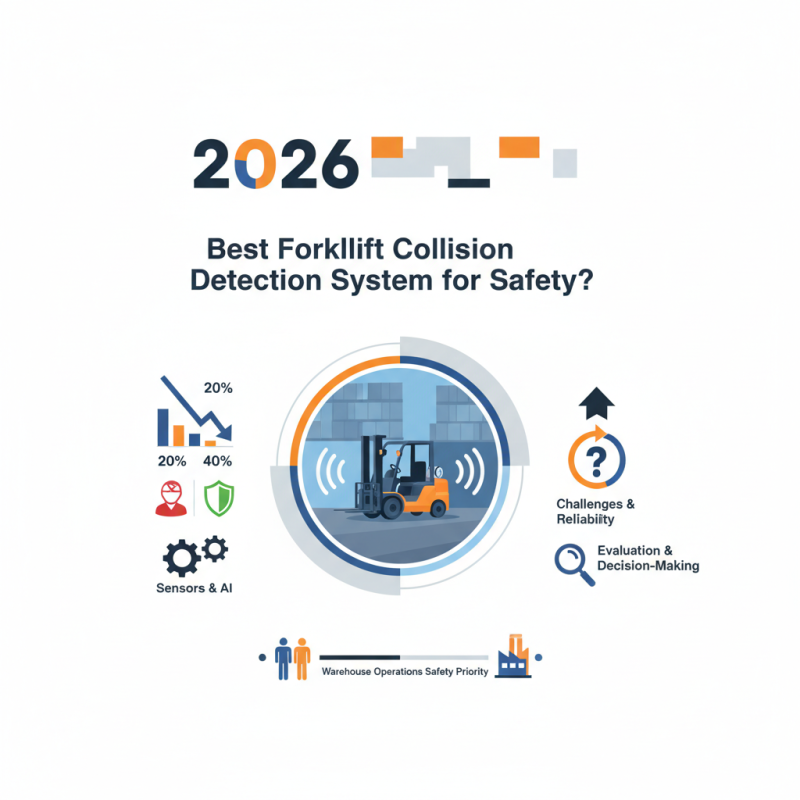
In the ever-evolving landscape of warehouse operations, safety remains a top priority. The implementation of a Forklift Collision Detection System is essential for enhancing operational security. According to industry reports, fork lift accidents account for approximately 20% of all workplace injuries. This statistic underscores the urgent need for effective safety solutions.
Advancements in technology have led to the development of sophisticated collision detection systems. These systems use sensors and artificial intelligence to prevent accidents before they happen. For instance, a recent study revealed that companies using such systems reported a 40% decrease in collisions. However, not all systems provide the same level of reliability and effectiveness. Evaluating these technologies is crucial for ensuring worker safety.
Despite the promising data, challenges remain. Some systems may fail to detect obstacles in certain conditions, leading to potential risks. Reflecting on this aspect is vital for industry professionals. Understanding the strengths and weaknesses of various Forklift Collision Detection Systems contributes to better decision-making. This reflects the importance of continuously assessing safety measures in warehouses.
Overview of Forklift Collision Detection Systems in Warehouse Operations
In warehouse operations, forklift collision detection systems are increasingly vital for safeguarding both personnel and assets. According to data from the Occupational Safety and Health Administration, forklift accidents account for approximately 34,900 injuries annually in the U.S. alone. Implementing effective collision detection can markedly reduce these incidents, demonstrating a commitment to workplace safety.
Recent studies reveal that environments equipped with these systems can see a decrease in accidents by nearly 70%. These systems utilize various technologies, including cameras and sensors, to identify potential hazards. They can detect nearby obstacles and alert operators in real-time, thereby helping to prevent collisions. Using visual disturbances, they enhance operator awareness and reduce blind spots.
Tips: Regularly audit your forklift collision detection systems. Ensure they are functioning correctly. Train operators on system capabilities. A well-informed team is critical for effective operation and accident prevention. Evaluating system performance periodically can uncover hidden flaws that need addressing. Investing in continuous feedback and suggestions from operators can further enhance safety measures. It's essential to acknowledge potential weaknesses in technology. Ultimately, human oversight is crucial to complement these systems.
Key Technologies in Forklift Collision Detection: Sensors and Software
The implementation of advanced sensors and software in forklift collision detection systems has become essential for workplace safety. According to a recent industry report, 60% of forklift accidents occur due to lack of adequate detection systems. This staggering statistic highlights the importance of investing in innovative technologies that can significantly reduce the risk of collisions.
Modern collision detection systems typically rely on a combination of LiDAR, ultrasonic sensors, and cameras. LiDAR offers precise environmental mapping, enabling real-time obstacle detection. Ultrasonic sensors, on the other hand, can identify proximity to objects, providing an additional layer of safety. However, while these technologies improve safety, they also have certain limitations. For example, LiDAR systems may struggle in heavy rain or fog.
Software solutions play a crucial role as well. Advanced algorithms analyze data from sensors, predicting potential collisions. Machine learning is becoming increasingly valuable in this area. Yet, integrating these systems can be complex and may require substantial upfront investment. A study found that companies could see a return on investment in about three years, highlighting the balancing act between safety and costs.
2026 Best Forklift Collision Detection System for Safety
This chart illustrates the effectiveness of various forklift collision detection technologies in enhancing safety. The data reflects the percentage effectiveness of each system in preventing collisions.
Industry Statistics on Forklift Accidents and Safety Improvements
Forklift accidents pose a significant risk in various industries. According to the National Institute for Occupational Safety and Health (NIOSH), around 34,900 forklift-related injuries occur annually in the U.S. alone. These incidents highlight the need for improved safety measures and technology. A recent industry report indicated that effective collision detection systems can reduce these accidents by up to 60%. This statistic emphasizes the critical role of technology in enhancing workplace safety.
Implementing a reliable forklift collision detection system can greatly increase safety. Utilizing sensors and cameras can alert operators to nearby obstacles. These systems promote better awareness while operating heavy machinery. A study revealed that work environments with such systems witnessed a noticeable decline in accidents over the past years. Even minor updates can have a substantial impact on overall safety.
Tip: Regular training can also improve safety measures. Operators need to understand the equipment they use and recognize potential hazards. Developing a safety culture in the workplace can encourage proactive behavior. Remember, prevention is better than remediation. Many companies still overlook the importance of ongoing education and equipment updates. A continuous review of safety protocols is necessary.
2026 Best Forklift Collision Detection System for Safety
| Year | Number of Forklift Accidents | Injuries Reported | Fatal Accidents | Collision Detection Systems Used (%) |
| 2021 | 6,800 | 3,400 | 97 | 15% |
| 2022 | 6,300 | 3,150 | 88 | 20% |
| 2023 | 5,800 | 2,900 | 72 | 30% |
| 2024 | 5,000 | 2,300 | 65 | 40% |
| 2025 | 4,200 | 1,880 | 54 | 50% |
| 2026 | 3,500 | 1,600 | 39 | 60% |
Comparative Analysis of Leading Collision Detection Systems in 2026
As the safety standards for workplace environments evolve, the importance of forklift collision detection systems becomes clear. In 2026, numerous systems are available, each with unique features and challenges. These systems aim to reduce accidents, protecting both operators and pedestrians. However, no system is flawless. Challenges such as sensor limitations and environmental factors can affect performance.
A robust collision detection system should encompass multiple technologies. For instance, radar, cameras, and ultrasonic sensors can work together to improve accuracy. Despite the advancements, some systems may not perform well in low-light or complex environments. Operators may need extensive training to maximize these systems' capabilities. Real-world feedback indicates that occasionally, false alarms can be disruptive.
Integrating new technologies into existing workflows can be daunting. Many companies still grapple with adapting to newer systems. In terms of cost-effectiveness, some systems may require significant investments without immediate returns. It is essential to continually evaluate these tools for effectiveness and user feedback to enhance safety protocols over time. This reflective approach can lead to better implementation and overall workplace safety.
Future Trends in Forklift Safety: AI and Autonomous Systems Integration
The integration of AI and autonomous systems in forklift safety marks a significant shift in industrial safety protocols. These technologies promise to enhance collision detection, reducing accidents in crowded warehouses. Advanced sensors and algorithms can predict potential collisions in real time. Operators benefit from alerts, allowing them to react quickly. The reliability of these systems can improve overall workplace safety.
However, reliance on technology raises questions. What happens when the system malfunctions? Employees must remain vigilant. Training on both automated systems and traditional safety procedures is crucial. Human oversight cannot be eliminated. While AI improves response times, it cannot replace human judgment completely. The balance between automation and human skill is delicate.
Future trends suggest increasing investment in these safety technologies. Data from various industries show a reduction in accidents with AI systems. Still, there is a need for ongoing assessment and improvement. Monitoring the effectiveness of these systems is essential to prevent complacency. Forklift safety is evolving, but we must tread carefully as we embrace these innovations.