Choosing an Electrical Test Kit is not just about counting functions. A technician needs reliable readings, durable leads, clear displays, and instruments suited to the work environment. A loose connection or a confusing selector can turn a routine check into a costly mistake. Small details matter.
The Electrical Safety Foundation International (ESFI), drawing on U.S. Bureau of Labor Statistics data, recorded 126 workplace electrical fatalities in 2022. That figure is a reminder: testing equipment supports safety, but cannot replace sound procedures or training. ESFI President Brett Brenner’s public safety guidance emphasizes prevention and training before workers encounter electrical hazards. That principle should shape every comparison in this guide.
The 10 kits ahead are considered for practical professional needs, including voltage and current measurement, continuity checks, lead quality, safety ratings, and ease of use. We also look at whether a kit’s specifications are clearly stated, because vague claims deserve a second look. No single kit fits every job. A field service electrician may value rugged protection, while a maintenance team may need a broader selection of instruments. Check the manufacturer’s instructions and the applicable workplace procedures before use. A well-chosen kit helps; it does not make testing risk-free.
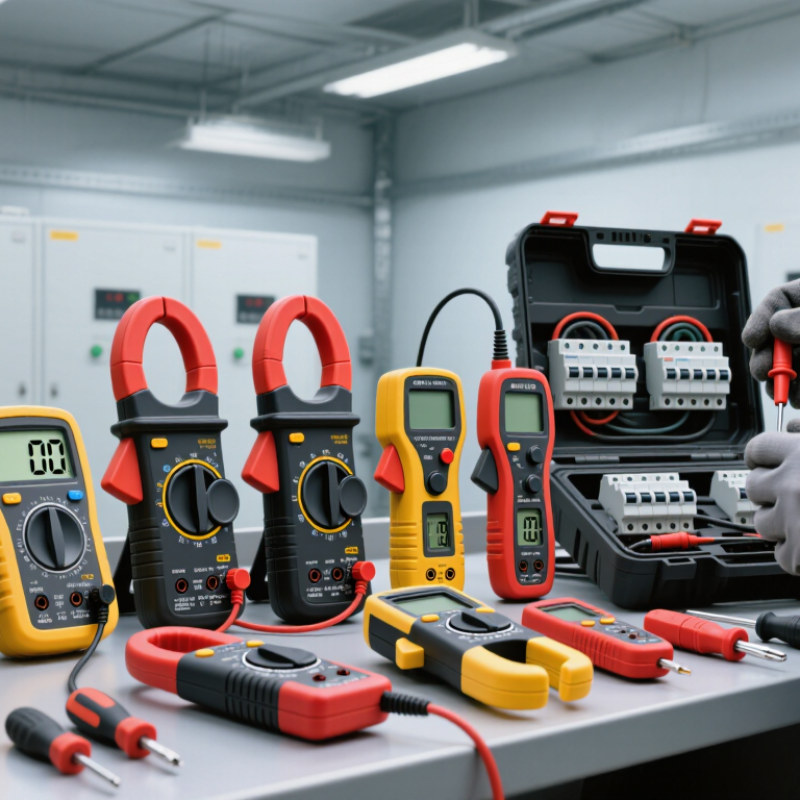
An electrical test kit brings several measuring tools into one case, helping professionals check circuits before installation, maintenance, or troubleshooting. A typical kit may include a digital multimeter, a non-contact voltage tester, test leads, and sometimes a clamp meter. Each tool answers a different question. A multimeter measures voltage, resistance, and continuity; a clamp meter reads current around a conductor without disconnecting it. It varies. Some kits also include proving units or adapters for specific tests.
These tools work by sensing electrical conditions and displaying readings, sounds, or indicator lights. A continuity test, for example, sends a small current through a circuit and signals whether the path is complete. Voltage checks can reveal whether a point is energized, but the reading depends on correct settings, sound leads, and suitable instrument ratings. I have seen people trust a familiar display too quickly. A reading is evidence, not a substitute for procedure. Inspect probes for cracked insulation, verify the meter on a known source before and after testing, and follow the instrument’s instructions.
Tips: Match the tool’s measurement category and range to the task. Keep fingers behind probe guards, and use one hand where practical near energized equipment. Never assume a circuit is safe because one tester shows no voltage; confirm with an appropriate second check. Small habits matter.

A professional electrical test kit should match the work, not simply offer the most functions. Check that its voltage, current, resistance, and continuity ranges suit the systems you service. Accuracy and resolution matter when readings guide troubleshooting, but clear overload indicators matter too. Select instruments with measurement categories and voltage ratings appropriate to the intended environment. These ratings are not interchangeable. A kit used around distribution equipment needs different protection from one used for low-energy control circuits. Always follow the instrument’s instructions and established safe-work procedures.
Look closely at the leads, probes, and clips. Insulation should be undamaged, connections secure, and probe tips suitable for the terminals you encounter. A bright display helps in a dim panel, while a stable grip can reduce slips when wearing gloves. Small details count. Consider whether the kit includes the accessories your tasks actually require, and whether replacements are easy to obtain. Check calibration guidance, service support, and the instrument’s operating limits for heat, dust, and moisture. A broad feature list can be tempting, but unused functions add little value. I would still compare kits in the conditions where they will be used; a comfortable tool on a desk may feel awkward inside a crowded cabinet.
Ten Top Electrical Test Kits for Professionals in 2026
Choosing among ten electrical test kits starts with the work, not the tool count. A service electrician may need a multimeter, clamp meter, and non-contact voltage tester. An installer handling three-phase systems may also need phase-rotation and multifunction installation testers. For maintenance teams, insulation-resistance and ground-resistance testers can reveal problems a basic meter may miss. Match each instrument’s measurement range and safety rating to the equipment and environment.
The U.S. Bureau of Labor Statistics’ 2024–34 employment projections anticipate 9% growth for electricians and about 81,000 job openings each year. That points to sustained demand for skilled field work, where clear readings and sound procedures matter. A practical ten-tool shortlist might include a multimeter, clamp meter, voltage tester, continuity tester, insulation tester, ground tester, phase-rotation tester, power-quality analyzer, thermal camera, and multifunction installation tester. No kit is magic. Check calibration status, lead condition, display readability, and whether the instrument supports the measurements your job requires.
On a dim service panel, a bright display and sturdy probes are useful, not decorative. For live measurements, follow applicable workplace safety procedures and use equipment rated for the circuit’s category and voltage. A large kit can still leave gaps; honestly, choosing one is rarely perfect. Compare documented specifications, accessories, and calibration support before buying. The BLS projections describe workforce demand, not tool performance, so treat them as context rather than proof that any particular kit is superior.
Comparison of professional kit types, not specific products. Measurement ranges and included accessories are representative examples; verify the specifications, safety category, and local requirements for the exact instrument before use.
| Kit Type | Typical Measurements | Representative Capabilities | Common Kit Contents | Best Suited For | Safety Considerations |
|---|---|---|---|---|---|
| Digital Multimeter Kit | AC/DC voltage, current, resistance, continuity, and often capacitance or frequency | Common professional models measure up to 600–1,000 V; current ranges vary by meter and input | Digital multimeter, test leads, probes, alligator clips, and carrying case | General electrical troubleshooting, service work, and electronics diagnostics | Select a meter with a suitable CAT rating for the measurement location. Inspect leads and use the correct input terminals. |
| Clamp Meter Kit | AC current; many models also measure voltage, resistance, and continuity | Typical clamp ranges extend from tens of amperes to several hundred amperes; capabilities depend on the model and jaw design | Clamp meter, test leads, temperature probe on some models, and case | Measuring current without disconnecting a conductor, especially during maintenance and load checks | Clamp around one conductor only for a standard current reading. Confirm the meter’s CAT rating and jaw limits. |
| Insulation Resistance Tester Kit | Insulation resistance and, on some models, voltage or continuity | Common test voltages include 250 V, 500 V, and 1,000 V DC; resistance ranges often extend into the megohm or gigaohm range | Insulation tester, test leads, remote probe on some kits, and case | Checking motors, cables, and electrical installations for insulation condition | Isolate equipment before testing. Test voltage can damage connected electronics; discharge the tested circuit afterward. |
| Earth Ground Tester Kit | Ground-electrode resistance; selected models also test soil resistivity or bonding continuity | Methods may include 3-pole or 4-pole stake testing and clamp-based testing; supported resistance ranges vary by instrument | Ground tester, test leads, auxiliary stakes, and storage case | Grounding-system installation checks and maintenance inspections | Follow the tester’s specified test method and electrode spacing. Consider parallel grounding paths when interpreting results. |
| Voltage and Continuity Tester Kit | AC/DC voltage presence, polarity, and continuity; some models include phase indication | Many professional testers cover low-voltage circuits through common building voltages, with exact limits set by the model | Two-pole tester, probes or leads, protective caps, and pouch | Quick checks during installation, maintenance, and fault-finding | Prove the tester on a known source before and after use. Do not use a non-contact detector as the sole proof of de-energization. |
| Power Quality Analyzer Kit | Voltage, current, frequency, power, power factor, harmonics, and event logging | Often supports single-phase and three-phase measurements; voltage and current limits depend on the analyzer and sensors | Analyzer, current clamps or flexible probes, voltage leads, and software or storage accessories | Investigating voltage dips, harmonics, load imbalance, and energy-use issues | Use correctly rated probes and current sensors. Match connection configuration to the electrical system and instrument instructions. |
| Thermal Imaging Inspection Kit | Infrared temperature patterns and visible-light images on some instruments | Temperature span, thermal sensitivity, resolution, and accuracy vary substantially by camera | Thermal camera, battery, charger, image-storage accessories, and case | Non-contact inspections of panels, connections, motors, and other electrical equipment | Thermal imaging does not confirm electrical safety or reveal every fault. Follow site arc-flash controls and maintain required boundaries. |
| Circuit Tracer and Breaker Finder Kit | Identifies a connected breaker or fuse and traces conductors, depending on system and accessories | Transmitter and receiver operation is generally intended for specified energized or de-energized circuits; check the model’s rated voltage | Signal transmitter, receiver, outlet adapters, leads, and case | Locating circuits, identifying breakers, and tracing wiring during service work | Use only on circuit types and voltage levels permitted by the manufacturer. A traced breaker identification should be independently verified. |
| Multifunction Installation Tester Kit | Continuity, insulation resistance, loop impedance, RCD testing, and earth-related tests, depending on model | Test functions and supported wiring systems vary; some instruments provide selectable test currents and RCD test sequences | Installation tester, leads, probes, test cord or socket adapter, and carrying case | Verification and commissioning of electrical installations | Choose a tester compliant with applicable local standards. Testing can trip protective devices or affect connected equipment. |
| Phase Rotation and Motor Test Kit | Phase sequence, phase presence, and, on some models, motor rotation or phase imbalance | Designed for specified three-phase voltage ranges; exact operating limits and test methods vary by unit | Phase-sequence tester, insulated leads or clips, and case | Checking three-phase supplies and confirming motor phase rotation | Verify the instrument’s voltage and CAT ratings before connection. Follow motor and equipment isolation procedures. |
Choosing a test kit starts with the task, not the number of tools in the case. A residential electrician may need a reliable multimeter, a non-contact voltage detector, and a proving unit for safe verification. Industrial maintenance work often calls for a clamp meter, insulation resistance tester, and phase rotation tester. For bonding checks, low-resistance measurement matters. Match the instrument’s measurement category to its actual location, such as a distribution panel or service entrance. Voltage range alone is not enough.
The U.S. Bureau of Labor Statistics’ 2023 Census of Fatal Occupational Injuries recorded 142 workplace deaths from exposure to electricity. That figure makes safe verification more than a convenience. Verify a tester before and after checking a circuit, and choose clear displays and durable leads for dim, crowded work areas. A kit can look complete yet lack the adapter your site uses. I would question any choice based only on accessory count. Check calibration needs, replacement lead availability, and whether the tools suit your daily measurements. Then reconsider the choice after a week in the field; real work exposes gaps that a spec sheet may not.
Relative importance of common test functions by trade. Scores are practical guidance on a 1–5 scale, not measured survey results; actual requirements depend on the installation and applicable codes.
Use the chart to shortlist functions, then confirm required measurement ranges and test procedures for the specific job. PV work may require dedicated photovoltaic testing features beyond those shown.
Electrical test kits protect workers only when their limits are understood. Before use, inspect lead insulation, probe tips, fuses, and the meter case for cracks or contamination. Confirm the instrument’s measurement category and voltage rating suit the circuit. Then verify operation on a known live source, test the circuit, and verify again. Small details matter. A damaged lead can turn a routine check into a hazard.
The U.S. Bureau of Labor Statistics’ 2022 Census of Fatal Occupational Injuries recorded 145 fatal work injuries involving electrical exposure. That figure is a blunt reminder: never treat a meter reading as permission to skip protective equipment or safe isolation procedures. Keep fingers behind probe guards, use one hand where practical, and avoid working in damp areas. It is tempting to rush when a panel is crowded. That is exactly when careful positioning matters.
Calibration should follow the instrument maker’s schedule and the risks of the work, not a convenient guess. NIST’s Policy on Metrological Traceability stresses documented links to recognized measurement standards. Keep certificates, adjustment records, and out-of-tolerance findings with each kit. A calibration sticker alone is not enough. After drops, overloads, or unexpected readings, remove the instrument from service until it is checked. Store leads loosely, keep contacts clean, and let equipment dry fully before use. Even careful teams miss things sometimes; review inspection logs and correct recurring gaps.
© Shipham Valves 2025. All Rights Reserved.
Website By PS Website Design Ltd
Request a Quote/Further Information
Download
We use cookies on this website, by continuing to browse the site you are agreeing to our use of cookies. Find out more.