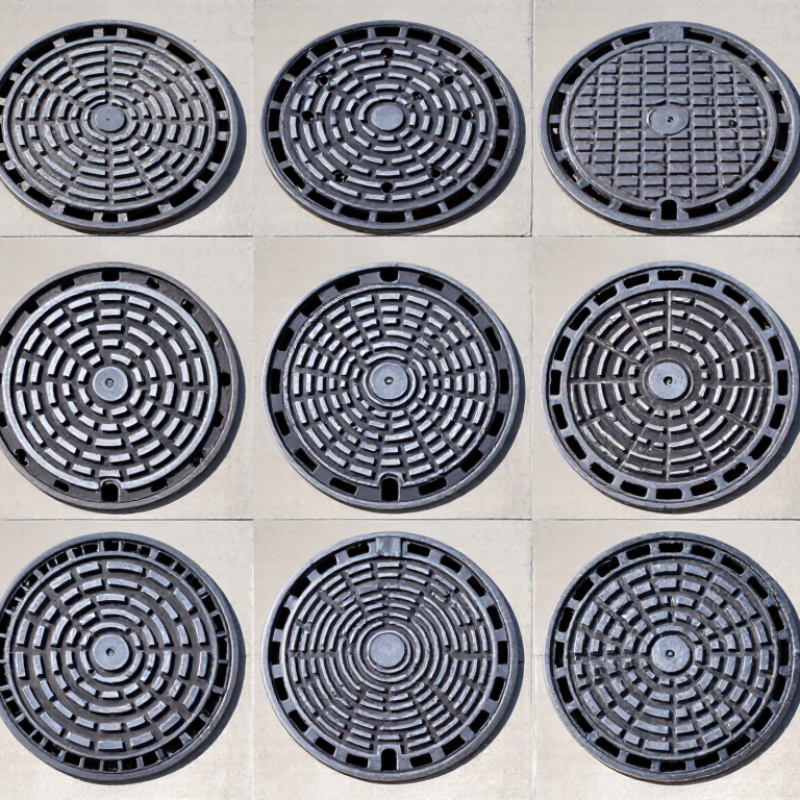
10 Best Ductile Iron Manhole Covers for Global Buyers

Choosing a ductile iron manhole cover involves more than comparing prices or appearance. Buyers need to match the cover’s load rating, clear opening, and frame dimensions to the installation site. A cover for a quiet pedestrian walkway may not suit a busy road with repeated heavy-vehicle traffic. The difference matters.

This guide reviews ten options for global buyers, focusing on practical details such as load classifications, locking features, anti-slip surfaces, and protective coatings. It also considers frame compatibility and the availability of product drawings, test reports, and traceable specifications. These documents help buyers assess a product before ordering, though requirements vary by destination and project. Verify them locally.

Material and workmanship deserve close attention. A well-made ductile iron manhole cover should have consistent casting, a stable seating surface, and a secure fit that limits movement under traffic. Coating quality can affect corrosion resistance, but site conditions and maintenance still play a role. No single model fits every project.

The comparisons ahead are intended as a starting point, not a substitute for engineering review. Check the supplier’s stated ratings against the actual installation conditions, and confirm dimensions with the project drawings. One overlooked detail can cause delays. Some product listings leave questions unanswered, so buyers should request clarification rather than rely on attractive photos alone.

10 Best Ductile Iron Manhole Covers for Global Buyers

What Ductile Iron Manhole Covers Are and How They Are Made

Ductile iron manhole covers are cast components made from iron in which magnesium treatment encourages graphite to form rounded nodules, rather than brittle flakes. This structure helps the metal combine strength with useful impact resistance. ASTM A536 Grade 65-45-12 specifies minimum tensile strength of 448 MPa, yield strength of 310 MPa, and elongation of 12%. Actual performance still depends on casting quality, cover geometry, and installation. Small details matter.

Production begins by melting iron and adjusting its chemistry. Foundries add magnesium and inoculants, then pour the treated metal into a sand mold shaped for the cover and frame. After cooling, workers remove excess metal, clean the casting, and inspect its surface and dimensions; some products also receive machining or protective coating. A rough seating edge can cause rocking under traffic. It happens. For load selection, EN 124-2:2015 defines classes including D400, tested at 400 kN, and E600, tested at 600 kN. These are classification test loads, not simple promises of field capacity. Buyers should match the class to the installation location and verify that the complete cover-and-frame assembly meets the specified standard.

How Load Classes, Standards, and Site Conditions Shape Selection

10 Best Ductile Iron Manhole Covers for Global Buyers

Load class, standards, and site conditions should guide cover selection. A15 suits pedestrian areas, while B125 is commonly specified for light vehicle zones. C250 may fit kerbside channels, and D400 is widely used in carriageways. Heavier traffic and industrial locations may require E600 or F900. These classes are not interchangeable. Confirm the applicable standard, edition, and approval requirements with the project authority; classifications and acceptance rules can vary by market.

The site matters as much as the rating. Check traffic speed, turning loads, flooding risk, and how often crews need access. A cover near a bus stop may face repeated impact, while a quiet access road may carry occasional heavy vehicles. Inspect the frame seating and chamber opening too. Poor bedding can cause rocking, noise, or premature damage, even when the cover has the right rating. A tidy load table can still miss site reality.

Tips: Match the cover and frame as a set. Verify clear opening, locking needs, corrosion exposure, and installation details before ordering. Ask for test documentation tied to the stated standard and load class. Small details matter. I have seen selection discussions focus heavily on class while overlooking frame support; that is an easy mistake, and specifications alone cannot correct poor installation.

Ten Leading Ductile Iron Manhole Cover Types for Global Buyers

For global buyers, ten common ductile iron manhole cover types serve different site conditions. Solid-top covers suit roads and paved areas where surface openings are unwanted. Vented covers allow airflow in chambers that need ventilation. Recessed covers accept paving blocks or concrete infill, helping them blend into surrounding surfaces. Hinged covers stay attached during inspection, reducing the chance of a displaced lid. Lockable, bolted covers help restrict unauthorized access. Water finds gaps. Gasketed covers use a seal to limit water and debris entry, though performance depends on correct installation.

Circular covers are widely used because they cannot fall through a matching circular opening. Square and rectangular designs can fit specific chambers or narrow utility corridors. Double-leaf covers provide a wider access opening, useful when crews handle larger equipment. Heavy-duty, traffic-rated covers are designed for areas with greater wheel loads. Check the stated load class, frame dimensions, clear opening, and relevant local specifications before ordering. Terms such as “heavy-duty” are not always comparable between suppliers. A detail that is easy to overlook is seating: uneven support can cause rocking, noise, and premature wear. The ten forms are not mutually exclusive; a cover can be circular, hinged, and gasketed at once.

How to Compare Safety, Durability, Fit, and Total Cost

Comparing ductile iron manhole covers starts with the actual site, not the catalogue image. Check the required load class against expected traffic, including delivery vehicles or occasional heavy equipment. Ask for test documentation and confirm which standard applies to the project. Safety also depends on details: a stable frame, secure seating, and suitable locking or hinge options can reduce movement and unauthorized access. Fit matters. Measure the clear opening, frame dimensions, and seating depth; even a strong cover may rock if the frame is uneven or mismatched. Small differences matter.

Durability depends on more than iron strength. Consider the coating, drainage around the frame, and exposure to road salt, standing water, or coastal air. Request material and coating specifications, then compare them with the site conditions. A thicker cover is not automatically the better choice if it adds weight without meeting a real need. Total cost should include freight, lifting equipment, installation time, replacement parts, and likely maintenance—not just the unit price. Cheap can cost more. A useful comparison sheet can list these items side by side, but it will still miss something: local handling conditions are easy to underestimate. Before ordering, confirm dimensions and load requirements with the project engineer or responsible site professional.

10 Best Ductile Iron Manhole Covers for Global Buyers - How to Compare Safety, Durability, Fit, and Total Cost

A practical, brand-neutral shortlist of common cover-and-frame configurations. “Best” depends on the installation location, required load class, opening size, and local specification.

Compare typical applications, fit considerations, durability features, and relative cost
# Configuration EN 124 class Typical placement Typical opening / fit checks Safety and durability features to specify Relative initial cost Total-cost considerations
1 Compact pedestrian-area cover and frame A15
15 kN test load
Pedestrian and cyclist areas where vehicle access is excluded Often available in small circular or square formats; confirm clear opening, frame outside dimensions, and seating depth. Stable frame seating and a non-slip top surface; choose only where the installation area is appropriate for A15. Low Usually economical where the light-duty class is permitted; replacement costs can rise if vehicles enter the area.
2 Footway and parking-area cover B125
125 kN test load
Footways, pedestrian areas, and car parks for cars Commonly offered with circular or square openings; match the frame to the existing chamber and paving build-up. Check the complete cover-and-frame assembly rating, secure seating, and resistance to rocking under traffic. Low to medium Balance purchase price against the cost of disturbance to paving and traffic management during replacement.
3 Kerbside channel cover or gully grating C250
250 kN test load
Kerbside channels and areas near the kerb where this class is suitable Confirm grating or cover dimensions, flow requirements, frame orientation, and the exact position relative to the kerb. For gratings, check slot layout and drainage needs; ensure the selected assembly is rated for its actual installation zone. Medium Drainage access and debris management can affect cleaning frequency and ongoing maintenance costs.
4 Standard circular roadway cover D400
400 kN test load
Carriageways and other areas used by road vehicles, where D400 is specified A 600 mm nominal clear opening is common in some markets, but is not universal; verify clear opening, frame dimensions, and cover depth. Specify a tested cover-and-frame set, secure seating, and a top surface appropriate to the road; consider a locking feature where needed. Medium Assess service life, inspection access, noise or movement complaints, and the cost of road closures for repairs.
5 Square roadway cover and frame D400
400 kN test load
Roadways and paved areas where a square opening suits the chamber layout Check clear opening separately from outside frame dimensions; confirm corner geometry and bearing support in the chamber. Ensure the complete assembly is rated for the location and that the frame is installed on an adequately prepared support. Medium May simplify access to square chambers; correct frame alignment and bedding help reduce movement and repeat repairs.
6 Large-opening roadway cover D400
400 kN test load
Roadway access points that need a larger clear opening Opening sizes vary by design; check lifting access, cover segmentation, frame footprint, and compatibility with the chamber. Confirm the rating applies to the specified size and configuration; larger covers may need safe lifting arrangements. Medium to high Consider handling equipment, inspection access, and whether segmented covers reduce maintenance downtime.
7 Gasketed roadway cover Typically D400
400 kN test load
Roadways or paved areas where limiting odor, water ingress, or rattling is a project requirement Check gasket profile, frame groove, seating surfaces, and whether the specified seal performance is supported by test documentation. A gasket can support sealing and reduce movement noise when correctly designed and maintained; do not assume it makes the assembly watertight. Medium to high Include gasket inspection and replacement in maintenance planning; potential savings depend on the actual sealing requirement.
8 Industrial-area cover and frame E600
600 kN test load
Industrial areas subject to particularly high wheel loads, where E600 is required Confirm opening size, frame bearing area, installation detail, and the actual vehicle or equipment loading conditions. Use an assembly tested for the required class and size; installation quality and support conditions remain critical. High Higher upfront cost may be appropriate where heavy loading makes premature failure and operational disruption costly.
9 Very-heavy-duty cover and frame F900
900 kN test load
Areas subject to exceptionally high wheel loads, such as certain aircraft operating areas Match the opening and frame footprint to approved project drawings; verify the intended load class for the exact installation. Require documentation for the complete assembly and installation requirements; do not substitute a lower class based on appearance alone. Very high Specify only where the loading conditions call for it; over-specification can increase procurement and installation costs without benefit.
10 Recessed or infill roadway cover Class as tested
Often specified for D400 locations
Paved public areas where the cover is intended to receive a compatible surface finish Check recess depth, finished-level allowance, infill material, cover weight, and the complete assembly’s tested configuration. The class must apply to the finished cover-and-frame assembly, including the specified infill arrangement; verify installation instructions. High Can help coordinate with surrounding paving, but infill, finishing, and replacement work may add to lifecycle costs.

Important: EN 124 load-class figures are test loads, not allowable service loads. The application descriptions are general guidance, not a substitute for local regulations or project engineering. Dimensions, weights, materials, performance, and price vary by design and market. Confirm the required standard and class, certified assembly, clear opening, frame dimensions, installation detail, and any sealing or locking requirements before purchase. Relative cost levels are qualitative; compare delivered price, installation, inspection, and replacement costs for the same specification.

Global Sourcing, Installation, and Maintenance Considerations

Global sourcing starts with the installation site, not the catalog. The U.S. EPA’s 2022 Clean Watersheds Needs Survey estimated $630.1 billion in wastewater and stormwater infrastructure needs over 20 years. That scale makes dependable, replaceable components important. Buyers should compare material certificates, dimensional drawings, coating details, and test documentation before ordering. EN 124-2:2015 classifies cast-iron access covers by intended traffic loading; confirm the applicable local standard and class for each location. A cover for a sidewalk is not automatically suitable for a busy carriageway. Paper compliance is not field performance.

Specify frame depth and clear opening, then check them against the existing chamber. A few millimeters can cause rocking. Fit matters. During installation, support the frame evenly on suitable bedding, keep it level with the finished surface, and compact surrounding material carefully. Poor seating can create noise, trip hazards, or premature damage. Check it. Confirm the cover opens with the intended lifting tool and does not bind after paving.

Maintenance should include checks for movement, cracked seating, blocked drainage slots, and coating damage, especially after roadworks or flooding. Record inspection dates and any replacement dimensions; this makes future sourcing less guesswork. Match coatings to soil moisture and exposure, but avoid assuming one coating suits every site. That detail is easy to overlook. EPA’s needs estimate is national, not a specification for any individual project, so local surveys and load assessments still matter.

Request a Quote/Further Information

    Download