China’s deluge valve manufacturers serve projects ranging from warehouse protection to industrial fire systems. Comparing them takes more than scanning product catalogs. Buyers should examine valve construction, pressure range, trim configuration, test documentation, and after-sales support. The details matter. A brass component, a clear nameplate, and complete test records can reveal more than a polished brochure.
Fire protection researcher John R. Hall Jr. has studied fire incidents and protection systems. His work is a useful reminder that equipment choices must be grounded in evidence. For this guide, the practical test is simple: “Look beyond the product claim; check the design, test record, and service support.” This is an editorial summary, not a direct quotation from Hall.
A deluge valve controls water delivery after a compatible detection system activates. Its reliability depends on correct system design, installation, inspection, and maintenance—not the valve alone. When reviewing Chinese suppliers, compare manufacturing experience, material specifications, quality-control procedures, certifications relevant to the project, and access to replacement parts. Ask for documents that can be checked, not just promises.
Some points deserve careful reflection. A low price may be attractive, but unclear test evidence or slow technical support can create costly uncertainty later. This overview will compare manufacturers through practical criteria, while noting where public information is limited. The goal is not to declare one universal winner. It is to help buyers identify a deluge valve supplier suited to their system, operating conditions, and verification needs.
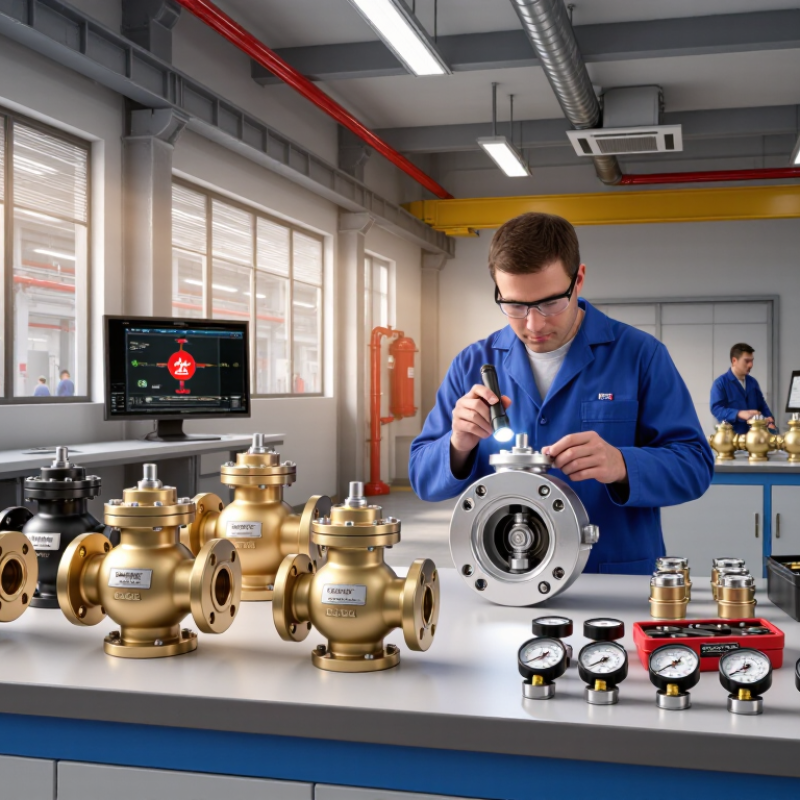
Deluge valves serve open-nozzle systems: every nozzle downstream is open, while water remains behind the valve until detection releases it. Water then enters the piping and discharges through all open outlets.
All open.
This coordinated release suits high-hazard areas where fire may spread quickly, including industrial process equipment and exposure protection. NFPA 13 addresses sprinkler-system installation, while NFPA 15 covers fixed water-spray systems. The applicable standard depends on the hazard and system purpose, not simply the valve type.
Design reviews should verify detection coverage, hydraulic demand, drainage, water supply, and valve-trim compatibility. A blocked strainer or slow release can delay discharge, so commissioning should include trip tests and recorded flow and pressure readings.
NFPA’s 2021 U.S. Experience with Sprinklers report found that sprinklers operated in 92% of fires large enough to activate them, and operated effectively in 96% of cases when they did operate. These figures cover sprinkler systems broadly, not deluge systems alone; they provide context, not a deluge performance guarantee.
Test the entire release chain.

Chinese deluge-valve manufacturers offer product ranges for water-based fire protection systems, from bare valves to assembled trim packages. Common options include diaphragm- or piston-operated valves, with hydraulic, pneumatic, or electric release configurations. Buyers may also find different body materials, connection sizes, pressure ratings, and accessories such as strainers, gauges, and manual release stations. Availability varies by manufacturer.
MarketsandMarkets estimated the global fire protection systems market at USD 78.6 billion in 2023, with growth projected through 2028. This broad market figure is not specific to deluge valves, but it reflects demand across fire protection equipment. When comparing Chinese suppliers, check technical datasheets, test records, spare-part availability, and whether the offered valve and trim match the intended hazard and system design. A long catalog is not proof of suitability. Details matter.
Tips: Ask for the complete trim schematic and operating-pressure range. Confirm which components are included, and request test documentation for the exact configuration. One detail is easy to miss: field access for inspection and resetting should be checked before installation.
Selected nominal sizes commonly used in deluge valve systems. Availability varies by manufacturer, model, and certification.
DN is a nominal size designation; it does not indicate the valve’s exact internal diameter. Check individual product documentation for available sizes and approvals.
For buyers comparing deluge valve manufacturers in China, UL 260 Listing and FM Approval offer useful, independently verified benchmarks. UL 260 covers dry-pipe and deluge valves for fire-protection service. A listing applies to a defined product configuration, not every valve from a factory. Check the exact model, size, pressure rating, trim arrangement, and release method against the current certification record. Details matter.
FM Approval provides another layer of evidence. Its Approval Guide lets buyers verify whether a specific valve configuration is approved for the stated application. Compare the approval record with the submitted drawings and physical nameplate. A mismatch in trim or pressure limits can matter during system design. Paperwork is not the whole story.
The risk is practical. NFPA’s report on U.S. industrial and manufacturing property fires for 2017–2021 estimates an annual average of 37,910 fires and $1.2 billion in direct property damage. These figures describe the United States, not China, but they show why dependable water-control equipment matters. Ask manufacturers for current certificates, test documentation, traceable production records, and clear installation limits. Then confirm those details independently. A certificate alone cannot prove that every delivered unit matches its approved design.
| Evaluation Dimension | UL 260 Benchmark | FM Approval Benchmark | What Buyers Should Verify |
|---|---|---|---|
| Product scope | UL 260 covers dry-pipe and deluge valves intended for fire-protection service. | FM Approval is product-specific; the applicable approval requirements depend on the valve and its intended service. | Confirm that the exact deluge-valve model is covered, rather than relying on a general statement that a supplier’s products are certified. |
| Certification evidence | Check the current UL certification record for the product and the scope of its certification. | Check the current FM Approvals listing or Approval Guide entry for the product. | Request current, verifiable records and confirm the manufacturer, model designation, and product description match the offered valve. |
| Model and configuration | Certification applies to the models and configurations identified in the relevant certification record. | Approval applies to the specific products and configurations identified in the relevant approval record. | Match the valve body, trim arrangement, accessories, and installation orientation to the documented approved configuration. |
| Size and pressure rating | Permitted sizes and ratings must be confirmed from the current product certification information. | Approved sizes and ratings must be confirmed from the current product approval information. | Compare the project’s required nominal size and working-pressure range with the exact listed or approved model. |
| Trim and release equipment | Trim and release-device details should be checked against the certified product documentation. | Trim and release-device details should be checked against the approved product documentation. | Verify compatible release devices, solenoid options, pressure switches, alarms, and trim packages; do not assume that every optional combination is covered. |
| Testing and performance | Use the certification record and manufacturer’s technical documents to identify the applicable product ratings and installation requirements. | Use the approval record and manufacturer’s technical documents to identify the applicable product ratings and installation requirements. | Request test documentation relevant to the offered model, including applicable operating, hydrostatic, and functional test information. |
| Manufacturing quality controls | A product certification should not be treated as a substitute for reviewing the supplier’s manufacturing and quality-control documentation. | An approval should not be treated as a substitute for reviewing the supplier’s manufacturing and quality-control documentation. | Assess traceability, inspection records, material documentation, production controls, and the supplier’s process for managing product changes. |
| Installation and maintenance | Follow the applicable installation, operation, and maintenance instructions for the certified model. | Follow the applicable installation, operation, and maintenance instructions for the approved model. | Confirm that instructions, replacement-part information, and commissioning guidance are available for the delivered configuration. |
| Project suitability | UL 260 certification alone does not establish suitability for every project, system design, or local code requirement. | FM Approval alone does not establish suitability for every project, system design, or local code requirement. | Have the fire-protection designer or authority having jurisdiction confirm compatibility with the system design, applicable codes, and project specifications. |
| Manufacturer comparison | Compare suppliers using the exact UL certification record for the proposed valve. | Compare suppliers using the exact FM approval record for the proposed valve. | Prioritize verifiable certification, model-to-record consistency, documented quality controls, technical support, and dependable parts availability—not broad certification claims alone. |
A useful comparison of deluge valve manufacturers starts with the system’s rated pressure and required flow. Check that the valve’s stated working pressure suits the installation, not just the test pressure. Then review flow curves or pressure-loss data at the expected operating flow. A valve may meet a headline rating yet create too much pressure drop in a real system. Small details matter.
Materials should match the water quality, ambient conditions, and maintenance plan. Compare body and trim materials, plus the diaphragm or other sealing components. Ask for technical data sheets and test records tied to the specific model or production batch. Records should identify test methods, results, and traceability details. A polished certificate alone is not enough. Not always.
Tips: Compare like with like: same pressure range, flow conditions, and test basis. Ask how factory results are verified and what inspection steps are recorded. If a figure is unclear, request the supporting curve or report before choosing. A quick spreadsheet helps, but it cannot replace checking the valve against the project’s actual hydraulic design.
Who Are the Best Deluge Valve Manufacturers in China?
NFPA 25 Inspection Criteria and After-Sales Support for Deluge Systems
A dependable deluge system needs more than a well-made valve. Buyers should ask manufacturers for clear inspection, testing, and maintenance instructions aligned with the NFPA 25 edition adopted locally. Inspection plans should address valve condition, trim, gauges, water supply, and system components. Functional tests must follow approved procedures and be coordinated with facility staff, since discharge can affect people, equipment, and operations. Keep dated records of findings, repairs, and parts replaced. Small details matter. A missing test note can make later troubleshooting harder.
Tips: Before purchase, request sample maintenance records, spare-parts lists, and written service response times. Confirm technicians can explain reset procedures and common fault checks. Keep it practical.
After-sales support matters most when a system is impaired or a replacement part is needed. Ask how quickly technical support responds, whether critical components remain available, and what information is needed to diagnose a fault. A useful supplier provides traceable manuals, training, and clear escalation steps—not just a sales contact. Check that documentation matches the delivered valve configuration. Even careful teams can overlook a small variation, so verify details against the equipment tag and approved drawings. Have qualified personnel conduct inspections and tests under applicable site procedures.
© Shipham Valves 2025. All Rights Reserved.
Website By PS Website Design Ltd
Request a Quote/Further Information
Download
We use cookies on this website, by continuing to browse the site you are agreeing to our use of cookies. Find out more.