Choosing the best Automated Line to buy in 2026 starts with the product, not the machine brochure. A line that fills 120 bottles per minute may be wrong for a plant running short, varied batches. Define the required output, product range, shift pattern, and available floor space before comparing suppliers. Small details matter: container dimensions, label changes, washdown needs, and the position of existing conveyors. They shape real performance.
Look beyond headline speed. Ask vendors for measured output under conditions close to yours, including changeover time, reject rates, and staffing assumptions. Request references from facilities with similar products and production volumes. Check what the quote includes: guarding, controls, installation, operator training, spare parts, and service response. Integration deserves equal attention. A fast machine can still become a bottleneck if upstream feeding or downstream packing cannot keep pace. That happens.
Compare total cost over the expected service life, not just purchase price. Include energy use, maintenance access, consumables, software support, and likely downtime. Confirm applicable safety requirements with qualified professionals and verify that documentation is complete. Then test your own materials where possible. A demonstration using unfamiliar sample parts may look impressive; it may not reflect daily production. No scorecard can remove every uncertainty. A supplier’s promises also need careful checking. The strongest choice is the line that meets verified production needs, fits the site, and has dependable support—not necessarily the most automated or expensive option. In 2026, the best purchase will be the one your team can run, maintain, and adapt as demand changes.
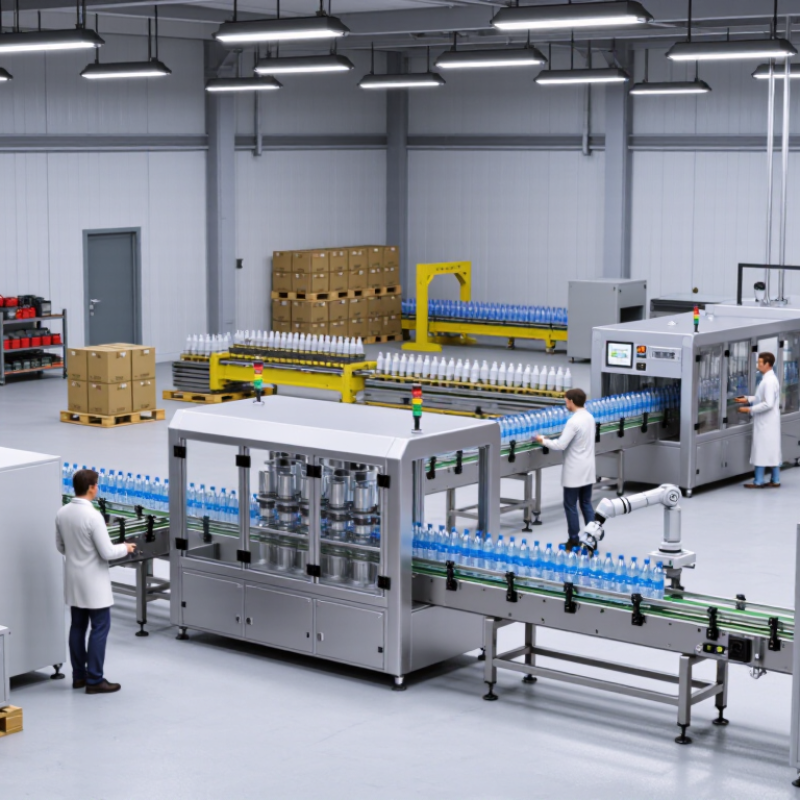
An automated production line is a connected sequence of machines that moves materials through repeatable steps. A conveyor may carry a part to a station, where a robot positions it and a tool performs an operation. Sensors check for presence, alignment, or a completed cycle. A programmable controller coordinates these actions and signals when something needs attention. It is not magic.
The line works through a steady loop: feed, process, inspect, and transfer.
For example, a photoelectric sensor can detect a component on a belt. The controller then pauses the belt, starts the next machine, and waits for a quality check. If a measurement falls outside the set range, the system can flag the part instead of passing it forward.
Operators still matter. They load materials, respond to alarms, and handle tasks that are difficult to automate reliably.
A useful line is designed around the product, production rate, and expected changes—not just machine speed.
A fast station can still create a bottleneck if the next station works more slowly. Changeovers also deserve attention: a new package size may require different guides, settings, or inspection limits.
Small details count. In practice, early estimates are often imperfect; a short pilot run can reveal awkward handoffs, recurring stops, and steps that looked simple on paper.
What Is the Best Automated Line to Buy in 2026?
How to Match Line Types to Products and Production Goals
The best automated line is the one that fits your product, not the one with the most robots. A high-volume beverage operation may need continuous flow, synchronized filling, and fast changeovers. A maker of varied components may benefit more from modular cells that can be rearranged as orders shift. The International Federation of Robotics reported 541,302 industrial robot installations worldwide in 2023, with 4,281,585 robots in operation. That scale shows automation is established, but it does not mean every factory needs a fully robotic line. Start with product dimensions, daily volume, changeover frequency, and the cost of downtime.
Match the line design to the production constraint. For fragile goods, gentle handling and vision inspection may matter more than raw speed. For stable, repeatable products, a dedicated line can deliver consistent output, but it may be less forgiving when product sizes change. Flexible systems cost more to plan. They can also leave capacity unused. That is worth questioning before purchase. Ask suppliers to model realistic product mixes, staffing, maintenance access, and peak demand—not just ideal cycle times.
Tips: Request a timed trial using your actual products. Watch a changeover, inspect reject handling, and confirm spare-parts lead times. A neat factory demo is not enough.
| Line Type | Best-Fit Products | Production-Volume Fit | Changeover Flexibility | Main Advantages | Key Trade-Offs | Best Production Goal |
|---|---|---|---|---|---|---|
| Dedicated transfer line | Stable, standardized parts such as automotive components, fittings, and appliance parts | High, steady demand for a limited product range | Low; tooling and station setup are optimized for specific parts | Consistent cycle times, repeatable quality, and efficient production at scale | High initial investment; product changes can require substantial retooling | Maximize output and unit-cost efficiency for long product runs |
| Modular assembly line | Consumer goods, electrical products, and assemblies with common process steps | Medium to high, especially when demand is predictable | Medium to high; stations can be rearranged or expanded as needs change | Supports phased investment and makes capacity adjustments easier | Rebalancing stations and coordinating modules require careful process planning | Increase capacity while retaining room for product or process updates |
| Flexible manufacturing system | Machined components and product families that share equipment but require different routings | Medium to high across a mix of products | High when products, fixtures, and programs are designed for quick changeovers | Can switch between product variants with less manual intervention than a dedicated line | Software, integration, and system planning add complexity; utilization must justify the investment | Handle product variety without giving up automated production |
| Robotic cell or robot-based line | Pick-and-place, machine tending, welding, palletizing, and repetitive assembly tasks | Low to high, depending on cycle time, number of robots, and material flow | Medium; reprogramming and end-of-arm tooling may be needed for new tasks | Automates repetitive or ergonomically demanding work and can be configured for different tasks | Requires safety measures, programming, and reliable part presentation | Improve labor productivity, consistency, or worker safety at key operations |
| Automated packaging line | Food, beverages, personal-care products, and other goods requiring filling, sealing, labeling, or case packing | Medium to high when product and package formats are standardized | Low to medium; format parts and settings may need to change between package sizes | Connects packaging steps and helps maintain consistent package handling and presentation | Container, closure, and label variation can affect speed and require change parts | Reduce packaging bottlenecks and keep pace with upstream production |
| Automated batch or process line | Liquids, powders, chemicals, and food products made through mixing, heating, dosing, or other process steps | Batch-based; capacity depends on vessel size, process time, and cleaning requirements | Medium; recipes can vary, but cleaning and product-contact requirements matter | Improves repeatability in recipe execution, process control, and material handling | Cleaning, validation, and changeover time can limit available production time | Improve batch consistency, traceability, and process control |
| Hybrid line with manual and automated stations | Products with a mix of repetitive tasks and steps requiring inspection, judgment, or delicate handling | Low to medium, or variable demand that does not justify full automation | High; staffing and work allocation can often be adjusted by station | Allows targeted automation without requiring every operation to be automated | Output may depend on staffing, line balancing, and consistent work methods | Automate the highest-value tasks while preserving operational flexibility |
Planning note: The best choice depends on product design, demand stability, required output, changeover frequency, quality requirements, available floor space, and integration needs. Volume-fit descriptions are comparative rather than guaranteed capacity figures; actual throughput must be confirmed through application-specific cycle-time studies and supplier testing.
In 2026, the most useful automation technologies solve specific production problems. A line handling three package sizes needs more flexibility than one repeating a single format. Machine vision can inspect labels, seals, and fill levels at speed, but results depend on lighting, camera placement, and product variation. Test with real materials. A clean sample on a showroom conveyor proves little.
Robotics can support repetitive picking, case packing, or palletizing, especially when product changes are frequent. Look for quick, clearly documented changeovers and grippers suited to the actual items. Modular controls and open data connections also matter: they make it easier to add equipment or connect production records later. Still, integration can take longer than expected. Ask who will configure, test, and maintain those links.
Useful sensors track conditions such as temperature, vibration, and air pressure, helping teams spot wear before a stoppage. Yet more dashboards do not automatically create better decisions. Operators need clear alerts, practical training, and safe ways to intervene. Check spare-part access, remote-support safeguards, and recovery procedures before purchase. I would not treat maximum speed as the main measure of value; a line that restarts cleanly after a minor fault may serve the plant better. That trade-off deserves a hard look.
When comparing automated lines, treat advertised speed as a ceiling, not a promise. The International Federation of Robotics reported 541,302 industrial robots installed worldwide in 2023, with 4,281,585 operating in factories. That scale makes supplier experience worth checking, but it does not prove a line fits your product mix. Ask for sustained output using your actual parts, operators, and changeover schedule. Watch a trial run. Count rejected units, jams, and minutes spent clearing faults. A fast machine can still bottleneck at a feeder or inspection station.
Integration deserves its own test. Confirm the line can exchange signals with existing equipment, production software, and quality systems. Request a floor plan showing access for cleaning, maintenance, and material replenishment. Then compare total cost: installation, tooling, training, energy, spare parts, service visits, and expected downtime. Ask how quickly technicians respond and which critical parts are stocked locally. One awkward detail: estimates often understate commissioning time. I would challenge that number. The IFR’s World Robotics data describes a growing installed base, not guaranteed local support. Get service commitments and acceptance criteria in writing, and calculate cost per good unit across realistic shifts—not just the best hour.
Compare capacity, integration, support, and total cost using a consistent evaluation framework.
How to use this chart: The percentages are an illustrative starting point, not market statistics or ratings of specific suppliers. Adjust them to match your operation, then score each proposal against the same criteria. Evaluate total cost across the expected service life, including purchase, installation, tooling, energy, maintenance, and other operating costs.
Choosing an automated line in 2026 starts with the product, not the brochure. Define the output you need per shift, including changeovers, cleaning, and planned stops. Ask suppliers to demonstrate your product, or a close substitute, under agreed operating conditions. A fast cycle time means little if rejects rise or operators must intervene every few minutes. That matters.
Compare proposals using the same checklist: usable throughput, staffing, footprint, utility demand, safety features, and integration with existing equipment. Request layouts, interface details, and a clear list of exclusions. Ask how performance is measured and whether acceptance tests use your materials, packaging, and target run duration. Get service response times, spare-parts lead times, training scope, and software access in writing. Ask for evidence.
Talk with customers running similar products. Ask what broke, how long recovery took, and which costs surprised them. A site visit can reveal awkward access panels, poor cable routing, or sensors that need frequent cleaning. Score suppliers on documented results and support, not presentation polish alone. I would still leave room for doubt: forecasts rarely capture every product variation. Build a realistic trial and contingency into the purchase plan.
© Shipham Valves 2025. All Rights Reserved.
Website By PS Website Design Ltd
Request a Quote/Further Information
Download
We use cookies on this website, by continuing to browse the site you are agreeing to our use of cookies. Find out more.