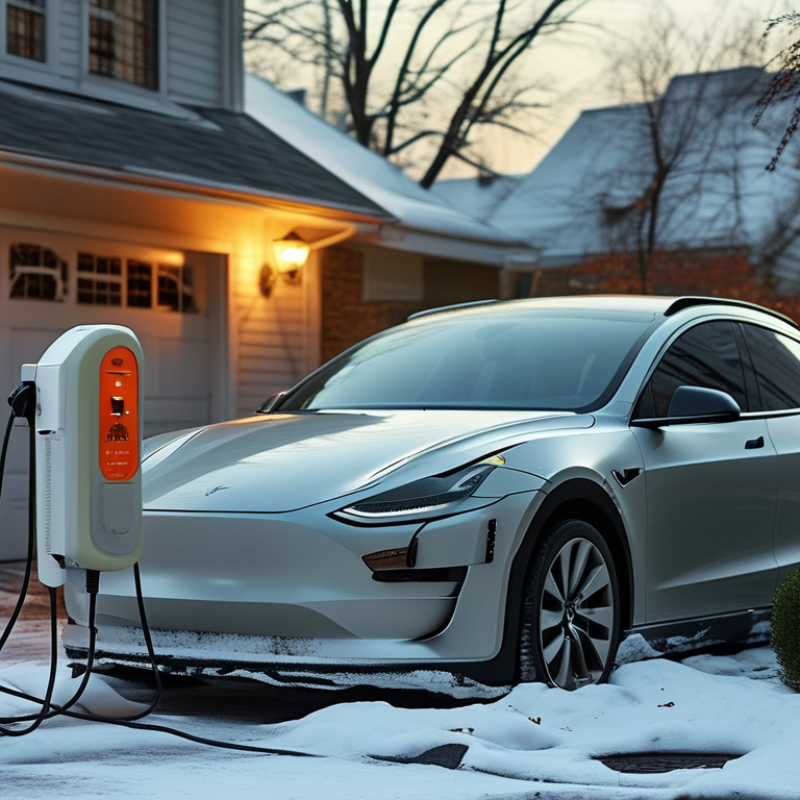
2026 Best AC Wallbox Charger for Home EV Charging?

Choosing the right Ac Wallbox Charger can make home EV charging safer, faster, and easier to manage. In 2026, buyers face more than simple power ratings. Cable length, connector compatibility, installation quality, software support, and household load limits all matter. A powerful charger is not automatically the best charger.

This guide examines leading home wallbox models through practical criteria. We consider charging speed, electrical protection, weather resistance, app reliability, warranty coverage, and independent safety certification. We also examine daily details, such as reaching a driveway socket during winter or storing a stiff cable beside the garage. These small issues often shape ownership more than impressive specifications.

Real homes are messy. One household may need overnight charging, while another shares power with a heat pump, oven, or solar system. Smart load balancing can prevent unnecessary electrical strain. Professional installation remains essential, especially when upgrading circuits or mounting equipment outdoors. Manufacturer claims deserve careful checking. Independent test results are stronger evidence.

No charger wins every test. Some models offer excellent software but weak customer support. Others provide durable hardware but limited scheduling features. This comparison aims to identify sensible choices, not promote one universal winner. It also acknowledges a common mistake: buying maximum output before confirming the vehicle’s onboard charging limit. The best 2026 AC wallbox may be the model that quietly fits your home, driving habits, budget, and electrical system.

2026 Best AC Wallbox Charger for Home EV Charging?

What Is an AC Wallbox Charger for Home EV Charging?

An AC wallbox charger is a fixed home charging unit that delivers alternating current to an electric vehicle. The vehicle’s onboard charger then converts AC into DC for the battery. That distinction matters. Unlike a basic household socket, a wallbox usually provides higher power, stronger protection, and clearer charging controls.

The U.S. Department of Energy’s Alternative Fuels Data Center defines Level 2 charging as 208–240 volts, commonly ranging from 3 to 19.2 kilowatts. Many homes use 7.4 or 11 kilowatts. A 7.4-kilowatt unit can often add 35–45 kilometers of driving range per hour, depending on vehicle efficiency and weather. Installation should include suitable cabling, residual-current protection, and an electrician’s inspection. A neat cable hook beside the driveway matters more than expected.

The International Energy Agency reported over 17 million electric cars sold worldwide in 2024, exceeding 20% of new-car sales. That growth increases pressure on convenient residential charging. Smart wallboxes can schedule charging during cheaper periods and reduce household peak demand. Still, “smart” does not always mean better. Weak Wi-Fi, complex software, or an undersized home connection can create frustration. Check the vehicle’s AC input, the home’s available capacity, and local electrical requirements before choosing a 2026 model.

How to Choose the Right 2026 AC Wallbox Charger

2026 Best AC Wallbox Charger for Home EV Charging?

How to Choose the Right 2026 AC Wallbox Charger

Choosing an AC wallbox starts with your home, not the charger’s advertised maximum. The IEA’s Global EV Outlook 2024 confirms that home charging remains central to daily electric-car use. A practical target is usually 7.4 kW on single-phase power or 11 kW on three-phase power. Check your vehicle’s onboard charger first. A 22 kW wallbox cannot make a car charge at 22 kW.

Safety deserves more attention than glossy specifications. IEC 61851 covers conductive charging requirements, while IEC 62955 addresses residual direct-current detection. Ask an accredited electrician to inspect cable size, earthing, breaker capacity, and moisture exposure. The installation matters.

Choose adjustable current control. It can reduce household overload when an oven, heat pump, and charger operate together. Smart scheduling can also follow lower electricity tariffs, where available. The U.S. Department of Energy’s Alternative Fuels Data Center lists Level 2 charging commonly within the 3–19 kW range, showing why household limits differ widely.

Look for a clear warranty, software support, and replaceable protection components. Wi-Fi is useful, but unreliable connectivity should not stop charging. I would not pay extra for features I cannot test locally. A mistake is trusting app screenshots more than electrician measurements. IP ratings, cable length, connector storage, and cold-weather performance deserve a hands-on check.

Data helps. Your switchboard decides.

Key Features and Safety Standards to Compare

Choosing the best AC wallbox for home charging in 2026 requires more than checking charging speed. The International Energy Agency’s Global EV Outlook 2025 reports that global electric car sales exceeded 17 million in 2024. Home charging therefore needs dependable protection, not just higher output. A 7.4 kW single-phase unit suits many houses, while an 11 kW three-phase unit can reduce overnight charging time. Check your supply capacity first. A faster charger is useless if the circuit cannot support it.

Safety standards deserve close attention. Look for compliance with IEC 61851 for conductive charging systems and IEC 62955 for residual direct-current detection. In practical terms, the charger should detect leakage before a fault becomes dangerous. Integrated 6 mA DC monitoring can support suitable residual-current protection. An electrician should verify earthing, cable size, breaker rating, and local installation rules. Do not rely on the product label alone.

Weather protection matters too. An outdoor wallbox should have a suitable IP rating, a strong enclosure, and a cable that remains flexible in winter. Load balancing is valuable when an oven, heat pump, and charger operate together. It can reduce nuisance tripping.

Smart scheduling may also use cheaper overnight electricity, although tariffs vary widely. Independent testing is preferable to advertising claims. I would also inspect app permissions and software support, because connected equipment can age poorly. That part is often overlooked. A clear fault indicator, emergency isolation method, and accessible service records make daily charging less stressful.

How to Install and Configure a Home Wallbox Charger

Installing a home AC wallbox charger starts with the electrical supply, not the charger itself. Ask a qualified electrician to inspect the consumer unit, cable route, grounding, and available load. A dedicated circuit is normally required. Protective devices must match local electrical rules and the charger’s specifications.

Choose a dry, shaded wall near the parking position. Keep the cable high enough to avoid water, wheels, and sharp bends. The mounting surface should be solid, with fixings suitable for masonry or timber. Leave space around the unit for ventilation and future servicing. It should feel boring.

After installation, configure the charging current carefully. Set it below the circuit’s safe continuous capacity, especially in older homes. Smart load management can reduce charging power when ovens, heaters, or pumps are running. Connect the charger to its control app or web interface, then set schedules, access control, and energy limits. Test the emergency stop, residual-current protection, cable lock, and indicator lights.

Watch the first few charging sessions. Check for unusual heat, burning smells, repeated trips, or unstable connections. I would not ignore a warm plug, even if charging continues. My own layout preference has changed after seeing cables stretched across walking paths. Recheck the cable reach in winter, when doors, gloves, and poor lighting make small mistakes more likely. Keep installation records and arrange periodic inspection according to local requirements.

2026 Best AC Wallbox Charger for Home EV Charging? - How to Install and Configure a Home Wallbox Charger
Evaluation Dimension Recommended Home Specification Typical Alternative Installation or Configuration Guidance
Charger Type AC Level 2 wallbox using a permanently installed circuit AC Level 1 portable charging cable A wallbox is generally more suitable for regular overnight charging because it provides higher power and better cable management.
Rated Charging Power 7.4 kW for single-phase homes or 11 kW for compatible three-phase homes 22 kW where the vehicle, property supply, and local electrical system all support it Choose the highest output that the vehicle and available electrical supply can safely use. A higher wallbox rating does not increase the vehicle's onboard AC charging limit.
Supply Voltage Approximately 230 V single-phase or 400 V three-phase, depending on the region Approximately 120 V single-phase in some North American installations Confirm the home's nominal voltage and phase arrangement with a qualified electrician before selecting the circuit and wallbox.
Maximum Current 32 A for a common 7.4 kW single-phase installation; approximately 16 A for an 11 kW three-phase installation Up to 32 A per phase for a 22 kW three-phase installation The configured current must not exceed the wallbox rating, vehicle limit, cable rating, or the capacity of the dedicated circuit.
Expected Charging Speed Approximately 35–55 km of driving range per hour at 7.4 kW, depending on vehicle efficiency Approximately 50–75 km of driving range per hour at 11 kW Actual range added varies with battery temperature, charging losses, vehicle efficiency, and the vehicle's onboard charger.
Connector Arrangement Fixed cable or a compatible AC vehicle connector approved for the local market Socketed wallbox with a detachable charging cable Use the connector type required by the vehicle and local regulations. Keep the connector clean, dry, and protected when not in use.
Dedicated Circuit Required for normal wallbox installation Shared household circuits are unsuitable for a full-power wallbox The circuit should be sized by a licensed electrician according to local electrical codes, cable length, installation method, and continuous-load requirements.
Residual-Current Protection Residual-current protection suitable for EV charging, with DC leakage protection where required Basic household residual-current protection may be insufficient for every wallbox design Follow the wallbox installation manual and local code. The protection arrangement depends on whether DC residual-current detection is built into the charger.
Overcurrent Protection Dedicated circuit breaker matched to the configured charging current Oversized or shared protection is not acceptable Do not increase the breaker rating to obtain more charging power unless the complete circuit has been designed and verified for that rating.
Dynamic Load Management Recommended where the home has limited electrical capacity or several large loads Fixed-current charging where sufficient spare capacity is available A compatible energy meter can reduce charging current when ovens, heat pumps, or other major loads are operating, helping prevent service overload.
Outdoor Protection Weather-resistant enclosure with an outdoor protection rating of at least IP54; higher protection may be preferable Indoor-only enclosure Install away from standing water, direct mechanical impact, and locations where the cable can become a trip hazard. Follow the manufacturer's mounting limits.
Operating Temperature Typically about −25°C to +50°C, subject to the selected unit's specification Reduced output may occur at temperature extremes Keep ventilation openings clear and avoid enclosing the wallbox in a sealed cabinet unless the installation instructions specifically permit it.
Communication Local control with optional Wi-Fi, Ethernet, Bluetooth, or cellular connectivity Basic plug-and-charge operation without networking Networking can support scheduling, firmware updates, energy monitoring, and remote status checks, but charging should remain usable if the internet is unavailable.
Charging Schedule Off-peak or solar-aware scheduling Immediate charging at the configured current Set the vehicle or wallbox schedule, but avoid enabling conflicting schedules in both systems unless their operating logic is understood.
Solar Integration Optional solar-surplus charging with a compatible energy meter Grid-only charging Solar-only modes may pause or reduce charging when generation falls. A minimum charging current may be needed for stable operation.
Access Control App, RFID card, PIN, or vehicle authorization where supported Open plug-and-charge access Enable access control if the charger is installed in a shared driveway or exposed parking area. Keep recovery credentials in a secure location.
Mounting Location Near the normal parking position, with enough clearance for the cable and connector Remote mounting that requires a long cable Choose a solid vertical surface, keep the cable off the ground, and allow sufficient space for maintenance and connector handling.
Installation Height Set according to local accessibility rules and the wallbox instructions Very low or overhead mounting The connector should be reachable without stretching, bending the cable sharply, or placing the control panel where it can be struck by a vehicle.
Typical Installation Time Several hours for a straightforward installation near the electrical panel One or more days when trenching, long cable routes, or service upgrades are required Time depends on cable routing, wall construction, permits, inspection requirements, and whether the electrical service needs modification.
Electrical Service Capacity Verified spare capacity for continuous EV charging Unverified connection to an existing circuit An electrician should assess the main supply, distribution board, earthing, cable route, and simultaneous household loads before installation.
Commissioning Checks Protective-device test, insulation check, polarity or phase verification, current-limit test, and functional charging test Visual inspection only Record the final configured current and test results. Confirm that the wallbox stops charging correctly when protection devices operate.
Best Choice for Most Homes 7.4 kW or 11 kW smart AC wallbox with adjustable current and load management 22 kW only when the vehicle and electrical installation genuinely support it Prioritize electrical safety, daily charging needs, cable length, weather protection, warranty support, and local compliance over maximum advertised power.
Safety note: Home wallbox charging involves high continuous electrical loads. Installation, inspection, and any service upgrade should be completed by a qualified electrician in accordance with applicable local regulations and the wallbox installation instructions.

How to Use and Maintain an AC Wallbox Charger Efficiently

2026 Best AC Wallbox Charger for Home EV Charging?

How to Use and Maintain an AC Wallbox Charger Efficiently

An AC wallbox works best when its circuit matches the vehicle and local electrical rules. Have a qualified electrician install it, check grounding, and confirm suitable protection. Avoid extension cords or loose adapters. Before charging, inspect the cable for cuts, bent pins, or unusual warmth. Insert the connector firmly, then check the vehicle display for a stable charging session. A moderate charging current often reduces heat and fits overnight home charging better.

Tips: Keep the cable off wet ground and away from driveways. Wipe the connector with a dry, clean cloth. Do not spray water into the socket. Leave space around the wallbox for cooling, and never open its enclosure yourself. Schedule charging during lower-demand hours when your electricity plan supports it. A monthly visual check is simple, but easy to forget.

Maintenance does not require complicated tools. Watch for repeated interruptions, burning smells, discoloration, or unexpected charging speed. Stop using the unit if these signs appear, and request professional inspection. Software updates may improve safety, so follow the equipment manual and use approved procedures. A perfect routine is unrealistic. I still think a small inspection calendar helps, especially in busy households. Do not ignore minor changes; electrical faults can worsen quietly.

Article Source:

Request a Quote/Further Information

    Download