Choosing the right Mens Watches in 2026 requires more than comparing case sizes or popular colors. Global buyers now examine movement quality, material durability, service access, and supplier credibility before placing an order. A polished photograph can hide uneven finishing, weak bracelets, or unclear warranty terms. Details matter.
This guide introduces the main types of mens watches for international markets, including mechanical, automatic, quartz, solar, smart, dive, dress, field, and chronograph models. Each category serves a different lifestyle. A diver may need strong water resistance and clear lume, while a business buyer may prefer a slim case under a shirt cuff. Travel-focused customers often value dual-time displays, scratch-resistant crystals, and dependable power reserves.
Look closely at the evidence. We consider movement reliability, real-world comfort, maintenance needs, and regional buying expectations. Manufacturer specifications help, but hands-on inspection remains important. A watch can feel heavier than expected. A bracelet may pinch.
The strongest options are not always the most expensive. They are the models with honest specifications, stable supply, traceable warranties, and practical after-sales support. Buyers should also confirm sizing standards, import requirements, and communication with sellers before payment. These points can vary by country and market channel.
Some recommendations will remain debatable. Personal taste changes. Technology moves quickly. Still, this overview offers a careful starting point for evaluating Mens Watches in a competitive global market. Expect useful comparisons, realistic limitations, and a few details worth questioning before purchase.
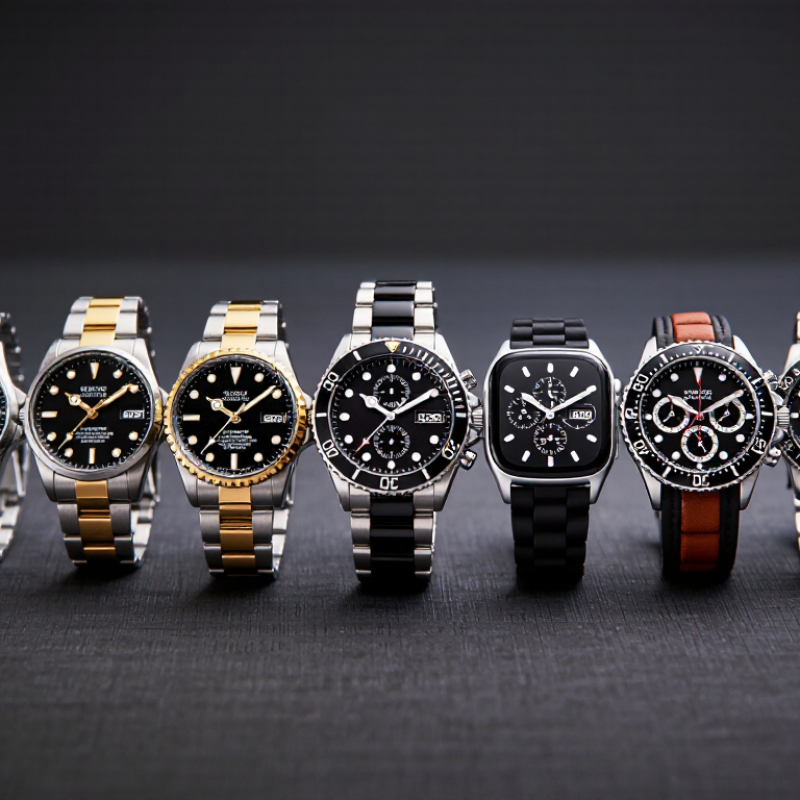
Men’s watches in 2026 are defined by function, movement, and daily context. Dress watches use slim cases, simple dials, and leather or refined metal straps. Field watches favor clear numerals, strong legibility, and practical durability. Dive watches usually include high water resistance, luminous markers, and rotating timing bezels. Chronographs add stopwatch functions for racing, travel, or timing everyday tasks. The categories overlap. A watch can look formal yet operate like a tool.
Movement is another major dividing line. Mechanical watches use wound springs and visible craftsmanship, while quartz watches prioritize accuracy, low maintenance, and accessible pricing. Smartwatches combine timekeeping with health tracking, notifications, and navigation. The International Data Corporation’s Worldwide Quarterly Wearable Device Tracker reported more than 500 million wearable-device shipments globally in 2024, showing the scale of connected wrist technology. However, wearable shipments do not equal traditional watch sales.
Traditional demand remains significant. The Federation of the Swiss Watch Industry reported Swiss watch exports of approximately CHF 26.0 billion in 2024, despite a year-on-year decline. This supports continued interest in mechanical and quartz construction, but export value is not the same as consumer preference. Deloitte’s 2024 Swiss Watch Industry Study also highlights younger buyers’ growing interest in digital discovery and pre-owned purchasing. That shift complicates old assumptions. Mechanical does not always mean better. The best type depends on accuracy, repair access, water exposure, clothing, and how often the wearer actually uses its features.

For global buyers in 2026, movement type remains the clearest difference between men’s watches. A mechanical watch stores energy in a wound mainspring. Manual models need regular crown winding, often once every one or two days. Automatic watches use a moving rotor to wind themselves while worn. They still stop when left unused for too long. That small daily motion matters.
Quartz watches use a battery and a quartz oscillator to regulate time. They are usually more accurate, affordable, and practical for travel. Many lose or gain only several seconds each month. Battery life commonly lasts one to three years, depending on the movement and functions. Quartz also needs less servicing, although battery replacement should not be ignored. Accuracy is not the whole story.
Mechanical watches appeal to buyers who enjoy visible craftsmanship, gentle ticking, and hand finishing. Automatic models suit regular wearers who prefer less winding. Quartz is often the better choice for business travel, changing time zones, and predictable maintenance costs. During overseas purchasing, check the movement type, power reserve, battery condition, and service documentation. Water resistance is not permanent; seals can age, even when the case looks perfect. I sometimes overvalue mechanical complexity. In real use, a reliable quartz watch may serve better than an unworn automatic model. Clearance, local servicing, and warranty terms also deserve careful attention before payment.
Men’s watches work best when their design matches the wearer’s daily demands. Use, clothing, and maintenance habits matter more than fashion alone. For office settings, a slim dress watch creates a clean appearance under a shirt cuff. Choose a clear dial, modest case, and comfortable leather or fabric strap. Leather feels refined, but it can absorb sweat and lose shape in humid weather.
Business travelers often need a practical everyday watch. An automatic movement offers mechanical character, while a quartz movement usually provides simpler accuracy and lower maintenance. Frequent travelers may prefer a dual-time display for checking home and local time. That convenience reduces mental effort during busy schedules. Still, complicated displays can become difficult to read quickly.
Outdoor and active lifestyles require stronger protection. Look for a durable case, secure clasp, luminous hands, and useful water resistance. Water resistance should be verified through technical specifications, not appearance. A watch marked for swimming may not suit diving or repeated hot-water exposure. Small details matter. A rotating timing bezel can help track exercise or cooking time, but it may add bulk.
For formal events, a thin watch usually sits neatly beneath a jacket sleeve. Personal taste remains important, though an oversized case can feel uncomfortable during long dinners. Try the watch before buying. Comfort is evidence. Consider wrist size, strap adjustment, service access, and repair costs. No style is perfect for every lifestyle, and a beautiful watch may still be impractical for daily use.
Smart, Hybrid, and Connected Watches for Global Buyers
Smartwatches suit buyers who want health tracking, alerts, navigation, and mobile payments on one wrist. IDC reported 537.9 million wearable devices shipped worldwide in 2024, showing strong demand for daily digital services. Yet smartwatch growth is uneven across regions. Battery life, language support, local payment access, and repair options can matter more than advanced sensors.
Hybrid watches combine traditional hands with discreet notifications and basic activity tracking. They often last weeks, not days, which helps travelers and outdoor users. Connected watches add cellular communication, location services, and emergency features. Counterpoint Research reported a 7% year-on-year decline in global smartwatch shipments during 2024. That figure suggests buyers are becoming more selective. The categories are not perfectly separate. A hybrid can still be highly connected. My own buying experience also shows a weakness: specifications rarely explain real-world comfort.
Tips: Check battery claims under active tracking. Confirm regional network compatibility. Review data privacy controls before purchase. Test the strap and display in bright sunlight. A cheaper model may serve better if replacement parts are available locally. Also, do not assume every health metric is medically reliable. The World Health Organization emphasizes that consumer devices should not replace professional diagnosis. Availability, accuracy, and after-sales support remain inconsistent. That is an uncomfortable detail, but global buyers should consider it.
How Smart, Hybrid, and Connected Watches Serve Global Buyers
| Watch Type | Core Functions | Typical Battery Life | Connectivity | Health & Activity Features | Typical Water Resistance | Best-Fit Global Buyer | Main Buying Consideration |
|---|---|---|---|---|---|---|---|
| Traditional Mechanical Watch | Time display powered by a mechanical movement; no electronic charging required. | Approximately 36–80 hours of power reserve when fully wound; automatic models recharge through wrist movement. | None; does not require a phone, app, or wireless network. | Generally none beyond timekeeping and, in some models, calendar or chronograph functions. | Commonly 30–100 metres, depending on case construction and seals. | Buyers prioritising craftsmanship, independence from electronics, long-term ownership, and formal styling. | Regular servicing is usually required, and accuracy can be affected by position, temperature, and magnetic fields. |
| Quartz Watch | Electronic timekeeping regulated by a quartz crystal; available in analogue or digital formats. | Usually 1–3 years per battery; solar-powered versions can operate for months in darkness after sufficient charging. | Normally none; some advanced models provide wireless synchronization. | Usually limited to time, date, stopwatch, alarm, or timer functions. | Commonly 30–200 metres, based on the intended use and model design. | Global buyers seeking high accuracy, low maintenance, affordability, and dependable daily use. | Battery replacement, local service access, and the clarity of the display or hands. |
| Digital Sports Watch | Digital timekeeping with alarms, timers, stopwatch functions, backlighting, and rugged controls. | Approximately 1–5 years for standard batteries; rechargeable versions often last several days to weeks. | Usually none; selected models may support basic wireless synchronization. | May include step counting, altitude, barometric pressure, compass, temperature, or basic training data. | Frequently 100–200 metres, with some designs intended for swimming or outdoor sports. | Outdoor users, travellers, athletes, and buyers working in demanding climates or physical environments. | Legibility, shock resistance, button usability, and performance in heat, cold, dust, or humidity. |
| Hybrid Smartwatch | Traditional analogue hands or a low-power display combined with selected connected functions. | Typically 2 weeks to several months, depending on display, sensors, and notification use. | Usually Bluetooth Low Energy for communication with a compatible smartphone. | Commonly supports activity tracking, sleep monitoring, heart-rate measurement, and basic workout records. | Often 30–50 metres; swimming suitability varies and should be verified before purchase. | Buyers wanting a classic appearance, longer battery life, and essential smart functions without daily charging. | Feature availability may depend on mobile operating-system compatibility and a companion application. |
| Connected Smartwatch | Digital interface for notifications, applications, calls, payments, navigation, media controls, and watch faces. | Commonly 1–3 days; intensive GPS, cellular, or always-on display use can reduce runtime. | Bluetooth and Wi-Fi are common; some models also support cellular connectivity through a compatible service plan. | Often includes heart-rate tracking, blood-oxygen estimation, sleep tracking, workout modes, GPS, and fall or emergency features. | Commonly 30–50 metres; selected models are designed for swimming but not necessarily diving. | Connected professionals, frequent travellers, fitness users, and buyers who need real-time information on the wrist. | Charging frequency, phone compatibility, privacy settings, app support, and cellular availability by country. |
| Fitness and GPS Watch | Training-focused design with route tracking, workout metrics, performance analysis, and navigation. | Approximately 5–30 days in smartwatch mode; GPS use can reduce battery life to roughly 8–60 hours. | Bluetooth and GPS/GNSS are common; some models also use Wi-Fi, NFC, or cellular networks. | May provide heart rate, recovery indicators, training load, sleep data, elevation, pace, route mapping, and multisport modes. | Often 50–100 metres, with water resistance depending on the sport and construction standard. | Runners, cyclists, hikers, endurance athletes, and buyers who need long battery life with detailed training data. | GPS accuracy, sensor quality, map coverage, local satellite performance, and compatibility with preferred sports platforms. |
| Diving Watch | High-visibility time display, rotating timing bezel, luminous markers, and a construction designed for underwater use. | Mechanical versions typically provide 36–80 hours of power reserve; quartz versions commonly use batteries lasting 1–3 years. | Usually none; designed for reliable operation without wireless services. | Normally limited to timing functions; professional dive instruments may add depth, decompression, or dive-log information. | Commonly 200 metres or more for purpose-built models; certification and use limits must be checked. | Divers, watersports users, maritime workers, and buyers seeking robust, highly legible timekeeping. | Water-resistance rating, pressure testing, bezel operation, crown security, and suitability for the intended depth. |
| Solar-Powered Watch | Quartz or digital timekeeping powered by light absorbed through the dial or a dedicated solar cell. | Often several months to multiple years in darkness after adequate charging; rechargeable cells require periodic replacement over their service life. | Usually none; some versions support radio, GPS, or Bluetooth time synchronization. | Generally focused on timekeeping, with selected versions offering sensors, alarms, or activity functions. | Commonly 50–200 metres, depending on the model and intended activity. | Travellers and environmentally conscious buyers seeking low-maintenance operation and reduced battery replacement. | Exposure to sufficient light, charging performance in low-light regions, and the cost of specialised servicing. |
Data note: Specifications are typical industry ranges rather than universal standards. Actual battery life, water resistance, sensors, and connectivity depend on the specific model, usage conditions, operating system, and regional service availability.
Choosing a men’s watch across borders requires more than comparing photographs. I compare movement type, accuracy records, case materials, and service access. Mechanical watches offer visible craftsmanship, but they may need regular adjustment. Quartz models often deliver stronger daily accuracy with less maintenance. Neither choice is automatically better. Your routine matters more than a trend. A busy traveler may value a clear dial, strong lume, and a dependable power source. A collector may accept more care for mechanical character.
Case size should match the wearer’s wrist, not only current fashion. Measure the wrist and check lug-to-lug length. A thick case can catch on shirt cuffs. Water resistance also needs careful reading. It supports defined testing conditions, not unlimited swimming. For humid regions, I look for corrosion-resistant materials, sealed crowns, and a strap that dries quickly. Leather may feel refined, yet it can age poorly with sweat. Small details become expensive regrets.
Before ordering, compare warranty terms, local repair options, delivery insurance, and the final landed cost. Currency conversion and import charges can change the apparent bargain. Ask whether spare parts and maintenance services are available in your region. I once focused too heavily on case finish and overlooked bracelet adjustment. The watch looked excellent but wore awkwardly. That mistake still shapes my buying checklist. Read independent user reports, but question extreme praise and complaints. Evidence is rarely perfect.
What Global Buyers Should Compare Before Choosing a Men’s Watch
Water resistance is shown in meters and represents a common market benchmark for each watch category, not a guarantee of safe diving depth. Buyers should also compare movement type, case material, crystal durability, strap comfort, service requirements, and the intended daily environment. A rating of 200 meters or more is commonly associated with purpose-built dive watches, while dress watches are generally designed for light water exposure only.
© Shipham Valves 2025. All Rights Reserved.
Website By PS Website Design Ltd
Request a Quote/Further Information
Download
We use cookies on this website, by continuing to browse the site you are agreeing to our use of cookies. Find out more.