Choosing the right carbon fiber production line manufacturer in 2026 requires more than comparing brochures or advertised output. This guide examines leading suppliers through practical engineering criteria, including furnace stability, line speed, energy consumption, automation, and after-sales support. A reliable Carbon fiber production line factory should explain its process clearly, from precursor handling to oxidation, carbonization, surface treatment, drying, and winding.
Real production details matter. A stable line should maintain even tension across long fiber runs. It should also limit breaks, uneven heating, and inconsistent sizing. Buyers should request verified data for tow sizes, annual capacity, temperature control, and finished-fiber strength. Factory acceptance tests, commissioning records, and customer references offer stronger evidence than promotional claims. Safety systems and environmental controls deserve equal attention, especially around high-temperature furnaces and process gases.
The top manufacturers may not be identical in every application. Some excel at high-volume industrial fiber, while others provide flexible pilot lines for research and specialty composites. This comparison therefore avoids treating one supplier as universally superior. Rankings can change as technology, service quality, and regional support develop. That matters.
A careful evaluation should include site visits, sample testing, spare-parts planning, and operator training. Even experienced buyers can underestimate installation complexity or future maintenance costs. The strongest manufacturers acknowledge these risks and provide measurable solutions. This article offers a practical starting point for identifying dependable partners, while leaving room for technical verification before any major investment.
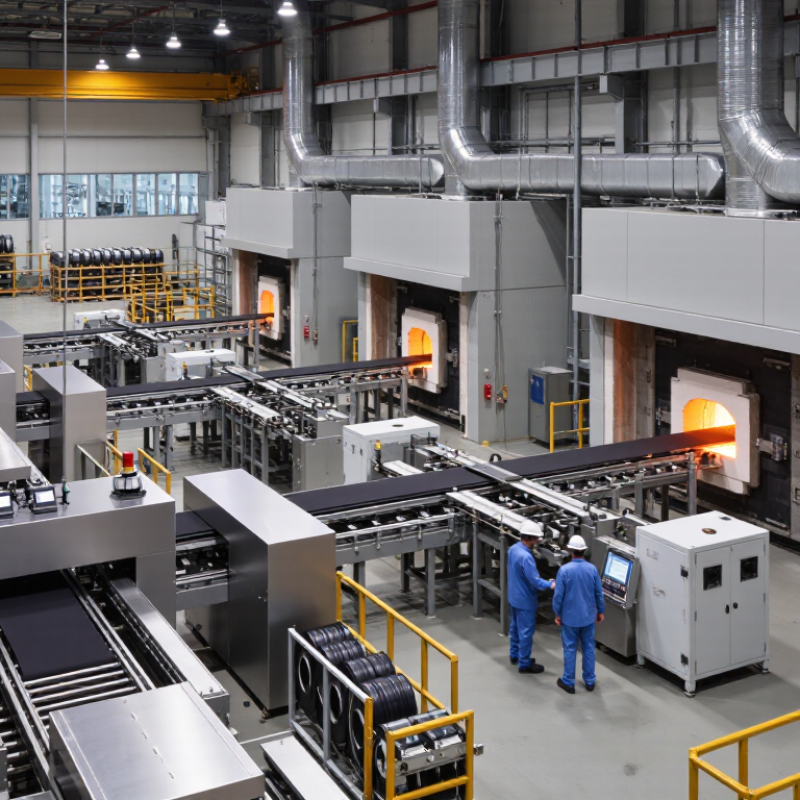
Carbon Fiber Production Lines: Definition, Components, and Core Processes
A carbon fiber production line converts precursor polymers into strong, lightweight carbon filaments. Most industrial lines use polyacrylonitrile, or PAN, as the precursor. The equipment usually includes precursor feeding, oxidation ovens, carbonization furnaces, surface treatment, washing, drying, and winding units. Temperature control is critical. A small thermal imbalance can change tensile strength, modulus, and filament uniformity.
The core process begins with stabilization in air, commonly between 200°C and 300°C. Carbonization then removes non-carbon elements through controlled heating, often above 1,000°C. Higher-performance grades may require graphitization above 2,000°C. Surface treatment improves bonding with resin during composite manufacturing. According to the MarketsandMarkets Carbon Fiber Market report, the global market was projected to grow from about USD 4.5 billion in 2024 to USD 7.3 billion by 2029. That growth increases demand for stable, scalable production lines.
A credible 2026 manufacturer should provide verified energy data, furnace temperature mapping, tension-control records, and pilot-scale testing. The U.S. Department of Energy identifies precursor cost and energy consumption as major barriers to wider carbon fiber adoption. A line may look advanced, yet poor fiber spreading can reduce real output. This is where many evaluations become too optimistic. Buyers should inspect production samples, maintenance access, emissions controls, and long-term process support. Fancy automation is not enough.
Carbon fiber production lines typically combine precursor preparation, stabilization, carbonization, optional graphitization, surface treatment, and sizing. The chart shows representative operating temperature windows for each core stage; actual settings vary according to precursor type, tow size, furnace design, and target fiber grade.
Choosing a carbon fiber production line manufacturer requires more than comparing equipment prices.
The International Energy Agency reported nearly 14 million electric car sales in 2023, increasing pressure for lightweight, repeatable composite production. A capable manufacturer should explain how its line handles precursor oxidation, carbonization, surface treatment, sizing, and winding. Ask for measured data, not attractive promises.
Evaluate process stability through line speed, temperature uniformity, tension control, energy consumption, and yield. The Japan Carbon Fiber Manufacturers Association has consistently identified aerospace, automotive, and wind energy as major demand sectors, each requiring different fiber grades and quality controls.
Request trial-production records, tensile-strength results, modulus data, and defect rates. Test samples independently under ASTM D4018 where applicable.
A factory visit also reveals practical details, such as spare-part storage and operator training. I would not trust a perfect brochure. Real lines produce occasional breaks.
Tips:
Require a full acceptance protocol before signing. It should define fiber properties, output capacity, downtime limits, and testing methods.
Check whether the manufacturer can trace each spool to furnace settings and raw-material batches. ISO 9001 certification supports process discipline, but it does not guarantee excellent carbon fiber.
Ask for recent audit findings and corrective-action records. Also compare energy data carefully; some suppliers measure only furnace consumption, while others report the complete line. That difference can distort operating-cost estimates.
In 2026, carbon fiber production line manufacturers will compete on consistency, energy control, and practical service. Serious buyers should examine more than published output rates. A line may promise high throughput, yet unstable tension can create breaks, uneven sizing, and costly downtime. Experienced manufacturers show pilot data, maintenance records, and clear acceptance criteria. They also explain how ovens, oxidation units, carbonization furnaces, and surface treatment systems work together. This matters. Small temperature variations can change fiber strength and surface quality.
Manufacturers worth watching will likely offer modular lines for aerospace, automotive, wind energy, and pressure-vessel applications. Their designs should support precursor traceability, automated tension monitoring, and closed-loop temperature control. Energy recovery deserves close attention, especially around high-temperature furnaces. A credible supplier can describe consumption per kilogram, spare-part lead times, operator training, and remote diagnostic limits. Factory visits remain valuable. They reveal cable routing, safety interlocks, housekeeping, and whether test equipment is genuinely available.
Still, comparisons are not always clean. Different precursor types, tow sizes, and testing methods can make performance claims difficult to judge. Some impressive demonstrations use ideal conditions. Buyers should request samples from routine production, not only showcase trials. No line is flawless. Even advanced automation needs skilled operators and disciplined maintenance. The strongest manufacturers respond openly when a target must be revised. That honesty may matter more than a polished brochure when production expands.
| Manufacturer Category | Primary Precursor | Typical Tow Sizes | Core Production Stages | Typical Processing Conditions | Main Product Focus | 2026 Evaluation Priorities |
|---|---|---|---|---|---|---|
| Large-scale PAN-based line builders | Polyacrylonitrile (PAN) | 1K–50K, depending on application | Precursor spinning, stabilization, carbonization, surface treatment, sizing, winding | Stabilization commonly about 200–300°C; carbonization commonly about 1,000–1,600°C | Aerospace, automotive, pressure vessels, wind-energy components | Line uptime, energy consumption, tension control, fiber consistency, scale-up experience |
| High-performance aerospace line specialists | High-quality PAN precursor | 1K, 3K, 6K, 12K and selected 24K formats | Precision spinning, multi-zone stabilization, controlled carbonization, graphitization, surface finishing | Carbonization up to approximately 1,600°C; optional graphitization commonly 2,000–3,000°C | High tensile strength and high modulus composite reinforcement | Mechanical-property repeatability, traceability, aerospace qualification support, defect reduction |
| Large-tow industrial line integrators | PAN, commonly optimized for large-tow conversion | 24K, 48K and 50K-class formats | Precursor conversion, stabilization, high-throughput carbonization, sizing and automated packaging | Moderate-to-high temperature continuous processing with strict residence-time control | Automotive structures, construction reinforcement, wind blades and industrial laminates | Throughput per furnace, cost per kilogram, tow spreading, automation and material utilization |
| Low-cost industrialization line developers | PAN with cost-optimized precursor chemistry | 12K–50K formats | Continuous oxidation, carbonization, surface treatment, sizing and inline inspection | Process windows are optimized for stable throughput and lower energy use rather than maximum modulus | Mass transportation, consumer products, building materials and general industrial composites | Capital cost, operating cost, yield, furnace efficiency, maintenance access and local service capability |
| Pitch-based carbon fiber line specialists | Petroleum or coal-tar pitch | Fine tow and specialty formats | Pitch preparation, melt spinning, stabilization, carbonization and optional graphitization | High-temperature treatment is often used to obtain very high modulus and thermal conductivity | Thermal management, satellite structures, electrodes and specialty high-modulus parts | Pitch purity, melt-spinning stability, graphitization uniformity and specialty-market qualification |
| Pilot and demonstration line suppliers | PAN, pitch and emerging precursor systems | Laboratory tow through small commercial tow | Modular spinning, oxidation, carbonization, surface treatment and testing | Flexible temperature and residence-time settings for process development | New precursor research, recycled carbon fiber, university projects and qualification trials | Modularity, data collection, recipe flexibility, rapid changeover and future scale-up compatibility |
| Recycled carbon fiber processing line providers | Recovered carbon fiber from composite waste or production scrap | Chopped fiber, milled fiber, reclaimed tow and nonwoven feedstock | Collection, contaminant removal, thermal or mechanical recovery, opening, classification and packaging | Thermal recovery conditions are selected to remove resin while limiting fiber damage | Automotive parts, nonwoven mats, compression molding and secondary composite applications | Fiber length retention, surface cleanliness, energy use, recycled content verification and supply-chain traceability |
| Turnkey automation and furnace suppliers | Compatible with PAN and pitch-based lines | Configured to the purchaser’s tow-size and production targets | Furnaces, drives, tension control, gas management, exhaust treatment, PLC/SCADA and quality monitoring | Continuous atmosphere control with oxygen exclusion during carbonization and graphitization | New plants, capacity expansion, modernization and process-control upgrades | Energy recovery, emissions control, cybersecurity, remote diagnostics and commissioning support |
Note: The table uses established carbon-fiber production technologies and typical industry operating ranges. Actual specifications vary by precursor chemistry, tow size, product grade, furnace design, qualification requirements and regional regulations.
Carbon fiber equipment is entering a more measurable phase. In 2026, leading manufacturers will compete through process control, not oven size. Modern lines connect tow tension, resin chemistry, temperature, and fiber speed in one data system. Inline cameras detect fuzz, broken filaments, and uneven spreading before defects reach final inspection. That shift reduces scrap and gives engineers traceable evidence during qualification.
Small sensors matter. High-resolution tension sensors now help stabilize thousands of filaments during spreading and winding. More precise oxidation ovens can adjust airflow across separate temperature zones. This supports consistent stabilization without excessive energy use. Equipment designers are also adding heat recovery systems, variable-speed drives, and electric heating modules. These features can reduce operating costs, although actual savings depend heavily on factory layout and maintenance discipline.
Artificial intelligence is entering production monitoring, but it should not replace experienced process engineers. A software alert may identify an unusual temperature pattern, yet it may miss a clogged nozzle or damaged guide. Digital twins can test line settings before physical trials, saving material and time. Still, models require clean production data. Many factories do not have it yet. The most credible manufacturers will offer accessible maintenance records, operator training, cybersecurity controls, and modular upgrades. Buyers should inspect running equipment, review defect data, and question impressive specifications that lack long-term production evidence.
Selecting a carbon fiber production line in 2026 requires more than comparing furnace length or quoted output. According to MarketsandMarkets’ Carbon Fiber Market report, the sector may grow at about 11.5% annually through 2028. That growth increases pressure on quality, energy use, and delivery reliability. A suitable supplier should provide trial data using your exact precursor, tow size, and target tensile strength.
Inspect the process details. Ask how the supplier controls tension between stabilization, carbonization, and surface treatment. Small variations can create fuzz, breaks, or inconsistent modulus. Request temperature-mapping records for each furnace zone. Energy performance also matters. The International Energy Agency’s Energy Technology Perspectives 2024 highlights industrial efficiency and electrification as major competitiveness factors. Therefore, compare energy consumption per kilogram, not only installed capacity.
Evidence matters more than polished presentations. Review factory acceptance tests, sample certificates, maintenance records, and documented uptime from comparable lines. The supplier should explain spare-part lead times and remote diagnostic procedures. Check whether its control system records precursor batches, furnace temperatures, tension, and winding conditions. Traceability is essential. A weak point remains common: buyers often accept optimistic capacity figures without testing long-run stability. I would require a supervised continuous trial, even if it delays procurement. The best line is not always the fastest; it is the one that repeatedly produces compliant fiber with predictable operating costs.
© Shipham Valves 2025. All Rights Reserved.
Website By PS Website Design Ltd
Request a Quote/Further Information
Download
We use cookies on this website, by continuing to browse the site you are agreeing to our use of cookies. Find out more.